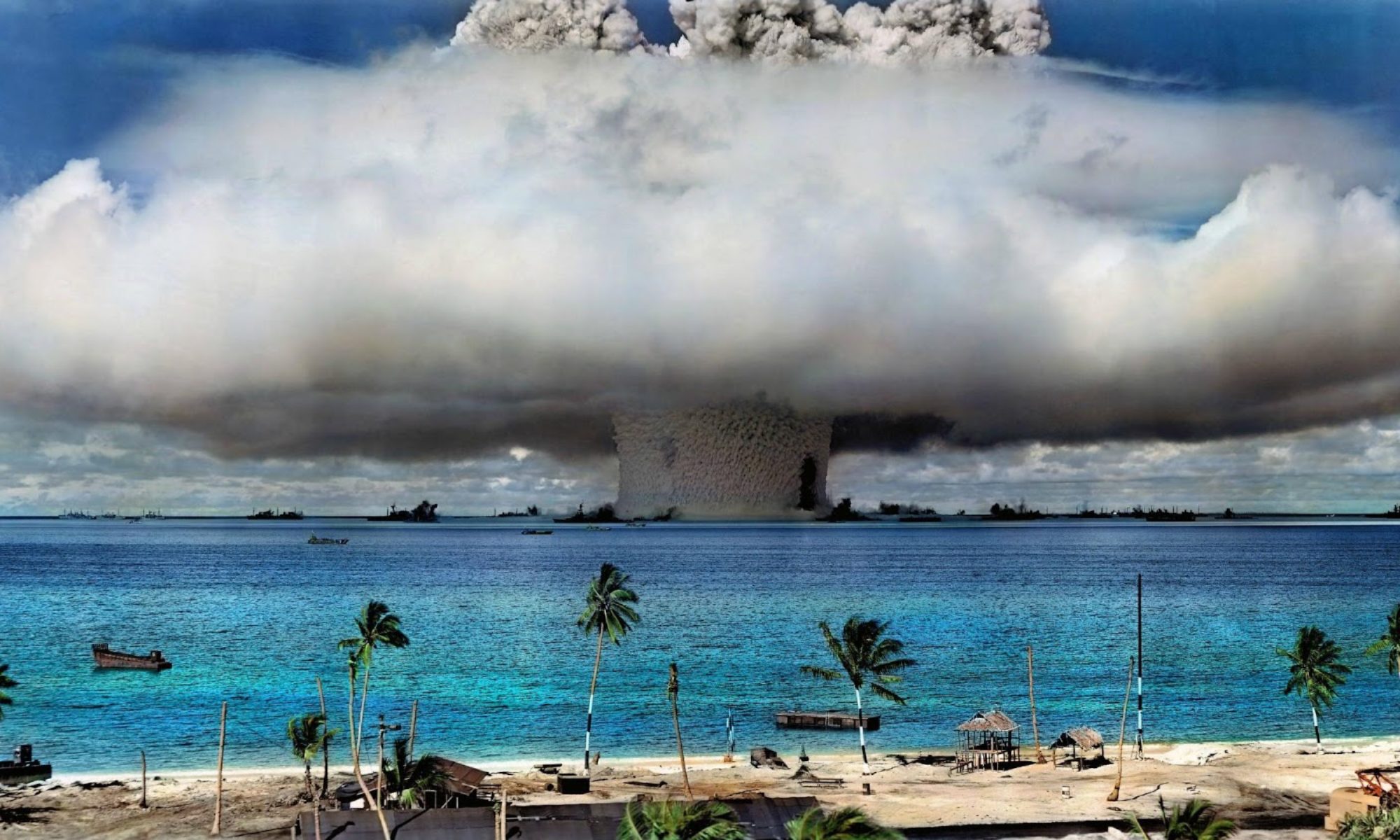
Erra and His Magnificent Sibitti (Seven)

A mysterious yet ominous idea—one that leaves the reader asking: Who was Erra?

Over centuries of Mesopotamian syncretism, Erra became closely associated—sometimes virtually interchangeable—with Nergal, the god of war, plague, death, and the underworld.

Through Nergal, the tradition extends even further back into older Mesopotamian religious structures tied to Enlil and the Sumerian world. The names shifted across centuries, but the results remained strikingly familiar.

Yet even Erra required instruments of destruction, which brings us to the Sibitti.

The Sibitti were a minor group of seven divine warlike daemonic beings associated with Erra. In many respects, they functioned as catalysts of destruction itself—personified weapons and agents of chaos bound to Erra’s violent sphere of influence.

Their role within the Epic of Erra is particularly unsettling. The Sibitti incite Erra to leave his peaceful slumber beside his consort and once more embark upon a destructive path against humanity. They are not passive servants awaiting command, but active participants in violence, almost partners in destruction itself.

This is what gives the Sibitti their distinctly daemonic character. Their existence is tied not merely to war, but to the activation of chaos, devastation, terror, and collapse.

“Wherever you go and spread terror, have no equal.”
He said to the second, “Burn like fire, scorch like flame.”
He commanded the third, “Look like a lion; let him who sees you be paralysed with fear.”
He said to the fourth, “Let a mountain collapse when you present your fierce arms.”
He said to the fifth, “Blast like the wind, scan the circumference of the earth.”
He said to the sixth, “Go out everywhere like the deluge and spare no one.”
The seventh he charged with viperous venom: “Slay whatever lives.”
Epic of Erra

The Sibitti are not simply agents of chaos. They are nihilism personified, bound to pressure the world toward destruction through Erra.

The unsettling aspect of the Sibitti is not merely what they destroy, but how they behave. Peace equals boredom. They pressure Erra toward movement, activation, and violence itself.

The duality of civilization is that it must wield destruction to survive while remaining forever vulnerable to destruction itself.

The deepest horror the Sibitti invoke is the suspicion that peace itself may be the illusion, and the restless warriors are the only honest voices in the room.

II. From Mythology to Structure

From Ancient Mesopotamia to the modern world, the mythological gods, demons, and divine weapons of yesterday are now expressed through institutions, technologies, bureaucracies, and systems of organized force. The names have changed. The pressures remain recognizable.

III. MACRO LEVEL — Civilization Organizes Around Latent Destruction

Modern civilization does not merely defend itself when threatened.

Civilization is built to always prepare for massive destruction (war), even and especially when the country is supposed to be at peace. It is not a quick fix for an emergency, but a permanent way of working.

From the second half of the twentieth century onward, the most advanced societies have maintained, refined, and normalized vast architectures of slumbering violence. These systems are not “break when needed” only during emergencies; they are embedded in society itself. They run in the background of daily life.

The clearest expression is nuclear deterrence. Thousands of warheads remain on hair-trigger alert or rapid-deployment status decades after the Cold War ended. The doctrine of Mutually Assured Destruction (MAD) is not a dormant relic; it is alive and well. Command-and-control systems are maintained at high readiness year after year. The logic is explicit: A stable civilization became a stable suicide postponed. Peace is the successful management of an apocalypse in real-time rather than the achievement of permanent safety. Sometimes the necessary evil is really tranquility in disguise.

Besides nuclear weapons, every major power sustains a large standing military in peacetime. These forces train and evolve continuously. Billions flow annually to ensure its readiness. Military exercises regularly simulate worst-case scenarios. To think that peace is a return to civility would be an error. Instead, it is a period of continuous costs in preparation for the next conflict, a central tenet of modern “Great Power Competition.”

This logic extends into the digital realm. Modern nations turn vital systems like power grids and transportation into weapons while trying to protect them. To do this, intelligence agencies hide cyber weapons inside enemy networks to prepare for future conflicts, weaponizing the infrastructure. Offensive cyber capabilities are developed and sometimes deployed even while nations proclaim the importance of a stable internet. This dual strategy hides the ongoing digital war between global powers under the guise of peace. These systems treat every citizen and foreign actor as a potential vector in a permanent, low-intensity conflict environment. In other words, everyone becomes an enemy of the state, including the state itself.

The U.S. economy, like most modern nations that exercise power, has been partially reoriented around this reality. The military-congressional-industrial complex consists of the military, corporations, and Congress, all of which depend upon defense contracts for innovation and revenue. Technological progress in dual-use fields is often driven by strategic competition rather than civilian demand. The result is a civilization built on the machinery of destruction for economic and intellectual prosperity.

States engage in political theater to project power through strategic signaling. This results in force posture adjustments within the military congressional industrial complex. Communicating that capability rewards vigilance and punishes perceived weakness without a shot being fired. Leaders must be a visible deterrent in order to appear strong and ready at all times. Together, these elements reveal a profound truth: civilizations throughout history have normalized the organization of latent destruction as a condition of existence. War is not an interruption of the system; it is the system’s ultimate reference point. The “peace” we experience is the managed equilibrium of war. As a nation, we are always armed, always watching, always investing in the next generation of lethality.

This is not a failure of modernity so much as its shadow architecture. In other words, it is the nature of the beast. This shadow architecture organizes the chaos to survive without a global ruler. Understanding this is essential before examining how newer technologies interact with it.

IV. OPERATIONAL LEVEL — Liminal Warfare

At this point, it is important to narrow the lens. The focus is that modern conflict often persists beneath the threshold of declared war.

What I mean is that it directly mirrors the fact that peace equals boredom, because the system increasingly refuses true dormancy.

The core idea is that populations become targets. Targets that can be stressed to produce fear and outrage. The weaponization of confusion causes emotional destabilization and, if effective, can maintain constant activation. Of course, this depends on the participants. The key is that conflict increasingly occurs within perception itself.

The one who controls the flow of information shapes the narrative. See, narratives are strategic terrain; they are, in fact, information ecosystems that can and are manipulated. This keeps the idea of truth continuously contested, allowing for the decentralization and acceleration of propaganda. The point is that control of interpretation becomes operationally valuable.

One way to spread various forms of information is through slogans,

images, and viral narratives, via memes. This memetic algorithmic amplification is an emotional contagion. From an operational perspective, the effects of information spread faster than traditional state messaging ever could. This brings us to cyber attacks.

This connects back to operational pressure. The idea is that the persistent probing of one’s target and the eventual penetration of said infrastructure, particularly during “peace,” will, over time, shape the invisible battlefield conditions for the future. Conflict, whether modern or past, often occurs before formal conflict exists. That is hugely important.

All of the above do, or will at some point, together or in cascading succession, cause economic destabilization. Take sanctions, for instance. Once sanctions are in place, supply chains begin to feel the pressure. This pressure is distributed to the populace, leading the government to perhaps engage in currency manipulation to survive at the cost of the governed through inflation, devaluation, and depletion, to name a few. This effectively creates a critical rift in the technological infrastructure needed for long-term economic and military stability. Economies have always been, and will always be, fair game in the scheme of operational terrain, for they are the lifeblood of systems. Once compromised, the potential to hemorrhage makes it all the more difficult for the system to coagulate.

This is where the fragmentation of society culminates. Let us start with polarization. Polarization breeds distrust among the populace, which, over time, leads to informational exhaustion. Once that occurs, we begin to see the rise of a perpetual crisis culture, in which populations are conditioned to instability because they no longer care about truth or fact. Therefore, destabilization begins within societies rather than invading them conventionally.

V. TECHNOLOGICAL ACCELERATION — AI, Automation, and the Compression of Decision

Overall, it comes down to compressing decision-making, and this is where AI comes in. Machine-assisted targeting enables predictive systems for automated analysis. This is crucial because it shrinks the human reaction window in escalation environments. This type of system is optimized for speed and restraint.

AI systems, in many ways, are perpetual. They monitor continuously, process constantly, and always adapt. This mirrors the idea that the absence of war is equivalent to lethargy, as the system increasingly refuses to maintain equilibrium.

At this point, we begin to see that the further amalgamation of man and machine, where the face of mankind begins to evolve. Algorithmic feeds in AI warfare process massive amounts of data to create a real-time, actionable “Common Operating Picture” that automates target identification and supports decision-making through recommendation systems. This also allows for an AI-generated narrative to produce

deepfakes, synthetic personas, and machine-mediated perception.

Overall, the result is a battlefield that increasingly intersects with cognition, interpretation, and emotional response, eliciting a reaction that justifies the means to an end.

From a philosophical point of view, the delegation of judgment is huge.

It is not that AI becomes conscious. Rather, humans increasingly defer decisions to systems, such as AI, to shape choices. This allows the

algorithm to prioritize the illusion of perception. The automation, in turn, influences the pathways of escalation. Therefore, technological systems will increasingly mediate human judgment itself.

VI. The Burden of Containment

This brings us back to the fact that the burden of containment is that peace increasingly resembles the continuous management of escalation rather than true stillness.

Diplomacy increasingly functions less in peace-making and more as a mechanism or tactic for stalling. This allows negotiations to continue without further adding to the issues at hand, unless one side does something that takes something off the negotiation table or adds to it, making the situation better or worse depending on the event. Treaties are valuable for the moment until something unfavorable happens, in which the treaty is called into question or loses value due to unforeseen circumstances. Summit meetings are a good place to hash out grievances on both sides. However, the real power lies in backchannel communication, where strategic dialogue is crucial to developing a potential deal that benefits both parties.

The core idea of deterrence is to prevent or discourage undesirable actions, as both state actors have recognized the consequences through visible force posturing and strategic ambiguity. In some ways, one could call it a peaceful game of chicken, since both sides are in the dark about each other’s intentions, which leads back to escalation management.

Overall, deterrence does not eliminate destructive capability; it just manages its behavior.

When it comes to de-escalation, modern systems increasingly rely upon friction mechanisms designed to slow escalation. Mechanisms like arms control or communications, where state actors can discuss the rules of engagement, allow both sides and their allies to build conflict-management structures to de-escalate while remaining deterrence-capable of striking.

When it comes to institutional restraint, civilizations build safeguards or structures specifically to delay impulsive activation. This is done within the government or governments through international institutions, where legal frameworks are lobbied, voted on, and tested through a bureaucratic process, usually with oversight.

Mankind remains one of the few remaining sources of friction in systems increasingly optimized for speed. Man understands that judgment can slow issues down for further scrutiny and debate. By throwing caution to the wind, uncertainty can reveal itself without slowing the system.

The tragic dimension is that the Mesopotamian god Ishum, divine watchman of the night, attempts to restrain Erra rather than destroy the Sibitti. In this context, Ishum never permanently defeats the Sibitti.

He delays them. That matters. Civilization often works similarly through nuclear deterrence, diplomacy, treaties, and institutions. They manage and disperse the pressure placed upon them, but can not erase it. Peace in today’s technological civilization resembles continuous containment rather than resolution.

VII. CONCLUSION — The Restlessness Remains

When it comes to civilization and the art of statecraft, one comes to realize sooner or later that it is reflective, cold, and controlled. States and their gods only know one thing, and that is to survive, even at the risk of an unintended suicide.

Erra’s weapons grow impatient during peace. Ours learned to wear human faces. Mankind’s weapons grow impatient during peace. AI learned to wear human faces. We cannot separate the weapon or discern the human face wearing it.

Pressure Without Victory: The Strategic Stalemate with Iran

This is a follow-up to my last article titled What Would War with Iran Look Like?, published on February 25th, 2026. In that article, I outlined what a conflict with Iran might look like militarily and strategically.

In this somewhat shorter article, I want to examine what has actually been done strategically and tactically since then, among other things. What has become increasingly clear is that pressure campaigns do not necessarily produce strategic collapse. In many respects, they work exactly as intended, yet the outcome remains unresolved.

So let’s first examine the U.S. pressure architecture.

With any nation the United States puts in the crosshairs, it essentially becomes part of a pressured network. So what do I mean by this? What exactly do I mean by U.S. pressure architecture?

Let’s start with economic pressure. What does the United States do first?

Sanctions.

Sanctions are economic, non-military punishments. Think of them as trade bans, asset freezes, financial transaction blocks, travel restrictions, arms embargoes, or even export controls imposed by one or more countries. This is often led by the United States, the UK, the EU, or the UN against a particular country. So basically, take Iran. You have certain groups or individuals pressuring them into changing their behavior—whether that means stopping aggression, halting a nuclear program, addressing human rights abuses, or ending support for terrorism—without actually going to war.

SWIFT exclusion: if you don’t know what that means, it stands for the Society for Worldwide Interbank Financial Telecommunications. SWIFT basically removes you from the global WhatsApp group that banks use to send each other money. Suddenly, your international payments just bounce with a big “user not found” error.

This brings us to energy export restrictions. An example would be Russia. Because of sanctions, Russia is often forced to sell its oil—especially crude—at steep discounts. Sometimes prices fall $10 to $30 per barrel below global benchmarks like Brent crude because buyers know Russia has fewer options and faces higher risks and costs from sanctions.

And lastly, secondary sanctions.

Secondary sanctions, in a nutshell, are when the United States tells foreign banks and companies worldwide: if you keep doing major business with Russia’s military suppliers or Iran’s oil sector, we’ll cut you off from the U.S. financial system—even if you’re not American and the deal technically has nothing to do with us.

Take Russia again as an example. Outside firms helping Russia’s war economy have been forced to drop deals to avoid losing access to dollars and U.S. markets. For Iran, it’s a classic case of non-U.S. banks having to choose between Iranian oil trade and their U.S. correspondent accounts, massively slashing Iranian export revenues.

This brings us now to military pressure, much of which I discussed in my last article: precision strikes, carrier groups, airpower, and ISR surveillance. That in turn overlaps with cyber and intelligence pressure, including cyber operations, assassinations, intelligence disruption, and infrastructure sabotage.

To make all of this work, the United States usually relies on outside help. When it comes to Iran, Washington has been fairly effective at regional containment through Israel, the Gulf states, maritime patrols, and missile defense networks.

All of these arrows point toward Iran.

Why?

Because the objective is the systemic degradation of Iranian power.

This brings us to the article’s target: Iran. When it comes to the Iranian regime, you cannot look at it as a single knot. Rather, think of it as multiple smaller circles connected together and labeled. You have the Islamic Revolutionary Guard Corps, the Qods Force (lit. “Jerusalem Force”), the political leadership, the energy economy, the security apparatus, and ideological legitimacy. All of these represent what is essentially a distributed internal structure.

Iran’s distributed response radiates outward rather than pointing inward. Now, what do I mean by that?

Let’s start with the proxy-warfare network they maintain: Hezbollah, Iraqi militias, the Houthis, Syrian militias, and Palestinian groups. Iran has a rather large network of proxies outside its borders that it can rely on. And it is without a doubt that many of these proxies have networks of their own. They also do not have to be kinetic all the time.

Then there is Iran’s economic adaptation: the shadow oil fleet, China trade networks, smuggling routes, and sanctions evasion. All of these have helped fund the Iranian regime and continue to do so.

So what is Iran’s strategic deterrence in all of this? They rely heavily on missiles—lots of them—and drones as well, which allow for maritime disruption. Think of the Strait of Hormuz. Iran still maintains leverage there.

The reason Iran has been so effective overall, and why it has not really been nudged off course, appears to lie in a combination of nationalism, revolutionary ideology, and a deeply entrenched anti-Western narrative.

The bottom line in all of this is that when it comes to Iran, persistent strategic friction is neither victory nor collapse. It is simply continuous pressure and adaptation.

Taliban commanders once made the point clearly: “You have the watches, but we have the time.” Ambassador Ryan Crocker later echoed this sentiment when discussing Afghanistan: “Americans have the watches; the Taliban have the time—we ran out of patience… Failing to be ready to stay the course is a huge problem for American diplomacy.

The same logic applies to Iran.

The United States and its allies may have the watches, but Iran has the time. They have been waiting it out since 1979, and it appears they are prepared to keep doing so.

However, I could be wrong.

The problem facing the United States is not the pressure campaigns. It’s not that pressure campaigns fail. Frankly, it’s the opposite. In many respects, they succeed. Take Iran, for instance. Iranian infrastructure is degraded, leadership figures are periodically eliminated, and the economy is continually squeezed, if not in some ways obliterated. On paper, therefore, Iran has already been defeated. But the difficulty lies elsewhere.

Understand that the Iranian system was never built around a single center of gravity that could be struck or collapsed. Instead, it resembles a distributed hydra, so to speak, capable of absorbing blows while shifting pressure outward through its proxies.

Economic adaptation under pressure produces ripple effects. As Iran scrambles to safeguard what strategic assets remain after repeated strikes, it doubles down on asymmetric pressure through its proxy networks across the region. This, in turn, forces surrounding markets and actors to adapt as well, spreading the disruption horizontally across the broader system.

What emerges is not victory, but a form of strategic fiction—sustained through a persistent pressure war in which neither side achieves decisive results, yet neither side disengages. Frankly, what we have here is a strategic standoff that could potentially put the broader global economy at risk.

There are two ways to look at how both the U.S. and Iranian systems are designed. The United States system is built for the decisive degradation of centralized adversaries. The Iranian system is built for distributed survival.

Both systems function exactly as designed. The result is strategic stalemate.

National Security Strategy of the United States of America

Trump’s National Security Strategy of the United States of America document is short-sighted in its long-term strategic architecture, but not necessarily short-sighted in the tempo of modern conflict, where political and military incentives often reward rapid repositioning. Adaptability over consistency carries significant political advantages. Yet even when adaptability is prioritized over fixed positions, one can still be consistent in one’s adaptability. In this way, adaptability itself becomes a coherent and recognizable strategic posture, providing a framework for action that is both flexible and systematically applied.

The Stalin-Putin Parallel: The War of Attrition as Strategy both Militarily and Politically

Putin’s approach to the Russo-Ukrainian War reflects both World War II and the Korean War—one shaped by industrial might, the other by political endurance. These strategies have proven effective in the past and remain just as formidable today.

The Russo-Ukrainian War is a 21st-century high-tech hybrid of second through fifth-generation warfare (2-5GW). Third-generation warfare (3GW) was the center of both forces in 2022-23, emphasizing rapid maneuvering in hopes of penetrating deep behind enemy lines and collapsing the enemy’s center of gravity. Russia’s initial invasion (2022) sought an AirLand Battle Blitzkrieg-style advance that failed to obtain air superiority, which led to its demise and pushback of its ground forces. The same could be said of Ukrainian forces in the following years.

The failure to establish maneuver ultimately led to an attritional, technology-driven conflict (2GW and elements of 4-5GW). For example, Russia’s shift toward entrenched defensive strategies, mass artillery fire, and drone warfare (2GW + 4GW), while Ukraine’s adaptation with precision strikes, asymmetric attacks using drones, and heavy reliance on Western intelligence (4GW + 5GW). However, the pendulum would swing the other way.

For 2024-2025, the war has shifted even further away from third-generation warfare (3GW) and is now dominated by second-generation (2GW) attrition and fourth-/fifth-generation (4GW/5GW) technological integration. Russia is winning due to several key factors.

The first of these many factors starts with the decline of 3GW and the rise of attrition (2GW). Russia’s fortified defensive lines made maneuver warfare almost impossible for Ukraine. Russia’s sheer firepower through massed artillery gave it an advantage due to outproducing the West in shell production and giving it an upper hand in grinding battles—along with the dwindling Ukrainian manpower, ammunition shortages, recruitment, and Western support.

However, shortly before the Ukrainian forces began to suffer the lack thereof, the Russian military began to integrate and amalgamate (4GW/5GW), giving their forces an edge. Drone warfare dominance has allowed the Russians to master loitering munitions, first-person view (FPV) drones, and swarm tactics, overwhelming Ukrainian positions. Not to forget electronic warfare (EW), which the Russian EW systems can now effectively jam Ukrainian communications, drones, and guided munitions and vice versa at times. AI and ISR (intelligence, surveillance, reconnaissance) have improved the Russian forces’ real-time battlefield awareness through satellites, drones, and AI-assisted targeting. At this stage of the conflict, Russia is not winning through maneuver (3GW) but by a relentless combination of industrial capacity and attritional strategy (2GW), advanced technology (4GW/5GW), and Ukraine’s weakening strategic position. While a basic overview of the military aspect has been outlined, how does it connect with the political dimension, and in what ways do they correlate?

A nation’s military actions directly reflect its political strategy—at least in the short term. Russian President Vladimir Putin’s approach to the war is similar to Stalin’s approach during the Korean War. Stalin, during the Korean War, sent Mao Zedong an interesting letter stating, “I also think, as do you, that the war in Korea should not be speeded up, since a drawn out war, in the first place, gives the possibility to the Chinese troops to study contemporary warfare on the field of battle and in the second place shakes up the Truman regime in America and harms the military prestige of the Anglo-American troops.

Like Stalin in Korea, Putin seems content with a prolonged war, seeing it as a way to:

  1. Observe, Study, Train, and Improve his forces for the current war and potential future conflicts.
  2. Strain Western support for Ukraine by dragging the war out, banking on political fatigue.
  3. Erode the military and economic strength of NATO-backed Ukraine, just as Stalin hoped to weaken the US-led coalition in Korea using China and North Korea.

At the same time, Putin has applied the WWII-era industrial attrition model, mirroring how the Soviets countered German Bewegungskrieg (war of movement) by leveraging sheer production capacity and the advantage of time and space. The vast Ukrainian front allowed Russia to absorb enemy attacks, stretch Ukrainian supply lines, and gradually wear down its forces—just as the Soviets did against the Germans. As Ukraine’s army and NATO supplies diminish, the vastness of its territory becomes an increasing liability. With fewer troops to defend an expansive front, strategic overstretch sets in, making it harder to hold ground, reinforce weak points, and sustain prolonged resistance—playing directly into Russia’s war of attrition:

  1. Russia’s mass industrial mobilization ensures its army is never starved of munitions.
  2. Defensive depth + counteroffensive waves: Like in WWII, Russian forces absorbed early Ukrainian counterattacks (2023), only to grind them down through attritional battles and layered defenses (2024-present), similar to how the Soviets wore down the Germans.
  3. Manpower attrition: Ukraine, with a smaller population and struggling recruitment, shows signs of exhaustion, much like Germany’s overstretched forces in WWII.

Ukraine’s dilemma is a lack of industrial capacity, much like NATO, which gives aid to Ukraine but also lacks a coherent military industry to fund, fuel, equip, train, and support the Ukrainian army, let alone its coalition, if decided to join directly. It also does not help to have low morale among the troops and the populace, even those nations’ administrations who support the effort; the nation’s population finds it fleeting. Because of this, the ability to conduct organized, combined arms maneuver warfare ceases to exist, leaving the Ukrainian forces to the brutality of attritional warfare.

This comparison suggests Putin’s long-term strategy is not about breakthrough victories but about wearing Ukraine and NATO down through political and industrial attrition. The defensive pressure placed on the Ukrainian forces and NATO backers will eventually collapse into itself as the center never holds. In this case, Ukraine and NATO are the center of gravity as both creatures exist in a politically symbiotic union; if the Ukrainian forces collapse, NATO folds. If NATO is unable to fund and equip the Ukrainian forces, Ukraine folds. In the end, both fold.

A Thousand Shades of Afghanistan

Map of the 2021 Taliban-led offensive in Afghanistan after the announcement of the United States’ withdrawal. 

It comes as no surprise that the Taliban have taken over Afghanistan in just a little over a week. Many, not all, in the administration and pentagon are surprised at how fast they could rapidly move across the country. This should not be a surprise.

When news reached that the Taliban were on the move, the White House made it clear that the Afghans were fully capable of deterring the threat. Our politicians assured the American people that the Afghans had the best training and equipment instead of returning it home. It’s much cheaper to leave the military items behind than bring them back. According to the BBC, the “Americans left behind about 3.5 million items, Gen Kohistani said, including tens of thousands of bottles of water, energy drinks and military ready-made meals, known as MREs. They also left behind thousands of civilian vehicles, without keys, and hundreds of armoured vehicles, the Associated Press reported.” Much of this military equipment will be sent to Iran, China, Russia, Pakistan, and other places to be examined, reverse engineering, and duplicated. According to Politico, the “United States spent more than $88 billion to train and equip Afghanistan’s army and police, nearly two-thirds of all of its foreign aid to the country since 2002.” I’m sure this number is an underestimate. So, with all the aid and training provided to the Afghan people, why did they collapse so quickly? The answer is they didn’t.

The Afgan troops did fight, losing 69,000 troops and perhaps many more. Let us also not forget the civilians caught in the crossfire. Without fuel, intelligence, air support, and much more, the tools to fight a war diminished. While many Afghans did fight, just as many saw no point. Would you want to continue the fight if you witnessed American troops pulling out overnight? While many did fight, just as many are okay with the Taliban. Those Afghanistan troops who did not fight are fine with the Taliban in charge due to their religious beliefs, kinships, clans, and tribal connections. These four alone, and perhaps many more, create a place for many parties within the many districts throughout Afghanistan to put aside their political differences and focus on what connects them. The Afgan landscape is a political kaleidoscope. This is what many in the military have failed to understand. They failed to understand that there are many shades of grey in Afghanistan.

The biggest mistake was thinking that Afghanistan was a country where we could create a state to our liking. Many military and political leaders failed to understand that Afghanistan is not a country but a phantom state where empires go to die.

By Cam Rea

Ark of the Covenant: A Weapon, A Throne, A Temple – Part II

Model of the Ark of the Covenant
Ark of the Covenant: Destruction, War & Plague – Part II

One of history’s most intriguing ancient mysteries remains the elusive and legendary Ark of the Covenant, also known as the Ark of the Testimony. According to Biblical sources, it was constructed after Moses had freed the Israelites from Egypt in the wilderness, and items of spiritual significance were placed in the chest.

After crossing the Jordan with the Ark, Joshua ordered his men to remove the twelve stones holding back the water, indicating no retreat or surrender. To fulfill the promise, you must fight to the death.

The Shout That Made Jericho Fall

According to Joshua 6:1-27, the Israelite army carried the Ark around Jericho once a day for seven days, and on the seventh day, they made a tremendous shout, and the walls came tumbling down. This may be partially true, but with a twist: Understand that Joshua was near Jericho at Gilgal. Joshua would have sent spies out to traverse the land and to gather intelligence from the locals. One such place was the fortified city of Jericho. Once the spies were inside, they went to an inn. Why an inn, you may ask? Because an inn is where you will hear all the gossip from the citizens to the traveling merchant. It was here that the spies are said to have met with a Canaanite prostitute by the name of Rahab. She informed them much about the city and the soldiers that resided within.

Rahab (center) in James Tissot's The Harlot of Jericho and the Two Spies. Between circa 1896 and circa 1902

Rahab (center) in James Tissot’s The Harlot of Jericho and the Two Spies. Between circa 1896 and circa 1902 (Public Domain)

The city of Jericho was not large, roughly 8.5 square acres or 1,400 meters (370,000 square feet) in circumference, with a population roughly between 2,400-2,600 inhabitants. Given the size of the population, the city of Jericho could muster between 500 and 600 men to defend the city walls, which meant roughly every 2.74 meters (nine feet) a soldier would be stationed.

Dwelling foundations unearthed at Tell es-Sultan in Jericho (Abraham/Public Domain)

Joshua informed the officers that Jericho was shut tight; no one entered or left, which suggested that even the local farmers sought refuge behind the walls. This told Joshua that the king of Jericho could not field an army. While a direct attack will do more harm than good, Joshua takes an indirect approach to overcome the city’s defenses. He explained to his officers that the location of Rahab’s window was on the city wall. Joshua made it clear to his officers that on the day of battle, the army, roughly between 8,000 and 9,000 men, was to concentrate most of its effort on marching in a column around the city for six days in silence.

Carrying the Ark of the Covenant: gilded bas-relief at Auch Cathedral, France

Carrying the Ark of the Covenant: gilded bas-relief at Auch Cathedral, France (Vassil/Public Domain)

On the seventh day, the Israelites circled the city seven times, and on the seventh circuit, the priests blew their trumpets, the army let out a loud shout, and the walls came tumbling down. However, the walls did not tumble, at least not in the literal sense. Instead, after six days, Rahab’s inn would have had at least 35-40 armed men hiding in her dwelling. Once those men heard the final blast of the trumpets and the loud shout given by the Israelites, those 35-40 men stormed out of Rahab’s inn to the walls near the main gate, slaughtered the guards, and opened Jericho to the onslaught. The Israelite army, roughly 8,000 men, stormed into the city. Some may have used scaling ladders, and once in: “They completely destroyed everything in the city with the sword — men and women, young and old, cattle, sheep and donkeys.” (Josh, 6:21) All breath had been extinguished except for Rahab and her family.

The covered ark and seven priests with rams' horns, at the Battle of Jericho, in an eighteenth-century artist's depiction.

The covered ark and seven priests with rams’ horns, at the Battle of Jericho, in an eighteenth-century artist’s depiction. (Public Domain)

As one can read, the Ark was nothing more than a decoy to keep the people occupied so that the Israelites could acquire the much-needed metals to supply their army.

The Philistines Capture the Ark and Pay the Price

As the Israelite forces gathered at Ebenezer, the better-equipped and organized Philistines, seeing that their opponent was nothing more than a ragtag, unorganized body of men, left the safety of Aphek and marched toward the Israelites who wished to do battle. Once both armies were in battle formation, the slaughter commenced. The Philistines are said to have slaughtered four thousand Israelites that day. The Israelite elders felt they lost the first engagement due to not having the Ark of the Covenant present at the battle. Because of this, the elders sent messengers to Shiloh, located in Ephraim, requesting that Eli’s sons, Hophni and Phinehas, bring forth the ark to the battle. Hophni and Phinehas brought the ark to the Israelite camp, where a great roar of excitement was heard. The Israelite forces, confident that their god was with them, went forth to battle against the Philistines the next day and suffered a terrible loss in which many thousands of men were slaughtered. Hophni and Phinehas were killed, and worst of all, the Ark of the Covenant was now in the possession of the Philistines. When messengers reached Eli to inform him of the dreadful news, he fell off his seat and broke his neck. (1 Samuel 4:1-18)

With the Israelite forces broken, the Ark captured, and Eli dead, the Philistines quickly overran the Jezreel valley, gained access to the northern highlands, and were able to overrun the territory of Ephraim and Benjamin, forcing them into tributary status. While the battle of Aphek-Ebenezer was a major Israelite defeat, it was also an indirect victory.

Death Plagues the City

The Ark fell into the hands of the Philistines, who triumphantly brought it back to Ashdod. While they celebrated, an invisible hand of death fell on them. According to the Bible, the people of Ashdod and its vicinity were afflicted with a mysterious illness. When the Philistines moved the Ark to Gath in hopes of alleviating their ills, death followed. Neither young nor old could escape. (1 Samuel 5:1-9) But what was this plague, and how did it come about?

The Plague of Ashdod.

The Plague of Ashdod. (Public Domain)

The Bible mentions that the plague the Philistines were afflicted with was emerods, better known today as hemorrhoids. However, this seems unlikely. Hemorrhoids do not kill the young and old, for hemorrhoids are not contagious. The Hebrew word is ofalim, which does not mean hemorrhoids but tumors or swellings. This suggests that the Philistines were suffering from bubonic plague, for the Bible gives another clue: vermin.

The Philistines grew tired of the ark and discussed with their holy men how to return the vile object that had been afflicting them for seven months. The Philistine holy men clarified that if you wanted to appease the god of Israel, make a guilt offering to him. “Then you will be healed, and you will know why his hand has not been lifted from you.” The Philistines responded, “What guilt offering should we send to him?” The Philistine holy men advised that they should make “Five gold tumors and five gold rats, according to the number of the Philistine rulers, because the same plague has struck both you and your rulers. Make models of the tumors and of the rats that are destroying the country, and give glory to Israel’s god.” (1 Samuel 6:5) The passages are clear: The Ark produced the plague, and the rats helped in its spread. But how did the Ark produce plague?

It seems probable that the Ark of the Covenant contained more than just a few holy items. Historian Adrienne Mayor mentions that the Ark may have contained sealed containers or cloth “that harbored aerosolized plague germs, or an insect vector that infected the rodents in Philistine territory.” In other words, whoever opened the ark to examine the objects within unknowingly opened Pandora’s Box.

After the Philistines had made the “Five gold tumors and five gold rats,” they placed the objects in a chest next to the ark on the cart drawn by two oxen. The five Philistine rulers escorted them to the border of Beth Shemesh. As the Israelites of Beth Shemesh were harvesting their wheat in the field of Joshua, “they looked up and saw the ark, they rejoiced at the sight.” (1 Samuel 6:13). It was an indirect victory by means of biological warfare. However, the Israelites would also pay the price.

Ark in the land of Philistines and the Temple of Dagon

Ark in the land of Philistines and the Temple of Dagon (Public Domain)

After the Levites had taken the chest and Ark down from the cart, they opened the Ark to observe the objects inside and to see if the contents were still there, and in doing so, unknowingly unleashed the same pestilence that afflicted the Philistines. Samuel states that the Lord “smote the men of Bethshemesh, because they had looked into the ark of the Lord, even he smote of the people fifty thousand and threescore and ten men.” (1 Sam 6:15-19) While it’s possible that people wanted to look inside the Ark out of curiosity, the Levites handling the Ark were the first exposed to the pestilence, which quickly spread throughout Beth Shemesh and other parts of Israel. While 50,070 seems a bit much, the likely number of dead was a little more than five thousand.

The aftermath of Aphek-Ebenezer was two-sided. The Philistines won the land battles while the Israelites won biologically, even though the majority of the populace and priests likely had no clue what caused the dangers in the Ark. While the epidemic stopped the advancement of the Philistines temporarily, it also further weakened the Israelites and denied them any hope of attacking the weakened Philistines once the plague had subsided.

The Enduring Enigma

So, what was the Ark of the Covenant? Was it a golden chest that served as the throne for Yahweh and had an unexplainable power, or was it just a beautifully gilded box with some nasty surprises inside? Based on the readings, it seems that the Ark was nothing more than a chest designed for a political purpose: to unite the Israelites and give them an identity. It also served as a religious symbol. Not only was Yahweh their king, but he was also, in fact, their God. Because of this, the Ark served as a place to worship wherever it resided. Thirdly and lastly, it had a military function. One could say the Ark served as Yahweh’s chariot. Yahweh was their commander and God of war. Moreover, like any good weapon, if it were to fall into the hands of the enemy, it could defend itself as it did against the Philistines when it unleashed a nasty plague upon them.

Overall, however, one looks at the Ark; it all comes down to faith.

Replica of the Ark of the Covenant in the Royal Arch Room of the George Washington Masonic National Memorial

Replica of the Ark of the Covenant in the Royal Arch Room of the George Washington Masonic National Memorial (CC BY-SA 2.5)

Cam Rea is an author and military historian. He has written numerous articles for Ancient Origins, and Classical Wisdom Weekly and has authored several books, including Hebrew Wars: A Military History of Ancient Israel from Abraham to Judges.

Top Image: Model of the Ark of the Covenant (Public Domain)

By Cam Rea

References

Gabriel, Richard A. The Culture of War: Invention and Early Development. New York: Greenwood Press, 1990.

—. The Military History of Ancient Israel. Westport: Praeger, 2003.

Hamilton, Victor P. Handbook on the Historical Books: Joshua, Judges, Ruth, Samuel, Kings, Chronicles, Ezra-Nehemiah, Esther. Mich: Baker Academic, 2001.

Mayor, Adrienne. Greek Fire, Poison Arrows & Scorpion Bombs: Biological and Chemical Warfare in the Ancient World. London: Duckworth, 2005.

Orent, Wendy. Plague: The Mysterious Past and Terrifying Future of the World’s Most Dangerous Disease. New York: Free Press, 2004.

Sicker, Martin. The Rise and Fall of the Ancient Israelite States. Westport, Conn: Praeger, 2003.

Sivertsen, Barbara J. The Parting of the Sea: How Volcanoes, Earthquakes, and Plagues Shaped the Story of Exodus. Princeton: Princeton University Press, 2009.

Stager, Lawrence E. “The Archaeology of the Family in Ancient Israel. Bulletin of the American Schools of Oriental Research.” JSTOR. Autumn 1985. http://www.jstor.org/stable/1356862

Ark of the Covenant: A Weapon, A Throne, A Temple – Part I

‘The Ark Passes Over the Jordan’
Ark of the Covenant: A Weapon, A Throne, A Temple – Part I

The Ark of the Covenant, also known as the Ark of the Testimony, is one of history’s most fascinating ancient mysteries. According to Biblical sources, it was built after Moses had freed the Israelites from Egypt in the wilderness. The chest was filled with items of spiritual significance and served as a visible sign of Yahweh’s (the Hebrew name of God) presence to the Israelites. However, the Ark went missing after the Babylonian destruction of Jerusalem in 587 BCE.

Why the Ark?

According to Exodus 19:5-6, Yahweh made a covenant with the Israelites: “Now therefore, if ye will obey my voice indeed, and keep my covenant, then ye shall be a peculiar treasure unto me above all people: for all the earth is mine: And ye shall be unto me a kingdom of priests, and an holy nation. These are the words which thou shalt speak unto the children of Israel.” It was believed this covenant brought about the construction of the Ark.

Another reason for the Ark’s construction was political. The Israelites believed Yahweh to be their king, and building it allowed them to transport their monarch wherever they went. This also made the Ark a military weapon. If Yahweh was their king/god, then he was their commander, which made the Ark a weapon. Therefore, the Israelites needed a symbol that they could look to, and it put fear into the minds of their enemies. More on this later.

A 4th century BCE drachm (quarter shekel) coin from the Persian province of Yehud Medinata, possibly representing Yahweh seated on a winged and wheeled throne. An inscription lies on the face of the coin, either a Phoenician inscription on the coin reading "YHW" or an Aramaic inscription reading "YHD"

A 4th century BCE drachm (quarter shekel) coin from the Persian province of Yehud Medinata, possibly representing Yahweh seated on a winged and wheeled throne. An inscription lies on the face of the coin, either a Phoenician inscription on the coin reading “YHW” or an Aramaic inscription reading “YHD” (Public Domain)

The Construction of the Ark

According to the book of Exodus 25:10-22, construction of the Ark began at Mount Sinai:

Have them make an ark of acacia wood—two and a half cubits long, a cubit and a half wide, and a cubit and a half high. Overlay it with pure gold, both inside and out, and make a gold molding around it. Cast four gold rings for it and fasten them to its four feet, with two rings on one side and two rings on the other. Then make poles of acacia wood and overlay them with gold. Insert the poles into the rings on the sides of the ark to carry it. The poles are to remain in the rings of this ark; they are not to be removed. Then put in the ark the tablets of the covenant law, which I will give you.

Make an atonement cover of pure gold—two and a half cubits long and a cubit and a half wide. And make two cherubim out of hammered gold at the ends of the cover. Make one cherub on one end and the second cherub on the other; make the cherubim of one piece with the cover, at the two ends. The cherubim are to have their wings spread upward, overshadowing the cover with them. The cherubim are to face each other, looking toward the cover. Place the cover on top of the ark and put in the ark the tablets of the covenant law that I will give you. There, above the cover between the two cherubim that are over the ark of the covenant law, I will meet with you and give you all my commands for the Israelites.

A model of the Ark of the Covenant from biblical description

A model of the Ark of the Covenant from biblical description (Blake Patterson/CC BY 2.0)

What is interesting about this is that the manufacture of not just the Ark but weapons also took place at Mount Sinai. The Israelites had difficulty acquiring the necessary skills to manufacture bronze weapons in the wilderness. Casting bronze was not easy or an ordinary skill. Exodus is silent when it comes to blacksmiths. One could argue that no blacksmiths were available within the camp. Alternatively, there might have been a handful of blacksmiths who either lacked the necessary equipment to produce the urgently needed weapons or were unskilled in weapon forging. So, the question arises: how did the Israelites manage to produce sufficient weapons, not to mention the Ark of Covenant? The solution to this enigma lies in Sinai.

Mount Sinai, also known as Mount Horbe

Mount Sinai, also known as Mount Horbe (Mohammed Moussa/CC BY-SA 3.0)

Moses led the Israelites into Sinai and to the base of Mount Horeb due to his relatives, the availability of copper, and the metalworkers who lived there. Moses knew well the area of Sinai and Mount Horeb (an alternative name for Mt. Sinai), for Moses used to lead Jethro’s flock “to the backside of the desert, and came to the mountain of God, even to Horeb.” (Exodus 3:1) Moses’ father-in-law, Jethro, was a Kenite/Midian priest who lived in the lands of Midian. (Judg 1:16; Ex 3:1; Num10:29) Moses led the Hebrews to Mount Sinai/Horeb, for he was familiar with the territory and the resources mined and forged at Sinai.

Moses Breaking the Tablets of the Law (1659) by Rembrandt

Moses Breaking the Tablets of the Law (1659) by Rembrandt (Public Domain)

The approach to Mount Sinai, painting by David Roberts

The approach to Mount Sinai, painting by David Roberts (Public Domain)

While Moses and a few others with him were familiar with the sights and sounds at Mount Sinai/Horeb, most of the Israelites and those tagging along were not, especially on the morning of the third day. “And it came to pass on the third day in the morning, that there were thunders and lightnings, and a thick cloud upon the mount, and the voice of the trumpet exceeding loud; so that all the people that was in the camp trembled.” (Exodus 19:16)

While it is possible that Yahweh did descend in a thunderous roar accompanied by spectacular lightning and smoke atop Mount Sinai/Horeb, perhaps there is another alternative to consider. Perhaps the reported sound of thunder the Israelites heard was none other than the metalsmiths atop the mountain who were smelting and hammering away. The flashes of what appeared to be lightning were nothing more than the flickering of the high flames produced by the furnaces. As for the cloud of smoke caused by the furnaces, it takes twice to four times as much charcoal to smelt copper compared to iron, which would produce a heavy cloud of smoke. The mountain landscape would have sounded and appeared eerie to the people below. The clue that links this possibility all together is the Kenites.

The Kenite name comes from the Hebrew word qayin, which means smith or metalworker. The Kenites lived in oasis towns in Midian and Sinai, where they mined the abundant rich copper ore at various spots in southwestern and southeastern Sinai. Furthermore, their location at the copper mines was not far from the trade routes that passed through Sinai, which allowed them to sell their goods and purchase the expensive tin needed to produce bronze, which was rare in the Middle East.

Because of this, it is possible to suggest that the Ark of the Covenant was designed and the metals collected atop Mount Sinai due to the Kenites who lived and worked within the vicinity. This speculation is because Moses was believed to be atop the Sinai for 40 days. However, the Bible gives two different accounts of who partook in the Ark. According to Exodus 31, Moses instructed Bezalel and Oholiab to construct the Ark, but the book of Deuteronomy 10:1-5 says Moses constructed it. At the same time, Bezalel and Oholiab are not mentioned. Forty days allow plenty of time to help in the design and manufacture of the weapons and the Ark, along with other items of religious significance. Therefore, it seems reasonable that Moses knew what he was doing when he arrived at Sinai to pay for weapons and the Ark with the gold they stripped from Egypt.

Power of the Ark

The power of the Ark is another intriguing matter. In biblical sources, the Ark divided the Jordan River for the Israelites to cross. In another instance, it brought down the walls of Jericho. It is said to have killed the Bethsames when they opened it. The Philistines are said to have acquired “hemorrhoids” (as shall be explained) after capturing the Ark, which caused them to quickly return it to the Israelites. And finally, there is the story of Uzzah, who was stuck down for placing his hands on the Ark as he tried to prevent it from falling. However, how true are these stories, and if they are true, is there another explanation worth considering?

Moses and Joshua bowing before the Ark.

Moses and Joshua bowing before the Ark. (Public Domain)

The Ark and the Jordan River

According to the book of Joshua 3:16, “the waters which came down from above stood and rose up upon an heap very far from the city Adam, that is beside Zaretan: and those that came down toward the sea of the plain, even the salt sea, failed, and were cut off: and the people passed over right against Jericho.” So, did the Jordan River miraculously divide, allowing them to march across a dry riverbed, or is there more to the story?

Earthquakes are common along the Dead Sea depression and might contribute to the Jordan splitting for Joshua. In 1927, an earthquake cut off the river for twenty-two hours. In 1546, an earthquake triggered a landslide, stopping the river from flowing for two days. In 1267, the river stopped again at midnight and would not flow until 10:00 the following morning. While this is plausible, the Book of Joshua provides an overlooked possibility.

As mentioned, they left Shittim (an ancient city in Moab, now Abil-ez-Zeit, Jordan) and encamped on the east bank of the Jordan River. Richard Gabriel points out that there is “no sound military reason for the three-day encampment.” From a military standpoint, it makes no sense to sit and wait for three days before crossing, considering that the king of Jericho easily could have mustered his forces and acquired the aid of local allies to deploy their forces along the west side of the Jordan River, thus using it as a tactical obstacle. However, the king evidently did not have the luxury of allies to assist him in preventing an Israelite crossing of the Jordan. The lack of assistance was apparently due to the disunity between the various Canaanite city-states. This is not to say that they could not unite to attack a common foe, but the military and political disunity shows their true weakness in preventing a foreign invasion. While Joshua’s decision seems a bit risky, he was no fool. So, what were the Israelites doing? The answer is they were taking advantage of a recent earthquake.

That the waters which came down from above stood and rose up upon an heap very far from the city Adam, that is beside Zaretan: and those that came down toward the sea of the plain, even the salt sea, failed, and were cut off. (Joshua 3:16)

With a natural obstacle in place, the flow of water slowed down and slowly receded, thus making the river shallow enough to build a barrier of some sort to hold back the slow, if not standing, waters. Joshua indicates that the “Jordan overfloweth all his banks all the time of harvest.” (Joshua 4:2-3) Knowing that the fords were flooded, Joshua decided that three days was sufficient to construct a barrier made of stone to hold back the waters and to allow the army to move fluidly across. Once the army crossed, Joshua gave the order to remove the stones:

“Take for yourselves from the people twelve men, a man from every tribe; and give them this order: ‘Take twelve stones from the middle of the Yarden riverbed, where the cohanim are standing, carry them over with you and set them down in the place where you will camp tonight.’”

Joshua passing the River Jordan with the Ark of the Covenant.

Joshua passing the River Jordan with the Ark of the Covenant. (Public Domain)

Joshua’s order to remove the twelve stones indicates that there is no retreat and no surrender. To fulfill the promise, you must fight to the death. Joshua understood well that a force with its back against a wall would fight more ferociously. Moreover, removing the barrier that held back the waters protected those Israelites on the east side of the Jordan if something went wrong.

Cam Rea is an author and military historian. He has written numerous articles for Ancient Origins Classical Wisdom Weekly and has authored several books, including Hebrew Wars: A Military History of Ancient Israel from Abraham to Judges.

Top Image: ‘The Ark Passes Over the Jordan’ ( Public Domain )

By Cam Rea

References

Gabriel, Richard A. The Culture of War: Invention and Early Development. New York: Greenwood Press, 1990.

—. The Military History of Ancient Israel. Westport: Praeger, 2003.

Hamilton, Victor P. Handbook on the Historical Books: Joshua, Judges, Ruth, Samuel, Kings, Chronicles, Ezra-Nehemiah, Esther. Mich: Baker Academic, 2001.

Mayor, Adrienne. Greek Fire, Poison Arrows & Scorpion Bombs: Biological and Chemical Warfare in the Ancient World. London: Duckworth, 2005.

Orent, Wendy. Plague: The Mysterious Past and Terrifying Future of the World’s Most Dangerous Disease. New York: Free Press, 2004.

Sicker, Martin. The Rise and Fall of the Ancient Israelite States. Westport, Conn: Praeger, 2003.

Sivertsen, Barbara J. The Parting of the Sea: How Volcanoes, Earthquakes, and Plagues Shaped the Story of Exodus. Princeton: Princeton University Press, 2009.

Stager, Lawrence E. “The Archaeology of the Family in Ancient Israel. Bulletin of the American Schools of Oriental Research.” JSTOR. Autumn 1985. http://www.jstor.org/stable/1356862

Tamerlane’s Invasion of India Part II

Timur, historically known as Tamerlane (1336 – 1405), was a Turco-Mongol conqueror and the founder of the Timurid Empire in Persia and Central Asia. After having conquered much of the Near East, Timur decided to on a massive invasion of India. As he pushed across the lands, conquering, he declared:

“The people of Samana and Kaithal and Aspandi are all heretics, idolaters, infidels, and misbelievers. They had now set fire to their houses and had fled with their children and property toward Delhi, so that the whole country was deserted.”

In late December 1398, Timur left from the fort of Aspandi. After marching twenty miles, he arrived at the village of Taghlak-pur, which is opposite the fort of that same name. When the people of the fort heard of the approach of Timur’s army, they abandoned it and scattered throughout the country. Timur would learn that the people who fled were called Sanawi [that is, fire-worshippers, Zoroastrians, or Ghebers]. Timur saw these people as misbelievers and ordered that their houses be burned and their fort and buildings to be razed to the ground.

The next day, Timur marched to Panipat, where he encamped. There he found that, “in obedience to orders received from the ruler of Delhi, all the inhabitants had deserted their dwellings and had taken flight.” After his soldiers entered the fort, they reported to Timur that “they had found a large store of wheat, which I ordered to be weighed, to ascertain the real weight, and then to be distributed among the soldiers.”

Timur receives envoys during an attack on Balkh (Afghanistan) in 1370. Representational image.

Timur receives envoys during an attack on Balkh (Afghanistan) in 1370. Representational image. (Public Domain)

To Plunder and Destroy and Kill

From that day on, Timur and his forces continued to make their way through India where they pillaged, raped, and plundered, or in the words of Timur: “Their orders were to plunder and destroy, and to kill everyone they met.” The next day, his forces proceeded to the palace of Jahan-puma, which is five miles (eight kilometers) from Delhi. As they progressed “They plundered every village and place they came to, killed the men, and carried off all the valuables and cattle, securing much booty; after which they returned, bringing with them a number of Hindu prisoners, both male and female.”

After much fighting and bloodshed, Timur held a court and summoned the princes, amirs, and officers to his tent. Timur likely informed his men after all the information had been gathered and considered as to what their next move was. He praised his men for their obedience and bravery. Besides praising his men, he also cautioned them, stating:

“I therefore gave them instructions as to the mode of carrying on war; on making and meeting attacks; on arraying their men; on giving support to each other; and on all the precautions to be observed in warring with an enemy. I ordered the amirs of the right wing, the left wing, the van, and the center to take their proper positions, and cautioned them not to be too forward or too backward, but to act with the utmost prudence and caution in their operations.” 

Afterwards, his men gave many blessings as they proceed from the tent. Timur knew that his men needed to hear some uplifting and cautionary words. It gave the officers confidence which could be distributed on down to the lower ranks and they were going to need it since Timur was very cautious.

The Problem of Prisoners

Before proceeding further, Timur had to make a decision on the one hundred thousand prisoners under his control. Timur feared that once he engaged the main enemy force, he would have to leave the prisoners in the rear with the gear. This was too dangerous, for the prisoners could revolt, find arms, and attack Timur from the rear during the battle. Therefore, Timur “immediately directed the commanders to proclaim throughout the camp that every man who had infidel prisoners was to put them to death, and that whoever neglected to do so, should himself be executed and his property given to the informer. When this order became known to the champions of Islam, they drew their swords and put their prisoners to death. One hundred thousand infidels, impious idolaters, were slain on that day.”

Timur's army attacks the survivors of the town of Nerges, in Georgia, in the spring of 1396. Representational image

Timur’s army attacks the survivors of the town of Nerges, in Georgia, in the spring of 1396. Representational image. (Public Domain)

On 17 December 1398, Timur prepared his army for battle. His grandson, Prince Pir Mohammed was placed in charge of the right wing. Prince Sultan Hussein and Khalil Sultan, were placed in command of the left wing. The rear was placed on Prince Rusam, while Timur held the center. The Delhi Sultanate ruler Mahmud Tughluk (Nasir-ud-Din Mahmud Shah Tughluq) commanded the opposing army, which consisted of 10,000 horsemen, 40,000 infantry, and 125 elephants covered with armor, “most of them carrying howdahs in which were men to hurl grenades, fireworks, and rockets.”

Elephant with howdah of the Golconda Sultanate, Qutb Shahi dynasty.

Elephant with howdah of the Golconda Sultanate, Qutb Shahi dynasty. (CC BY-SA 4.0)

Two Powerful Armies Clash

The two armies confronted each other, the drums beating; shouts and cries were raised on both sides and the ground trembled. Part of the enemy force separated from the vanguard, “and when they perceived that Sultan Mahmud’s forces were approaching, they moved off to the right, and getting secretly behind the enemy’s advance-guard as it came on unsuspecting, they rushed from their ambush, and falling upon the foe in the rear, sword in hand, they scattered them as hungry lions scatter a flock of sheep, and killed six hundred of them in this single charge.”

Prince Pir Mohammad, who commanded the right wing, moved his forces forward, and with Amir Sulaiman Shah and his regiments, attacked the left wing of the enemy, which was commanded by Taghi Khan, and showered arrows upon them, which compelled them to take refuge in flight.

The left wing under Prince Sultan Husain, Amir Jahan Shah, Amir Ghiyas-ad-din, and other amirs, attacked the enemy’s right wing, which was commanded by Malik Mu’in-ad-din and Malik Hadi. They pressed with the “trenchant sword and piercing arrows that they compelled the enemy to break and fly. Jahan Shah pursued them, and attacked them again and again until they reached the gates of the city of Delhi.”

Simultaneously, Sultan Mahmud’s army at the center was more numerous and with its strong war elephants, made an attack upon Timur’s center, “where Prince Rustam, Amir Shaikh Nur-ad-din, Gateway of the mosque of Ala-ad-din at Delhi and their colleagues met it with a brave and resolute resistance. While they were thus engaged, Daulat Timur Tawachi, Mangali Khwaja, and other amirs came up with their respective forces and assailed the enemy.”

Timur then gave the order to a party of “brave fellows who were in attendance upon me, and they cut their way to the sides of the amirs, who were fighting in the forefront of the battle. They brought the elephant drivers to the ground with their arrows and killed them, after which they attacked and wounded the elephants with their swords. The soldiers of Sultan Mahmud and Mallu Khan showed courage in the fight, but could not withstand the onslaughts of Timur’s army. Seeing that the situation is bleak their “their courage fell and they took to flight.” Mahmud Tughluk army was defeated; “part was slain, and part had found refuge in the fort, toward which I marched, exalted with victory.” With the main threat vanquished, Timur made his way to Delhi.

The Devastating and Bloody Sack of Delhi

After this victory, Timur soon entered Delhi. At first, everything was going fine; many officials came forward to offer Timur gifts. While the regal ceremony and the state of affairs were taking place within the court, problems in the city were about to erupt. Below is the devastating recorded account of what happened to citizens of Delhi in 1398:

“On the sixteenth of the month (Dec. 26), certain incidents occurred which led to the sack of the city of Delhi and to the slaughter of many of the infidel inhabitants. One was this.

A party of fierce Turkish soldiers had assembled at one of the gates of the city to look about them and enjoy themselves, and some of them had laid riotous hands upon the goods of the inhabitants. When I heard of this violence, I sent some amirs, who were present in Delhi, to restrain the Turks, and a party of soldiers accompanied these officers into the city. Another reason was that some of the ladies of my harem expressed a wish to go into the city and see the Palace of a Thousand Columns which Malik Jauna had built in the fort called Jahanpanah.”

Ruins of East gate entry in to Begumpur Masjid

Ruins of East gate entry in to Begumpur Masjid (CC BY 2.0), Jahanpanah. The grand palace with its audience hall of beautifully painted wooden canopy and columns is vividly described but it does no longer exists.

“I granted this request, and I sent a party of soldiers to escort the litters of the ladies. Another reason was that Jalal Islam and other officials had entered Delhi with a party of soldiers to collect the contribution laid upon the city. Another reason was that some thousand troopers with orders for grain, oil, sugar, and flour had gone into the city to collect these supplies. Another reason was that it had come to my knowledge that great numbers of Hindus and infidels had come into the city from all the country round with their wives and children, and goods and valuables, and consequently I had sent some amirs with their regiments into Delhi and directed them to pay no attention to the remonstrances of the inhabitants, but to seize these fugitives and bring them out.”

“For these various reasons a great number of fierce Turkish troops were in the city. When the soldiers proceeded to apprehend the Hindus and infidels who had fled to Delhi, many of them drew their swords and offered resistance. The flames of strife thus lighted spread through the entire city from Jahan-panah and Siri to Old Delhi, consuming all they reached. The savage Turks fell to killing and plundering, while the Hindus set fire to their houses with their own hands, burned their wives and children in them, and rushed into the fight and were killed. The Hindus and infidels of the city showed much alacrity and boldness in fighting. The amirs who were in charge of the gates prevented any more soldiers from entering Delhi, but the flames of war had risen too high for this precaution to be of any avail in extinguishing them.”

View of Tohfe Wala Masjid in Siri Fort area near Shahpur Jat village

View of Tohfe Wala Masjid in Siri Fort area near Shahpur Jat village (CC BY-SA 3.0)

“All day Thursday and throughout the night, nearly fifteen thousand Turks were engaged in slaying, plundering, and destroying.”

Timur defeats the Sultan of Delhi. (Public Domain)

Stripping Wealth and Life from the Land

“When Friday morning dawned, my entire army, no longer under control, went off to the city and thought of nothing but killing, plundering, and making prisoners. The sack was general during the whole day, and continued throughout the following day, Saturday, the eventeenth (Dec. 27), the spoil being so great that each man secured from fifty to a hundred prisoners, men, women, and children, while no soldier took less than twenty. There was likewise an immense booty in rubies, diamonds, garnets, pearls, and other gems; jewels of gold and silver; gold and silver money of the celebrated Alai coinage; vessels of gold and silver; and brocades and silks of great value. Gold and silver ornaments of the Hindu women were obtained in such quantities as to exceed all account. Excepting the quarter of the Sayyids, the scholars, and the other Mussulmans, the whole city was sacked.

The pen of fate had written down this destiny for the people of this city, and although I was desirous of sparing them, I could not succeed, for it was the will of God that this calamity should befall the city.”

Top Image: Bust of Timur ( CC BY-SA 3.0 ), and Timur defeats the Sultan of Delhi (Pubic Domain); Deriv.

By Cam Rea

References

Jackson, A. V. Williams, History of India: The Mohammedan Period as Described by its Own Historians Volume V. London: The Grolier Society, 1906.

Manz, Beatrice Forbes (2002). “Tamerlane’s Career and Its Uses”. Journal of World History. 13: 3.

Manz, Beatrice Forbes, The Rise and Rule of Tamerlane. Cambridge: Cambridge University Press, 1989.

Marozzi, Justin. Tamerlane: Sword of Islam, Conqueror of the World. Cambridge, MA: Da Capo Press, 2006.

Meri, Josef W. Medieval Islamic Civilization: An Encyclopedia. New York: Routledge, 2006.

Rose, Dennis M. The Campaigns of Tamerlane. Hayden, ID: Createspace, 2014.

Publishing, DK. Commanders. London: DK Pub, 2010

Tamerlane’s Invasion of India—Part I

Timur, historically known as Tamerlane (1336 – 1405), was a Turco-Mongol conqueror and the founder of the Timurid Empire in Persia and Central Asia. Timur rose through the ranks by gaining the respect of local chieftains due to his personal valor in combat and his brigandage. His actions, whether raiding or in combat, caused many to flock to him. It was during a battle that arrows struck his right arm and leg which left him partially paralyzed. Because of this, Europeans referred to him as ‘Tamerlane’ or ‘Timur the Lame.’

Timur was born in Transoxania a member of Barlas tribe. He rose to power among the Ulus Chaghatay. The Ulus Chaghatay was nomadic tribal confederation that formed the central region of Mongolian Chaghadaid khanate. Timur’s story is similar to Genghis Khan; How true these stories are is up for debate.

Portrait of Timur, 15th century. (Public Domain)

Portrait of Timur, 15th century. (Public Domain)

Timur, not being related to Genghis Khan, could not bear the title Khan. Since he could not use the title, he decided to use politics to his advantage. While in the city of Balkh, (now northern Afghanistan), Timur quickly gained allies from among the merchants, peoples, and clergy due to sharing his loot with the locals, while the ruler, Husayn, who also happened to be Timur’s brother-in-law, was not viewed in with such praise. It may be that Husayn was a fine ruler; it is just that Timur had the capital to profit from his ambition.

The Chagatai Khanate and its neighbors in the late 13th century. (CC BY 3.0)

The Chagatai Khanate and its neighbors in the late 13th century. (CC BY 3.0)

Timur challenged and defeated Husayn in 1370 and took his other wife, Saray Mulk Khanum, who was a direct descendent of Genghis Khan. This allowed him to become the indirect imperial ruler of the Chaghatay tribe. To strengthen his position further, he collected a number of princes from the various branches of the Genghisid branches.

Timur also used Islam to legitimize his position by praising and patronizing the Sufi sheikhs and ulama. He built religious monuments to both please the religious faith and at the same time show that he was favored by the supernatural due to his connection to Genghis Khan. Timur understood the power of charisma as well as using the fear of the divine to solidify his position.

Emir Timur feasts in the gardens of Samarkand. (Public Domain)

Emir Timur feasts in the gardens of Samarkand. (Public Domain)

Facing India: Soldiers, Elephants, Destroyers of Men!

By the time Timur had considered invading India 1398, he had already conquered most of the Near East. However, his appetite for conquest had not been quenched. He wanted more, and he desired India.

Timur had focused most of his military career on the west. With the west secured there was no remaining kingdom in that region that could really put a dent into his empire. Therefore, he looked east as he always had a desire to conquer China and bring it back under the fold of the Mongol Empire. However, India was closer; this multi-kingdom subcontinent bordered his empire. The grand prize in all this was the powerful kingdom of the Delhi Sultanate. Timur knew that the Kingdom of Delhi was no pushover, but given that it was weakened due to being in a state of civil war, made Delhi ripe for the sacking.

Asia in 1335, showing including Turco-Mongol culture nations such as the Golden Horde and the Chagatai Khanate. (Public Domain)

Timur’s desired to take Delhi as he felt not only would he secure his southern border, but also he would acquire the kingdom’s extraordinary amounts of wealth. That being said, selling the war was not so easy.

Timur ordered the princes and amirs to meet with him to see what they thought about making a military expedition into India. Most opposed the idea due to the prospective kingdom being of the same faith; others also feared that invading India was too ambitious of a task. Many were bewildered by this and stated “The rivers! And the mountains and deserts! And the soldiers clad in armor! And the elephants, destroyers of men!”

Elephant in Battle, Kota, Rajasthan, India. (

Elephant in Battle, Kota, Rajasthan, India. (Public Domain)

Prince Mohammad Sultan scolded the men and shamed them for such talk. Afterwards, he made a plea to their greed to uplift their spirits by stating:

“The whole country of India is full of gold and jewels, and in it there are seventeen mines of gold and silver, diamonds and rubies, emeralds and tin, iron and steel, copper and quicksilver, and many metals more; and among the plants which grow there are those fit for making wearing-apparel, and aromatic shrubs, and the sugar-cane; and it is a country which is always green and verdant, and the whole aspect of the land is pleasant and delightful. Now, since the inhabitants are chiefly polytheists and infidels and idolaters and worshippers of the sun, it is meet, according to the mandate of God and of His Prophet, for us to conquer them.”

Timur’s son, Shahrukh Mirza also made a statement, reminding the officers that “India is an extensive country. Whichever Sultan conquers it becomes supreme over the four corners of the globe. If under the conduct of our amir, we conquer India, we shall become rulers over the seven climes.”

The World Trembles, but the Khan Does Not

After much debate, Timur decided to go ahead and prepare for a massive invasion. While he readied his forces, he sent Prince Pir Mohammed Jahangir ahead to place the holy city of Multan (located in present-day Pakistan) under siege.

Multan is famous for its large number of Sufi shrines, including the unique rectangular tomb of Shah Gardez that dates from the 1150s and is covered in blue enameled tiles typical of Multan.

Multan is famous for its large number of Sufi shrines, including the unique rectangular tomb of Shah Gardez that dates from the 1150s and is covered in blue enameled tiles typical of Multan. (Junaidahmadj/CC BY-SA 3.0)

While this was ongoing, Timur ordered for the assembly of ninety thousand troops. To make sure everyone was on board, Timur called for a qurultay, which is a meeting with all the princes, chiefs, and other officials to inform them what his intentions were.

Timur stated:

Although the true faith is observed in many places in India, the greater part of the Kingdom is inhabited by idolaters. The Sultans of Delhi have been slack in their defense of the Faith. The Muslim rulers are content with the collection of tribute from these infidels. The Koran says that the highest dignity a man can achieve is to make war on the enemies of our Religion. Mohammed the Prophet counselled like wise. A Muslim warrior thus killed acquires a merit which translates him at once into Paradise.

Timur also made it clear that they should fear him and his army for “most of Asia are under our domination, and the world trembles at the least movement we make.” Timur also saw destiny on his side and believed he had been blessed with favorable opportunities. Because of this, his armies rode “south, not east. India through her disorders has opened her doors to us.”

Timur sent a letter addressed to Sarang Khan of Dipalpur with a possible deal:

If the rulers of Hindustan come before me with tribute, I will not interfere with their lives, property, or kingdoms; but if they are negligent in proffering obedience and submission, I will put forth my strength for the conquest of the realms of India. At all events, if they set any value upon their lives, property, and reputation, they will pay me a yearly tribute; and if not, they shall hear of my arrival with my powerful armies. Farewell.

Sarang Khan replied:

It is difficult to take an empire to your bosom, like a bride, without trouble and difficulty and the clashing of swords. The desire of your prince is to take this kingdom with its rich revenue. Well, let him wrest it from us by force of arms if he be able. I have numerous armies and formidable elephants, and am quite prepared for war.

Preparing for War

The armies of Timur were unlike those of the 14th-century Muslim states and closer to that of Genghis Khan and his successors. Timur’s military leadership may have started with an arban at the bottom of the chain. The next part is pure speculation. One can assume, without certainty, that every Timurid warrior belonged to an arban. An arban consisted of 10 men with one being the commander. Ten arbans equals one jagun (plural jaghut) consisting of 100 men. Ten jagunt consist of 1,000 men and form a minqan (plural minqat). Ten minqat form one tumen (plural tumet) consisting of 10,000 men.

10 men = 1 arban

100 men = 1 jagun

1,000 men = 1 minqan

10,000 men = 1 tumen

100,000 men = 1 tuc

A Mongol melee in the 13th century.

A Mongol melee in the 13th century. (Public Domain)

While Timur decidedly used the old Mongol system, it is uncertain as to whether or not he used the same traditional names. As for the size of Timur’s army marching into India, this remains debatable. Some say the army prepping for invasion into India was roughly between 90,000-100,000 or 40,000-45,000 troops. It might be safe to say that the army that sacked Delhi was roughly 60,000 strong.

If Timur’s army was purely cavalry based (and no infantry as some sources suggest), one can speculate that the number of horses each warrior had; perhaps five mounts at his disposal. If so, an army of 40,000 to 45,000 would have required 200,000 to 225,000 mounts, while an army of 90,000 to 100,000 would have needed 450,000 to 500,000 mounts. Two hundred thousand mounts would many square miles of grass per day on the plains. Hydration was also crucial, and the horses would require millions of gallons of water a day. To ensure that the horses had food and water, Timurid scouts, far ahead of the main army, searched for suitable grazing ground that supplied ample food and water. Timur’s best option to feed his army in areas less suitable was to raid nearby villages in enemy territory.

Timur’s army battles Egyptian forces.

Timur’s army battles Egyptian forces.  (Public Domain)

Heretics, Idolaters, Infidels, and Misbelievers

Once Timur and his forces pushed out in March 1398, his advanced guard and right wing were under the command of his grandson, Pir Mohammed. Pir Mohammed moved his forces into a less confined area as he pushed into Punjab. Once in Punjab, his mission was to capture Multan. With Pir Mohammed was busy in Punjab, Timur’s other grandson Mohammed Sultan, marched by way of Lahore. Timur, took a more difficult route, with a much smaller force into the Hindu Kush before making his way south to join his main force east of the Indus by September.

Once December arrived, Timur declared:

For my intended attack on Delhi in this same year 800 A.H. (1398 AD), I arranged my forces so that the army extended over a distance of twenty leagues. Being satisfied with my disposition of the troops, I began my march on Delhi. On the twenty-second of Rabi’-al-awwal (Dec. 2) I arrived and encamped at the fort of the village of Aspandi, where I found, in answer to my inquiries, that Samana was seven leagues distant.

The people of Samana and Kaithal and Aspandi are all heretics, idolaters, infidels, and misbelievers. They had now set fire to their houses and had fled with their children and property toward Delhi, so that the whole country was deserted.

Top Image: Bust of Timur ( CC BY-SA 3.0 ), and Timur standing with cane (Public Domain); Deriv.

By Cam Rea

References

Jackson, A. V. Williams, History of India: The Mohammedan Period as Described by its Own Historians Volume V. London: The Grolier Society, 1906.

Manz, Beatrice Forbes (2002). “Tamerlane’s Career and Its Uses”. Journal of World History. 13: 3.

Manz, Beatrice Forbes, The Rise and Rule of Tamerlane. Cambridge: Cambridge University Press, 1989.

Marozzi, Justin. Tamerlane: Sword of Islam, Conqueror of the World. Cambridge, MA: Da Capo Press, 2006.

Meri, Josef W. Medieval Islamic Civilization: An Encyclopedia. New York: Routledge, 2006.

Rose, Dennis M. The Campaigns of Tamerlane. Hayden, ID: Createspace, 2014.

Publishing, DK. Commanders. London: DK Pub, 2010