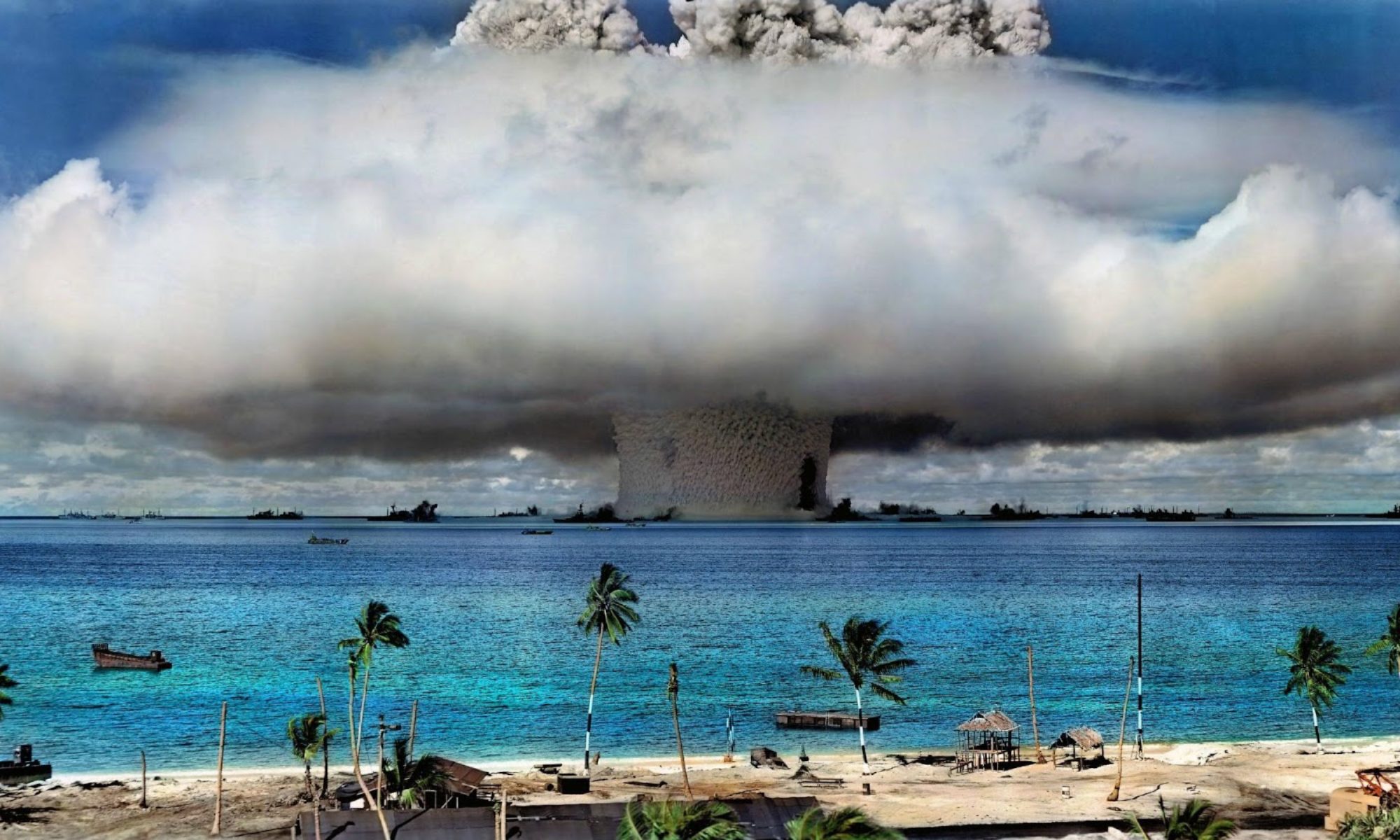
Erra and His Magnificent Sibitti (Seven)

A mysterious yet ominous idea—one that leaves the reader asking: Who was Erra?

Over centuries of Mesopotamian syncretism, Erra became closely associated—sometimes virtually interchangeable—with Nergal, the god of war, plague, death, and the underworld.

Through Nergal, the tradition extends even further back into older Mesopotamian religious structures tied to Enlil and the Sumerian world. The names shifted across centuries, but the results remained strikingly familiar.

Yet even Erra required instruments of destruction, which brings us to the Sibitti.

The Sibitti were a minor group of seven divine warlike daemonic beings associated with Erra. In many respects, they functioned as catalysts of destruction itself—personified weapons and agents of chaos bound to Erra’s violent sphere of influence.

Their role within the Epic of Erra is particularly unsettling. The Sibitti incite Erra to leave his peaceful slumber beside his consort and once more embark upon a destructive path against humanity. They are not passive servants awaiting command, but active participants in violence, almost partners in destruction itself.

This is what gives the Sibitti their distinctly daemonic character. Their existence is tied not merely to war, but to the activation of chaos, devastation, terror, and collapse.

“Wherever you go and spread terror, have no equal.”
He said to the second, “Burn like fire, scorch like flame.”
He commanded the third, “Look like a lion; let him who sees you be paralysed with fear.”
He said to the fourth, “Let a mountain collapse when you present your fierce arms.”
He said to the fifth, “Blast like the wind, scan the circumference of the earth.”
He said to the sixth, “Go out everywhere like the deluge and spare no one.”
The seventh he charged with viperous venom: “Slay whatever lives.”
Epic of Erra

The Sibitti are not simply agents of chaos. They are nihilism personified, bound to pressure the world toward destruction through Erra.

The unsettling aspect of the Sibitti is not merely what they destroy, but how they behave. Peace equals boredom. They pressure Erra toward movement, activation, and violence itself.

The duality of civilization is that it must wield destruction to survive while remaining forever vulnerable to destruction itself.

The deepest horror the Sibitti invoke is the suspicion that peace itself may be the illusion, and the restless warriors are the only honest voices in the room.

II. From Mythology to Structure

From Ancient Mesopotamia to the modern world, the mythological gods, demons, and divine weapons of yesterday are now expressed through institutions, technologies, bureaucracies, and systems of organized force. The names have changed. The pressures remain recognizable.

III. MACRO LEVEL — Civilization Organizes Around Latent Destruction

Modern civilization does not merely defend itself when threatened.

Civilization is built to always prepare for massive destruction (war), even and especially when the country is supposed to be at peace. It is not a quick fix for an emergency, but a permanent way of working.

From the second half of the twentieth century onward, the most advanced societies have maintained, refined, and normalized vast architectures of slumbering violence. These systems are not “break when needed” only during emergencies; they are embedded in society itself. They run in the background of daily life.

The clearest expression is nuclear deterrence. Thousands of warheads remain on hair-trigger alert or rapid-deployment status decades after the Cold War ended. The doctrine of Mutually Assured Destruction (MAD) is not a dormant relic; it is alive and well. Command-and-control systems are maintained at high readiness year after year. The logic is explicit: A stable civilization became a stable suicide postponed. Peace is the successful management of an apocalypse in real-time rather than the achievement of permanent safety. Sometimes the necessary evil is really tranquility in disguise.

Besides nuclear weapons, every major power sustains a large standing military in peacetime. These forces train and evolve continuously. Billions flow annually to ensure its readiness. Military exercises regularly simulate worst-case scenarios. To think that peace is a return to civility would be an error. Instead, it is a period of continuous costs in preparation for the next conflict, a central tenet of modern “Great Power Competition.”

This logic extends into the digital realm. Modern nations turn vital systems like power grids and transportation into weapons while trying to protect them. To do this, intelligence agencies hide cyber weapons inside enemy networks to prepare for future conflicts, weaponizing the infrastructure. Offensive cyber capabilities are developed and sometimes deployed even while nations proclaim the importance of a stable internet. This dual strategy hides the ongoing digital war between global powers under the guise of peace. These systems treat every citizen and foreign actor as a potential vector in a permanent, low-intensity conflict environment. In other words, everyone becomes an enemy of the state, including the state itself.

The U.S. economy, like most modern nations that exercise power, has been partially reoriented around this reality. The military-congressional-industrial complex consists of the military, corporations, and Congress, all of which depend upon defense contracts for innovation and revenue. Technological progress in dual-use fields is often driven by strategic competition rather than civilian demand. The result is a civilization built on the machinery of destruction for economic and intellectual prosperity.

States engage in political theater to project power through strategic signaling. This results in force posture adjustments within the military congressional industrial complex. Communicating that capability rewards vigilance and punishes perceived weakness without a shot being fired. Leaders must be a visible deterrent in order to appear strong and ready at all times. Together, these elements reveal a profound truth: civilizations throughout history have normalized the organization of latent destruction as a condition of existence. War is not an interruption of the system; it is the system’s ultimate reference point. The “peace” we experience is the managed equilibrium of war. As a nation, we are always armed, always watching, always investing in the next generation of lethality.

This is not a failure of modernity so much as its shadow architecture. In other words, it is the nature of the beast. This shadow architecture organizes the chaos to survive without a global ruler. Understanding this is essential before examining how newer technologies interact with it.

IV. OPERATIONAL LEVEL — Liminal Warfare

At this point, it is important to narrow the lens. The focus is that modern conflict often persists beneath the threshold of declared war.

What I mean is that it directly mirrors the fact that peace equals boredom, because the system increasingly refuses true dormancy.

The core idea is that populations become targets. Targets that can be stressed to produce fear and outrage. The weaponization of confusion causes emotional destabilization and, if effective, can maintain constant activation. Of course, this depends on the participants. The key is that conflict increasingly occurs within perception itself.

The one who controls the flow of information shapes the narrative. See, narratives are strategic terrain; they are, in fact, information ecosystems that can and are manipulated. This keeps the idea of truth continuously contested, allowing for the decentralization and acceleration of propaganda. The point is that control of interpretation becomes operationally valuable.

One way to spread various forms of information is through slogans,

images, and viral narratives, via memes. This memetic algorithmic amplification is an emotional contagion. From an operational perspective, the effects of information spread faster than traditional state messaging ever could. This brings us to cyber attacks.

This connects back to operational pressure. The idea is that the persistent probing of one’s target and the eventual penetration of said infrastructure, particularly during “peace,” will, over time, shape the invisible battlefield conditions for the future. Conflict, whether modern or past, often occurs before formal conflict exists. That is hugely important.

All of the above do, or will at some point, together or in cascading succession, cause economic destabilization. Take sanctions, for instance. Once sanctions are in place, supply chains begin to feel the pressure. This pressure is distributed to the populace, leading the government to perhaps engage in currency manipulation to survive at the cost of the governed through inflation, devaluation, and depletion, to name a few. This effectively creates a critical rift in the technological infrastructure needed for long-term economic and military stability. Economies have always been, and will always be, fair game in the scheme of operational terrain, for they are the lifeblood of systems. Once compromised, the potential to hemorrhage makes it all the more difficult for the system to coagulate.

This is where the fragmentation of society culminates. Let us start with polarization. Polarization breeds distrust among the populace, which, over time, leads to informational exhaustion. Once that occurs, we begin to see the rise of a perpetual crisis culture, in which populations are conditioned to instability because they no longer care about truth or fact. Therefore, destabilization begins within societies rather than invading them conventionally.

V. TECHNOLOGICAL ACCELERATION — AI, Automation, and the Compression of Decision

Overall, it comes down to compressing decision-making, and this is where AI comes in. Machine-assisted targeting enables predictive systems for automated analysis. This is crucial because it shrinks the human reaction window in escalation environments. This type of system is optimized for speed and restraint.

AI systems, in many ways, are perpetual. They monitor continuously, process constantly, and always adapt. This mirrors the idea that the absence of war is equivalent to lethargy, as the system increasingly refuses to maintain equilibrium.

At this point, we begin to see that the further amalgamation of man and machine, where the face of mankind begins to evolve. Algorithmic feeds in AI warfare process massive amounts of data to create a real-time, actionable “Common Operating Picture” that automates target identification and supports decision-making through recommendation systems. This also allows for an AI-generated narrative to produce

deepfakes, synthetic personas, and machine-mediated perception.

Overall, the result is a battlefield that increasingly intersects with cognition, interpretation, and emotional response, eliciting a reaction that justifies the means to an end.

From a philosophical point of view, the delegation of judgment is huge.

It is not that AI becomes conscious. Rather, humans increasingly defer decisions to systems, such as AI, to shape choices. This allows the

algorithm to prioritize the illusion of perception. The automation, in turn, influences the pathways of escalation. Therefore, technological systems will increasingly mediate human judgment itself.

VI. The Burden of Containment

This brings us back to the fact that the burden of containment is that peace increasingly resembles the continuous management of escalation rather than true stillness.

Diplomacy increasingly functions less in peace-making and more as a mechanism or tactic for stalling. This allows negotiations to continue without further adding to the issues at hand, unless one side does something that takes something off the negotiation table or adds to it, making the situation better or worse depending on the event. Treaties are valuable for the moment until something unfavorable happens, in which the treaty is called into question or loses value due to unforeseen circumstances. Summit meetings are a good place to hash out grievances on both sides. However, the real power lies in backchannel communication, where strategic dialogue is crucial to developing a potential deal that benefits both parties.

The core idea of deterrence is to prevent or discourage undesirable actions, as both state actors have recognized the consequences through visible force posturing and strategic ambiguity. In some ways, one could call it a peaceful game of chicken, since both sides are in the dark about each other’s intentions, which leads back to escalation management.

Overall, deterrence does not eliminate destructive capability; it just manages its behavior.

When it comes to de-escalation, modern systems increasingly rely upon friction mechanisms designed to slow escalation. Mechanisms like arms control or communications, where state actors can discuss the rules of engagement, allow both sides and their allies to build conflict-management structures to de-escalate while remaining deterrence-capable of striking.

When it comes to institutional restraint, civilizations build safeguards or structures specifically to delay impulsive activation. This is done within the government or governments through international institutions, where legal frameworks are lobbied, voted on, and tested through a bureaucratic process, usually with oversight.

Mankind remains one of the few remaining sources of friction in systems increasingly optimized for speed. Man understands that judgment can slow issues down for further scrutiny and debate. By throwing caution to the wind, uncertainty can reveal itself without slowing the system.

The tragic dimension is that the Mesopotamian god Ishum, divine watchman of the night, attempts to restrain Erra rather than destroy the Sibitti. In this context, Ishum never permanently defeats the Sibitti.

He delays them. That matters. Civilization often works similarly through nuclear deterrence, diplomacy, treaties, and institutions. They manage and disperse the pressure placed upon them, but can not erase it. Peace in today’s technological civilization resembles continuous containment rather than resolution.

VII. CONCLUSION — The Restlessness Remains

When it comes to civilization and the art of statecraft, one comes to realize sooner or later that it is reflective, cold, and controlled. States and their gods only know one thing, and that is to survive, even at the risk of an unintended suicide.

Erra’s weapons grow impatient during peace. Ours learned to wear human faces. Mankind’s weapons grow impatient during peace. AI learned to wear human faces. We cannot separate the weapon or discern the human face wearing it.

Eannatum: The First Conqueror? Part II


The city of Lagash was located northwest of the junction of the Euphrates and Tigris rivers and east of the city Uruk. Lagash was a fertile area, with irrigation canals feeding its crops via the Shatt al-Gharraf channel that filtered in water from the rivers. Lagash grew bountiful crops due to fertile land and its location made it a prime economic powerhouse when it came to commerce, all due to the waterways. Commercial competition with other city-states was healthy. However, like all city-states, there comes a time when hostility rises and the need to settle disputes requires war.

Fragment of Eannatum's Stele of the Vultures

Fragment of Eannatum’s Stele of the Vultures (Sting/CC BY-SA 3.0)

Eannatum’s tour of Elam, Urua, and Umma paid off. He controlled provinces and regions rich with resources. He had metal to produce weapons and fertile fields to grow food—both of which were used to feed and arm his forces. Eannatum was far from finished. With an increase in resource-rich lands came an increase in manpower to replenish and increase the size of his ranks. Eannatum was drunk with power and looked west to quench his thirst.

With Eannatum’s eastern flank secured, the west was ripe for the taking.

Goddess Nisaba with an inscription of Entemena, ruler of Lagash (2430 BC)

Goddess Nisaba with an inscription of Entemena, ruler of Lagash (2430 BC) (CC BY-SA 3.0)

Grabbing up Valuable Resources

The king led his forces to the city-state of Uruk. Uruk was important for a number of reasons – the first of which is that it sat along the Euphrates River and not far from the Persian Gulf, making it a valuable trading city by both land and sea. Second, Uruk’s population was rather large and prosperous, and surrounded by fertile fields, making it desirable in terms of supplying the army with food and swelling the ranks with additional troops.

With Uruk conquered, Ur came next and its armies were put to the sword. Ur was also a valuable trading center and offered a strategic location near the mouth of the Euphrates River that led into the Persian Gulf. Unlike the lands of Elam, the only thing put to the sword in both Uruk and Ur was the military forces sent out to oppose the armies of Lagash. Uruk and Ur were valuable, providing much for an army on the march.

Lugal-kisal-si, king of Uruk

Lugal-kisal-si, king of Uruk (Public Domain)

Uruk and Ur were also important for their strategic positions. To the east were the other various city-states like the one that just conquered them—Lagash; to the north were more city-states of various sizes, and to the south was the Persian Gulf which was used for importing and exporting resources. Imports that came up the Tigris and Euphrates Rivers and exports that flowed down the rivers and out to the sea made their way to far distant lands. To the west lay a great desert that in and of itself was a natural barrier against any unwanted intruders. Three natural barriers, the Zagros Mountains to the east, the desert to the west, and the Persian Gulf to the south, surrounded Eannatum’s empire. Eannatum’s only true threat came from the north.

The ancient cities of Sumer.

The ancient cities of Sumer. (CC BY 3.0)

Pushing into the North – Zuzu Fights Back

After the southern portion of Sumer was conquered, Eannatum began his march north. His campaign towards the north involved Elam again, as the city-state of Mishime was conquered. It is possible that the city of Mishime was conquered during his first campaign, and the reason may be due to rebellion, in hopes other Elamite city-states would join in the fight to break free from Lagash control. After Elam, Eannatum made his way north, eyeing a prize-worthy, religious target known as Kish.

However, before he could make his way to Kish, Zuzu, the king of Akshak, had had enough of Eannatum’s war-making and went out to confront the man who wished to own the world. Zuzu and his forces made their way towards Lagash, where Eannatum’s forces routed them. Zuzu was killed in combat and Akshak taken and incorporated into Eannatum’s ever increasing empire. With Akshak conquered, Eannatum marched into Kish with ease. Eannatum, confident in his power, decided to take the title “King of Kish.” The title King of Kish means much more than being the overlord of Kish, rather the title implies that whoever has the title is also King of Sumer.

Copper spearhead from lance, engraved with the image of a lion and inscribed ‘Lugal… King of Kish’. Between 2800 and 2600 BCE.

Copper spearhead from lance, engraved with the image of a lion and inscribed ‘Lugal… King of Kish’. Between 2800 and 2600 BCE. (CC BY-ND 2.0)

King of Kish, King of Sumer, King of the World

You would think that Eannatum would have been happy with his conquests since he was the king of Sumer. However, it is said war is the health of the state and it rang true for Eannatum. Soon after Eannatum had taken over and centralized all of Sumer under his sole authority, city-states outside the sphere of Sumer were looking rather pleasing for the taking, like Mari. Mari was located on the western bank of the Euphrates in what is today the country of Syria. However, Mari during the time of Eannatum was not entirely Sumerian, but a mix of Sumerians and Amorites. What made Mari pleasing to Eannatum’s eyes was the strategically important fact that Mari laid at the divide between the Sumerian cities of lower Mesopotamia and the northern cities of Syria. Remember, Sumer had not the abundance of building materials such as timber and stone as northern Syria did. Therefore, Mari could quench Sumer’s thirst for such materials, thus making it a prime target to be conquered and its positions confiscated—which Eannatum did soon after unifying Sumer.

The Standard of Ur mosaic is made of red limestone, bitumen, lapis lazuli, and shell, depicts peacetime, from the royal tombs of Ur. (Public Domain)

What is Seen and What is Unseen: The Illusory Economy

Eannatum’s rise to power was anything but peaceful. One could say it all started with Lagash’s neighbor Umma over a property dispute dealing with the Shatt al-Gharraf waterway and the fertile fields of Guedena long before Eannatum’s rise to power. What turned out deadly was decided peacefully. Of course, there was a bit of religious bias as whom the gods favored the most between the belligerent cities. Even though a god-inspired deal did stop the war and promote peace for the time being, it also allowed the Umma to rest and eventually take up the sword again.

When Eannatum came to power, Umma was on his mind and evidently much more. He must have known for a fact through military intelligence that Umma and Elam were weak. With such information, he quickly assembled and likely increased the rank and file of his forces. Eannatum thrust his forces into a series of bloody conflicts. With each battle came conquest and confiscation of the various city-states. Money, resources, and people poured into Eannatum’s coffers, ever increasing with further conquests. War was good business for Eannatum, for war engulfed his economy. His war economy, you could argue, was “military Keynesianism” in which Lagash used military spending to increase economic growth. In other words, every city conquered and the property confiscated allowed Eannatum to increase military spending, thus giving the impression that his empire was economically strong due to the amount of resources he controlled.

Many of the resources needed during the time of war were likely allocated from private use to military use, which caused a chain reaction of ills, such as higher taxes to pay for the bloated war deficits, which in turn increased conscription and affected many lives. Also, consider the destruction of property via conscription. In other words, many of the young and middle-aged men conscripted would have to leave their property. The loss of labor was a loss in products and revenue. With both losses came the possibility of losing the property by way of state confiscation. In addition, consider the trade restriction throughout the war. City-states that enjoyed a healthy trade relationship with other city-states were severed from gaining or delivering the resources needed or desired between the two.

Eannatum: The Father of the War economy and Globalization?

Another aspect to consider is that when Eannatum was on his “conquest of the known world tour” he may have started what we term today as “globalization.” The economic dimension he created by way of war took various city-state economies, which were different to various degrees, and centralized them under his rule. How much of a negative impact it had after his grand adventure is unknown, but prosperity likely increased after a while.

The political dimension under Eannatum’s rule seems to have somewhat stayed the same among the city-states except for one aspect, Sumer was now united for the first time, and under a king. The cultural dimension was unaffected for the most part, unless you were from Elam I would suppose, since Elam was hated by Sumer. The Elamites may have been frowned upon while they lived under Sumerian/Lagash rule, but their resources were loved.

Battle formations on a fragment of the Stele of the Vultures

Battle formations on a fragment of the Stele of the Vultures (CC BY-SA 3.0)

This leads us to the ideological dimension. What was once normal, (as in being a collection of free city-states who worked together in a loose confederation) was now under a ‘new normal’ of unification through force under a single ruler. From a military perspective, Eannatum’s conquest likely had an impact on the future of warfare. Consider that with each conquest, Eannatum and his officers and men learned new methods of warfare given city-states sacked and those, like the Elamites they conquered. With each new city-state or foreign nation placed under their thumb, new military resources were acquired like additional weapons and information pertaining to those even farther away.

Furthermore, by acquiring tin to go along with the rich copper mines, weapons could be produced on a greater scale, especially the number of artisans, such as blacksmiths who could produce such weapons of war, which were not always easy to come by, since blacksmithing was not exactly widespread profession on a massive scale. By controlling the Mesopotamian region and Elam, Eannatum could draw on the professions of the many craftsmen throughout his empire to produce arms and armor and to improve upon technology. However, Eannatum’s effect on Mesopotamia did have a drawback; when Eannatum’s empire fell apart a new one would arise. Those who held power, like Sargon of Akkad much later, saw the possibility of controlling Mesopotamia and took it upon themselves to proclaim the region as theirs.

Therefore, what is seen is a man who conquered and united Sumer into a single powerhouse—but what is unseen is the amount the war cost in lives and property, not to mention that Eannatum’s actions also changed the military and political landscape along with the future of authority to come. While it is tempting to suggest that Eannatum was indeed the father of the war economy and globalization, he is not. Rather, he was just the first to unite the two using force on a grand scale. Yes, many leaders before him who held considerably less power also used the economy to support wars. But Eannatum introduced and took advantage of this demon by centralizing his power on all fronts to ensure victory through forceful servitude.

Top Image: ‘Mask of Warka’, marble head from Uruk, ancient city of Sumer  (Public Domain) and battle formations on a fragment of the Stele of the Vultures (CC BY-SA 3.0);Deriv.

By Cam Rea

References

Quincy Wright, A Study of War (Chicago: University of Chicago Press, 1965)

Samuel Noah Kramer, The Sumerians: Their History, Culture, and Character (Chicago: University of Chicago Press, 1963)

Richard A. Gabriel, The Culture of War: Invention and Early Development (New York: Greenwood Press, 1990)

Jane McIntosh, Ancient Mesopotamia: New Perspectives (Santa Barbara, Calif: ABC-CLIO, 2005)

Martin Sicker, The Pre-Islamic Middle East (Westport, Conn: Praeger, 2000)

Jack M. Sasson, Civilizations of the Ancient Near East (Peabody, Mass: Hendrickson, 2006)

Amnon Altman, Tracing the Earliest Recorded Concepts of International Law: The Ancient Near East 2500-330 BCE (Leiden: Martinus Nijhoff Publishers, 2012)

Jeremy Black and Anthony Green, Gods, Demons and Symbols of Ancient Mesopotamia (Austin: University of Texas Press, 1995)

S. H. Hooke, Middle Eastern Mythology (New York: Penguin Books, 1963)

Jeremy A. Black, The literature of ancient Sumer (Oxford: Oxford University Press,2004)

Sing C. Chew, World Ecological Degradation: Accumulation, Urbanization, and Deforestation 3000 B.C. – 2000 A.D. (Walnut Greek: AltaMira Press, 2001)

Lloyd Weeks, “Metallurgy,” in A Companion to the Archaeology of the Ancient Near East, ed.

Eannatum: The First Conqueror? Part I


Between the Tigris and Euphrates Rivers, lies a land known as Mesopotamia. It was here that men found suitable land, which they pierced, ripped, and seeded. Once the seeds took root, civilization was born. Lagash, like other city-states of its time, shared control over resources and social actives between the palace and temple. The temple controlled a great amount of land and exerted a powerful influence over the people. The palace authority controlled as much if not more land than the temple. This was fine until later on, when the palace was able to wield an even greater influence over the people.

Map showing Lagash located near the shoreline of the gulf

Map showing Lagash located near the shoreline of the gulf. (CC BY-SA 4.0)

In doing so, the king was able to amalgamate the palace with the temple, in which the king saw himself as god’s own representative on earth. If god chose the king, then the temple must obey. This placed the temple in a predicament. However, this does not mean there would never be strife again between the palace and temple authorities. So long as they existed side by side, the desire to control and hold a monopoly over the other’s institution was desirable, especially if one wished to control the masses.

Relief of Ur-Nanshe, King of Lagash and grandfather of Eannatum. Early Dynastic III (2550–2500 BC). (Public Domain)

The First Conqueror?

Enter Eannatum, King of Lagash (c. 2455-2425 BCE), who established the first Mesopotamian empire in history through constant warring. But how did Eannatum achieve this, how did he create the first verifiable empire in history?

Eannatum, son of King Akurgal of Lagash ascended the throne due to his father getting into a bit of a squabble with his northwestern neighbors the city-state of Umma. Eannatum’s spat with the city-state of Umma led him on a quest for dominance in the region, which would ultimately ruin his empire.

The city of Lagash was located northwest of the junction of the Euphrates and Tigris rivers and east of the city Uruk. Lagash was a fertile area, with irrigation canals feeding its crops via the Shatt al-Gharraf channel that filtered in water from the rivers. Lagash grew bountiful crops due to fertile land and its location made it a prime economic powerhouse when it came to commerce, all due to the waterways. Commercial competition with other city-states was healthy. However, like all city-states, there comes a time when hostility rises and the need to settle disputes requires war.

A War For Water

Eannatum, upon receiving his power, understood that Lagash security relied on its water supply from the Shatt al-Gharraf. However, his neighbor, the city-state of Umma, also bordered this very channel on the western bank. The chief cause of hostility is unknown, according to some historians. However, it seems obvious that the conflict was over water.

Water is a precious resource and was especially so in Mesopotamia. Water could make or break kingdoms and alliances. Umma held this one strategic advantage over Lagash. Cutting the water supply to the city would hinder crop growth in their region thus causing domestic food shortages and trade issues via waterway, effectively crippling the commerce in Lagash and sending prices upward on all commodities. This, in turn, would cause the locals to either fight or pack-up and seek greener pastures.

Conflict between Lagash and Umma was common. Enmetena, son of Eannatum II and nephew of the famed conqueror Eannatum I, records the history of this conflict on a cone known as the “Enmetena Cone.” The first war between the two powers was over the fertile fields of the Guedena. Enlil, king of all the lands, father of all the gods, by his righteous command, for Ningirsu and Shara, demarcated the (border) ground. Mesalim, king of Kish, by the command of Ishtaran, laid the measuring line upon it, and on that place, he erected a stele.

One of the oldest diplomatic documents known, on a clay nail, by King Entemena, c 2400 BC.

One of the oldest diplomatic documents known, on a clay nail, by King Entemena, c 2400 BC. (Public Domain)

Kings and Gods of War

The inscription is an entanglement of religion and the state. Enlil was the main Sumerian god. Therefore, Enlil is the judge, jury, and executioner. Enlil is the god who fixes the boundaries and terrestrial estates of the lesser gods. His will cannot be changed and his decisions final, regardless of divine assembly. However, each city-state has a patron god. The god Ningirsu represented the city of Lagash. The god Shara represented the city of Umma.

Lagash made the argument that the borders were already set in place and Enlil was in favor of them retaining control over Guedena. Umma saw it differently. Therefore, a mediator was needed to settle the dispute. That mediator was Mesalim, king of Kish. The title “King of Kish” means “King of the world or King of Kings.” Mesalim was the supreme overseer of the Sumerian lands, which was the civilized world to these people. Mesalim’s decision was final regardless of the moral argument.

Inscription: "Ur-Namma, king of Ur, king of Sumer and Akkad, the one who built the temple of Enlil”. Foundation figure, c. 2075 BCE

Inscription: “Ur-Namma, king of Ur, king of Sumer and Akkad, the one who built the temple of Enlil”. Foundation figure, c. 2075 BCE (CC BY 2.0) “ The figure depicts the king carrying a basket containing the mud to make the temple’s bricks. The first brick was modeled by the king himself, who is represented in the occupation considered the lowliest in Mesopotamia–‘carrying the basket’–for in the presence of the gods the king was a humble servant.”

Mesalim’s final decision was to build a trench along with a levee on either side to separate the two territories. Finally, a stele was erected at the border indicating his decision. However, the decision made by Mesalim favored Lagash more so than Umma over the water rights and the fertile fields of the Guedena. The reason for this decision is unknown. However, could it be possible that Lagash was more powerful than Umma?

According to Mesalim, Enlil favored the stronger of the two. However, all gods aside, Mesalim likely chose Lagash because Lagash had a much stronger economy; this would provide the means to afford a strong military and could provide more to the loosely knit confederation of the Sumerian city-states in a time of crisis than Umma could. Therefore, in essence, the King of Kish picked the winners and losers of Sumer.

Victory Granted – But to Whom?

This was not the end of the border dispute between the two city-states. Later, Ush, ruler of Umma, marched to the border, smashed Mesalim’s stele, and advanced into Lagash territory. Ush proceeded with his forces to seize the fertile fields of Guedena. Ush would be defeated from any further advance by an unknown Lagash king.

The Sumerian inscriptions state that “Ningirsu, the hero of Enlil, by his just command, made war upon Umma. At the command of Enlil, his great net ensnared them. He erected their burial mound on the plain in that place.” The victory was granted to the patron god of the city of Lagash. The reason there is no mention of the Lagash king of the time is that Enmetena, son of Eannatum and the great-grandson of Ur-Nanshe, wrote the story.

Ur-Nashe was the founder of the dynasty from which Enmetena came from. The man who defeated Ush had to be none other than Lugal-sha-engur, the predecessor of King Ur-Nanshe. So why would Enmetena not mention Lugal-sha-engur’s victory over Ush? Simple, Enmetena was not interested in giving thanks or glory to a dynasty that was not his own.

Vase dedicated by Entemena, king of Lagash, to Ningirsu. Silver and copper, ca. 2400 BC. Found in Telloh, ancient city of Girsu.

Vase dedicated by Entemena, king of Lagash, to Ningirsu. Silver and copper, ca. 2400 BC. Found in Telloh, ancient city of Girsu. (Public Domain)

Eannatum the Conqueror

One would think that Eannatum’s military campaign early in his reign would have begun by attacking Umma. However, the “Boulder Inscription” suggests otherwise. Instead of going straight for Umma, he turned his attentions to the troublesome Elamites, and he “conquered Elam” and ripped up their “burial mounds.” After subjugating Elam, he turned his forces towards the city-state of Urua, which he quickly conquered—and of course, ripped apart their burial mounds. The city-state of Umma, his archenemy, was next on his hit list, and they too suffered the same fate. After Umma, he defeated the city-states of Uruk, Ur, and Kiutu. Iriaz was destroyed and its ruler put to the sword. Mishime suffered destruction and Arua was obliterated. After some time, Zuzu, the king of Akshak, rose up, challenged Eannatum, and he was obliterated. However, Eannatum was not finished, as he turned his attentions towards the city-states of Kish, Akshak, and Mari, which were all defeated. However, a question remains, why did Eannatum conquer the city-states mentioned and what were his motives?

Eannatum’s Hit List

Why did Eannatum’s tour start with Elam? The Elamites were a troublesome hill people. In many ways, they were still partly nomadic at the time. In other words, they had moved past being hunter-gatherers and had established a civilization like those living in Mesopotamia. However, they still clung to nomadic methods of warfare such as raiding. An example is the destruction of Ur, which came much later. The actions of this event are found in The Lament of Ur, which states, “Enlil brought down the Elamites, the enemy, from the highlands … Fire approached Ninmarki in the shrine of Gu-aba. Large boats were carrying off its silver and lapis lazuli.” This type of pillage-and-run tactic likely became monotonous to those living nearest to them.

One would think that Eannatum would have dealt with Umma first. They were, after all, the archenemy of Lagash, and due to their weakness, they would have made a prime target. However, Eannatum saw an economic opportunity. He was confident that his military forces could protect Lagash while the main body was sent to conquer and confiscate the lands of Elam. Elam was a much bigger prize than Umma. Eannatum’s conquest of Elam gave him the resources needed to provide an army on the march. The lands of Elam were rich in timber, precious metals, and stone. Of these resources, one sticks out as the major factor in Eannatum’s conquest of Elam: tin. Elam had tin mines that dotted the Zagros Mountains. Moreover, there were valuable trade routes that ran through Elam from the east. Not only did Elam produce its own tin, (although how much they produced is uncertain), but also the mining and transportation of tin went beyond the Iranian plateau. Tin was rarer than copper during these times and rarely used as a pure metal. Without tin to accompany the copper, the manufacturing of bronze weapons was impossible.

The city-state of Urua was next. The location of Urua was located in the northwestern Iranian province of Khuzistan, which means Urua was within the vicinity of Elam. The importance of conquering Urua was due to its strategic location. Urua is located on the Susiana plain, which controls the passage that leads into what would be later the southern portion of Babylonia.

Umma was next on Eannatum hit list. As mentioned, Umma held a strategic advantage over Lagash due to Shatt al-Gharraf waterway, which bordered Umma. By conquering Umma, Lagash would have sole control over the waterway that filtered in water from the Tigris and Euphrates Rivers. Furthermore, Lagash would safely and securely control the fertile fields of Guedena.

Eannatum’s tour of Elam, Urua, and Umma paid off. Eannatum controlled provinces and regions rich with resources. He had metal to produce weapons and fertile fields to grow food—both of which were used to feed and arm his forces. Eannatum was far from finished. With an increase in resource-rich lands came an increase in manpower to replenish and increase the size of his ranks. Eannatum was drunk with power and looked west to quench his thirst.

With Eannatum’s eastern flank secured, the west was ripe for the taking.

Top Image: Statue of Gudea, prince of Lagash (long after King Eannatum) neo-Sumerian period, 2120 BC (Public Domain) and a fragment of the Stele of the Vultures (CC BY-SA 3.0);Deriv.

By Cam Rea

References

Quincy Wright, A Study of War (Chicago: University of Chicago Press, 1965)

Samuel Noah Kramer, The Sumerians: Their History, Culture, and Character (Chicago: University of Chicago Press, 1963)

Richard A. Gabriel, The Culture of War: Invention and Early Development (New York: Greenwood Press, 1990)

Jane McIntosh, Ancient Mesopotamia: New Perspectives (Santa Barbara, Calif: ABC-CLIO, 2005)

Martin Sicker, The Pre-Islamic Middle East (Westport, Conn: Praeger, 2000)

Jack M. Sasson, Civilizations of the Ancient Near East (Peabody, Mass: Hendrickson, 2006)

Amnon Altman, Tracing the Earliest Recorded Concepts of International Law: The Ancient Near East 2500-330 BCE (Leiden: Martinus Nijhoff Publishers, 2012)

Jeremy Black and Anthony Green, Gods, Demons and Symbols of Ancient Mesopotamia (Austin: University of Texas Press, 1995)

S. H. Hooke, Middle Eastern Mythology (New York: Penguin Books, 1963)

Jeremy A. Black, The literature of ancient Sumer (Oxford: Oxford University Press,2004)

Sing C. Chew, World Ecological Degradation: Accumulation, Urbanization, and Deforestation 3000 B.C. – 2000 A.D. (Walnut Greek: AltaMira Press, 2001)

Lloyd Weeks, “Metallurgy,” in A Companion to the Archaeology of the Ancient Near East, ed.