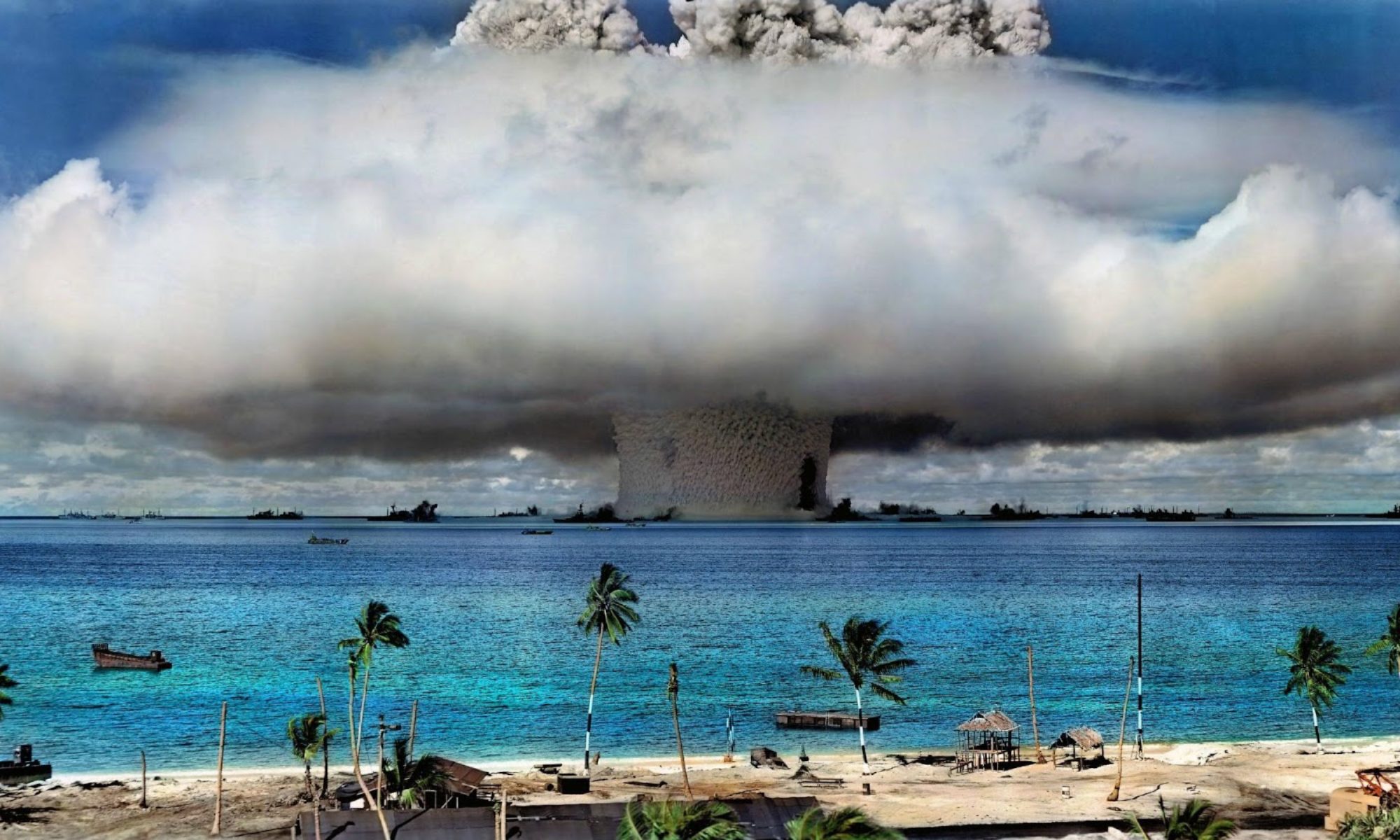
Over the last 158 years, the United States has sought to purchase Greenland from Denmark at different times, beginning in 1867, when Secretary of State William H. Seward (Johnson administration) pursued Greenland for its Arctic position and telegraph ambitions. In 1910, the United States explored acquisition again, and again in 1946, and so on to the present day. Below is a chart/table I put together of each attempted push to acquire the island.
Year(s)
U.S. Actor(s)
Context / Motive
What Happened
Outcome
Key Primary Sources
1867–1868
Sec. of State William H. Seward (Johnson admin)
Post–Civil War expansion; Arctic navigation, coal stations, telegraph routes
Informal discussions about buying Greenland + Iceland from Denmark
So, is the potential acquisition of Greenland good or bad? Politically, there is significant pushback—and rightfully so. This comes from Denmark, the European Union, and NATO, not to mention critics within the United States and, most importantly, the people of Greenland, who have the greatest say. However, the world is still ruled by realpolitik, justified by raison d’État. So, once again: is the purchase or taking of Greenland good or bad?
Politically, it is a bad move. The more relevant question is what the political fallout would be.
Why is it politically alarming?
The harm stems from system-level consequences, and it starts with NATO.
Buying territory via coercion from a fellow NATO member (Denmark) fractures alliance trust. This, in turn, sets a precedent in which alliances become conditional when power shifts. Moreover, it weakens Article 5’s credibility—psychologically, even if not legally.
This also brings us to EU and allied backlash, which reinforces the narrative that the United States treats allies as instruments rather than partners. Because of this, it could—or will—push Europe toward strategic autonomy. If so, one should expect hedging behavior, in which state “A” avoids fully committing to one power or one alliance and instead spreads its risks across multiple options.
This kind of behavior represents a form of neo-feudalization of international politics. States “A,” “B,” and so forth will no longer give exclusive loyalty to a single patron, but instead distribute their security, economic, and diplomatic dependencies across multiple great powers. Power is thus measured in self-economic control and security guarantees, which will increasingly resemble conditional contracts rather than formal alliances. These alliances will remain, but they will come to resemble contractual arrangements more than political communities bound by ideological similarity.
The Greenlandic legitimacy problem
This is a major issue, for legitimacy flows from the people, not merely from territory or treaties. In other words, sovereignty is no longer simply control of land. Control over the land people live on is now justified by the consent, identity, and political will of the population itself, and this has been the norm since 1945. One can point to the UN Charter, which promotes self-determination, decolonization, referenda, and human rights.
So, in the Greenlandic context, even if the United States and Denmark agreed legally, without Greenlandic consent, the acquisition would be viewed as illegitimate by most international institutions, most states, and the population itself. This could translate into chronic political instability, resistance politics, and permanent narrative warfare against the United States.
When I say resistance politics, I do not mean armed rebellion. More likely, it would take the form of protests and strikes, refusal to cooperate with institutions, and the emergence of sustained political movements.
Even a legal “purchase” without genuine local consent would create a permanent legitimacy deficit—that is, a lasting condition in which authority is never fully accepted by the governed population or by much of the international system. While this makes a low-level insurgency or sustained unrest unlikely, it would still serve as political cannon fodder: a propaganda gift to Russia and China.
This brings us to the global precedent.
Global precedent
The acquisition of Greenland could establish a global precedent if the United States were to go through with it. In other words, normalization. Normalizing territorial acquisition by a great power would encourage others to proceed with calculated caution. One can think of Russia’s dealings with Ukraine, Georgia, and Moldova (the Transnistria conflict), Turkey in northern Syria, or China in the South China Sea and the possible invasion of Taiwan. Not to mention the many other states with unresolved border disputes scattered across the globe.
This is where spheres-of-influence logic, to some degree, supersedes the rules-based order. In doing so, it weakens the very system that benefits the United States economically and financially.
Political fallout: What actually happens if the United States tries
From a short-term perspective, this would create a severe diplomatic crisis with Denmark. The European Union would almost certainly condemn the United States, and NATO would fracture internally under the strain. One would also expect significant domestic political backlash and public protest.
From a mid-term perspective—if there even is one—NATO becomes more transactional and less cohesive. In other words, NATO would still exist, but it would stop functioning as a political community and start operating more like a marketplace of temporary bargains. Think of it as a mercenary state for hire. Support becomes case-by-case. NATO members begin to think in terms of: What do I get in return?What does this cost me domestically?Is U.S. support conditional this time?
Obligations become negotiable and reversible rather than automatic. Alliance membership begins to resemble a protection racket—a pay-for-play arrangement, a mercenary logic applied at the level of states. NATO shifts from a community of mutual defense into a market for security guarantees. This is not a moral condemnation. It is a structural diagnosis.
Historically, systems built on that logic are stable only until the price changes. When it does, uncertainty follows.
Europe accelerates toward defense independence. China and Russia exploit the hypocrisy narrative relentlessly. Arctic militarization accelerates.
From a long-term perspective, two possible equilibria emerge.
The first is what one might call power normalization, in which the world once again accepts spheres of influence. The United States gains territory but loses moral authority, and the international system reverts to a more openly nineteenth-century character. History does not repeat, but it rhymes.
The second scenario is strategic overreach. In this case, the United States gains territory, but it pays a persistent alliance and legitimacy tax—one that quietly compounds over time. The map improves. The balance sheet deteriorates. Regardless of the territorial gain, the net power position stagnates or even weakens.
Conclusion
Surprisingly, none of this means the United States would be acting irrationally. Nor, for that matter, would any other major power. From the standpoint of realpolitik, the logic is clear. Geography does not change. The Arctic is opening. The chess pieces are positioning themselves, as if in a game of Go. The United States is acting rationally in seeking to secure Greenland regardless of EU or NATO cohesion, because in a multipolar system, strategic geography outweighs institutional loyalty. And when control is lost, it is rarely regained without cost.
As for raison d’État, it has never concerned itself with moral comfort, only with survival and advantage. Institutions will always preach unity to the masses, but states prepare for fragmentation. That is the essence of raison d’État. The problem is that what is strategically coherent can still be systemically destructive. The acquisition of Greenland may strengthen the United States on a map, but weaken the architecture that made that map stable in the first place.
Power is gained, and trust is spent. And in international politics, trust—once gone—is rarely rebuilt at the same price it was lost. That is the dilemma. Not whether the United States can pursue Greenland, but what kind of international order it is willing to inhabit if it does.
Liminal warfare, what is it? The term itself sounds strange. The combination of “liminal” and “warfare” comes off awkward, perhaps even contradictory. The term warfare implies clarity—enemies, commanders, battles, beginnings, and endings. Liminal, by contrast, refers to what exists in between. So what does liminal actually mean, and why does it matter for understanding how war is conducted today?
According to the Oxford English Dictionary, the word liminal derives from the Latin limen, meaning “threshold” or “boundary.” More broadly, it refers to something relating to a transitional or initial stage of a process. In other words, it describes a state of being in between, a passage rather than a destination, akin to a doorway or a hallway rather than a room.
From this root emerges a related but distinct concept: liminality. Liminality, like liminal, derives from the same Latin root limen (threshold). While the two terms appear similar on the surface, they are not identical. Liminal describes a position or quality of being in between, whereas liminality refers to the condition itself—an ambiguous, transformative “betwixt-and-between” state that exists during periods of transition.
Think of it this way: liminal is an adjective. It describes something that exists on a threshold—between states, categories, or conditions, such as a liminal phase or a liminal conflict. Liminality, by contrast, is a noun. It refers to the condition or state of being on that threshold—the enduring in-between-ness itself.
Liminal: simple examples
A hallway: not a room, but a space between rooms.
Dawn or dusk: not fully day or night.
An airport terminal: not home, not the destination.
The moment after you quit a job but before you start the next one.
These are all liminal spaces or moments—defined by what they are between, not by what they are themselves.
Liminality: simple examples
Waiting months for immigration papers, when life is effectively on hold.
A prolonged government shutdown.
A ceasefire that never becomes peace.
Being “engaged” for years without either marrying or separating.
Here, the issue is not the moment itself, but the enduring condition of uncertainty.
In short, liminal modifies what something is like; liminality names the state or process of being in between.
So what is Liminal Warfare? (Origin)
Liminal warfare is a strategic concept developed by Dr. David Kilcullen in response to Russia’s 2014 seizure of Crimea. Kilcullen demonstrates that Russia used modern hybrid tactics—ambiguity and the blending of conventional and unconventional methods—to operate in the “threshold” (liminal) zone, achieving political goals while bypassing traditional post-Soviet military methods and adapting to counter Western dominance.
In 2014, Russia seized Crimea using ambiguous forces—often referred to as “little green men.” Conventional military units, special forces, local proxies, and information operations were blended to create chaos and uncertainty about what was happening. This, in turn, triggered a natural response to the who, what, when, where, why, and how scenario. Political institutions and Western governments hesitated to respond decisively, allowing Russia to achieve its objectives without triggering open war. This invisible and mostly silent operation exemplifies liminal warfare: acting in the threshold between peace and war, exploiting cognitive and political ambiguities to achieve strategic aims.
Theory
At first glance, liminal warfare reminded me of the Chinese game of Go and the Russian concept of Deep Battle. That instinct felt right—but only partially, and only if those analogies are treated with care.
Liminal warfare resembles Go in its logic and Deep Battle in its mechanics, yet it cannot be reduced to either. It is better understood as a hybrid strategic grammar, borrowing from both while operating in domains neither was designed to address fully. In other words, it lives around—and within—the perceived shadows of the mind.
Some may find this phrasing more poetic than analytical. If so, it is worth recalling that war—whether kinetic or non-kinetic—has always operated within perceptual and cognitive shadows: the spaces in which conflict is recognized, interpreted, misinterpreted, and ultimately acted upon.
Sun Tzu gives us a useful entry point if we split one famous line in two:
“To win one hundred victories in one hundred battles is not the acme of skill.”
On the surface, this is a statement about kinetic success—conventional warfare measured in engagements won and forces destroyed. Victory is real, but it is still bounded by battle. Moreover, just because one wins the battle does not mean one has won the war.
“To subdue the enemy without fighting is the acme of skill.”
This is something else entirely. Here, the battlefield is no longer physical terrain but perception, cohesion, legitimacy, and decision-making. The enemy is not defeated by force, but by being rendered unable—or unwilling—to fight at all. This is liminal warfare: conflict conducted in the space before open war, where outcomes are decided without crossing the threshold that would make violence unavoidable. Furthermore, this line establishes that once the enemy’s liminality has been identified—once the fault lines in organization, authority, or perception are located—a liminal approach can proceed.
Conclusion / Forward-Looking
Liminal warfare challenges the traditional understandings of conflict. It operates in the ambiguous space between peace and war, manipulating perceptions, disrupting decision-making, and exploiting organizational vulnerabilities. While Russia’s actions in Crimea illustrate its practice in a regional context, the concept has broader implications for the 21st century. Understanding liminal warfare prepares us to recognize, anticipate, and respond to conflicts that do not follow conventional rules—and opens the door to exploring how other global powers, including China, approach this strategic space.
Trump’s National Security Strategy of the United States of America document is short-sighted in its long-term strategic architecture, but not necessarily short-sighted in the tempo of modern conflict, where political and military incentives often reward rapid repositioning. Adaptability over consistency carries significant political advantages. Yet even when adaptability is prioritized over fixed positions, one can still be consistent in one’s adaptability. In this way, adaptability itself becomes a coherent and recognizable strategic posture, providing a framework for action that is both flexible and systematically applied.
What happens after the war ends in Ukraine—and it will—is the one subject most policymakers skirt, and perhaps with good reason. Because the day after is not a celebration, it is a reckoning.
Ukraine will not return to what it was in 2021. It will awaken to something far more unsettling: a society exhausted by war, disillusioned with its leaders, and divided by conflicting visions of what the country was supposed to become, regardless of political identity. The sentiment of betrayal by politicians who overpromised, by allies who underdelivered, by a strategy sold as inevitable victory, will fester. When that happens, the external enemy evaporates, and the internal enemies become visible.
Paraphrasing James C. Davies: nations don’t break from weakness, but from the collapse of the expectations they were led to believe—often for someone else’s agenda. Ukraine risks entering a postwar environment defined not by Russian aggression, but by Ukrainian fragmentation—regional mistrust, ethnic resentments, ideological vendettas, and political scapegoating—basically a hellscape that will affect all facets of life. That is how Balkanization begins: not through secession, but through the mentality of it. The idea that one’s real enemies live closer than Moscow has already taken root. And the more I think about it, the more I realize that “close” doesn’t just mean political factions or regional divisions within Ukraine. It also means the people who fled. When millions sought refuge in places like Poland, France, Germany, and elsewhere, they escaped the war physically—but they will return to a country transformed, hardened, and angry.
Those who stayed and fought may look at those who left not as fellow citizens coming home, but as outsiders who abandoned them when everything was on the line. Resentment is a powerful force, especially in a society held together by shared suffering. And when the war ends, those refugees will walk back across the border not to open arms, but to suspicion. They will be seen as people who missed the crucible, who didn’t carry the burden, who didn’t bleed with everyone else — yet now expect to reclaim the full privileges of citizenship.
This is how social fractures deepen: not only between east and west, soldier and politician, nationalist and pragmatist — but between those who endured and those who escaped. The enemy “close by” becomes not just the internal divisions born from war, but the distrust of those returning from safety to a nation that no longer sees them as the same.
But the internal fractures are only half the story. The other half is what leaves the country entirely.
This war has produced a generation of men who know nothing but combat. Many will return home to an economy that cannot absorb them—no jobs, no prospects, and no reason to embrace a peace that feels like defeat. That is when the training they received, the weapons they carried, and the networks they formed become a different kind of currency.
When the war ends, Ukraine—and Russia—will not simply demobilize soldiers. They will release them into a global marketplace where violence is both a commodity and a career. What emerges next is a conflict market for mercenaries: a worldwide, often illicit, and highly lucrative trade in private military services, where hardened fighters are hired for combat, security, training, or political enforcement.
Peace creates unemployment. The world provides opportunities. This market thrives on instability, and it will eagerly absorb thousands of men who have spent years learning the trade of war. For these veterans—Ukrainian, Russian, Chechen, and foreign volunteers (Colombian)—their experience becomes a portable skill set. Whether for money, purpose, or simply because peace offers them nothing, many will migrate into this shadow economy of conflict zones stretching from the Sahel to the Caucasus to the Middle East. Here, violence is no longer tied to national defense. It becomes transactional.
Ukraine will face a double blow: a country struggling with its identity at home while fueling instability abroad. The front lines may stop moving in Ukraine, but the war will continue—in the identities people cling to, and in the fighters who take their craft elsewhere. The tragedy is not merely that the war could have been avoided. It’s that its consequences will outlive the signatures on any peace agreement.
In this undated political cartoon about U.S. expansionism in the Pacific, Uncle Sam straddles the Americas while wielding a big stick inscribed with the words “Monroe Doctrine 1824-1905.” The stick is a metaphor for military force. The caption reads “Expansion! The western patrol’s long stretch.” Getty Images.
Introduction: The Return of an Old Doctrine
Two centuries after President James Monroe warned European powers against interference in the Western Hemisphere, the United States finds itself resurrecting the spirit—if not the letter—of that doctrine. Today, the adversaries are no longer colonial monarchies but twenty-first-century powers: China and Russia.
The battleground is not Cuba or Nicaragua, like in the 1960s or 1980s, but Colombia and Venezuela, where the United States now invokes the familiar rhetoric of the “war on drugs” while pursuing a broader, unspoken aim—to curtail Eurasian influence and maintain strategic dominance in its own hemisphere.
What is unfolding in Colombia and Venezuela is a hemispheric echo of the Thucydides Trap—where the United States, long the unchallenged hegemon of the Americas, now confronts the creeping advance of rising Eurasian powers. The “drug war” is real, but it is also a symptom of strategic anxiety: the fear of displacement in its own backyard. At the heart of that anxiety stand Colombia and Venezuela—the lynchpins of the hemisphere’s balance:
Colombia, the two-ocean gateway
Venezuela, the energy titan with the world’s largest oil reserves
Together, they form the pressure point where old doctrines collide with new realities.
Colombia: The Fulcrum of Two Oceans
Few nations are as strategically crucial to the Americas as Colombia. It’s the only South American nation with access to both the Caribbean Sea and the Pacific Ocean. That dual maritime identity is almost unmatched.
Militarily, this makes Colombia a hemispheric hinge—a base from which U.S. forces can project power into both oceanic theaters, monitor transnational trafficking routes, and maintain logistical access to the Panama Canal and the Andean corridor.
For Washington, losing influence in Colombia would not simply mean losing an ally; it would mean sacrificing a key strategic partner and ceding maritime control over the entire northern arc of South America. This space doesn’t just connect Atlantic trade routes to Pacific supply chains—it links the Caribbean directly to the Indo-Pacific strategic arena.
But the very geography that makes Colombia indispensable to Washington also makes it irresistible to its rivals. In recent years, Bogotá has charted a more independent course—restoring ties with Venezuela, distancing itself from U.S. policy, and opening economic channels with China. Under President Petro, Bogotá has reoriented its foreign relations around regional autonomy rather than dependency, marking the end of automatic alignment with Washington—for now. This shift has unsettled the United States. For decades, Colombia was the cornerstone of U.S. influence in Latin America—a reliable base for counternarcotics, surveillance, and regional diplomacy. Yet the landscape is shifting. China is now Colombia’s second-largest trading partner, investing capital in infrastructure, as seen in Venezuela, while Russia’s influence extends through its deepening alliance with Caracas. Together, these powers are quietly eroding U.S. dominance in the one region Washington once considered untouchable. Now, it is a matter of strategic competition.
The “Drug War” and the Strategic Mask
Officially, U.S. operations in Colombia and neighboring Venezuela are framed in the language of counternarcotics—targeting drug cartels, trafficking networks, and the corruption they sustain. But beneath that language lies a more complex reality.
The narrative surrounding the “drug war” gives Washington legitimacy to carry out covert operations in the region. This policy masks its true intentions, enabling the U.S. to deploy resources, strengthen regional alliances, and ultimately justify interventions that align with its broader geopolitical objectives.
In practice, it operates as a strategic mask for the containment of Chinese and Russian economic and military penetration. This is not to say the drug problem is imaginary. This is not to say that drug trafficking, cartel violence, and state collusion remain serious challenges, because it does, to varying degrees. Yet the U.S. emphasis on these threats conveniently aligns with its larger geostrategic anxieties—namely, the encroachment of rival powers in its historic sphere of influence.
Russia’s Footprint: Military Presence and Political Shielding
Russia has entrenched itself as Venezuela’s principal military patron. Since the early 2000s, Moscow has sold billions of dollars’ worth of arms to Caracas, including Sukhoi fighter jets, Mi-series helicopters, S-300 surface-to-air systems, and T-72 tanks, among other items. Russian advisers and technicians maintain and train Venezuelan forces, while joint naval and air exercises routinely project power into the Caribbean.
Beyond the military sphere, the Russian state has embedded itself in Venezuela’s oil industry through government-to-government financing, naphtha supplies, technical assistance, and bilateral energy agreements—both to gain leverage and to help Caracas circumvent U.S. sanctions. The relationship functions as mutually assured protection between two sanctioned states.
Moscow’s objective is not merely commercial. It is symbolic and strategic: to plant a flag in America’s backyard and show that Russia can still challenge U.S. power far from Eurasia.
China’s Economic Entrenchment
While Russia supplies arms and advisers, China supplies money and infrastructure. Over the past two decades, Beijing has extended more than $60 billion in loans to Venezuela, making it China’s largest debtor in the Western Hemisphere. Chinese firms have invested heavily in mining, telecommunications, and oil projects, while digital giants such as Huawei have established surveillance and communications networks across Venezuela.
In Colombia, China’s footprint is subtler but growing—focused on infrastructure, technology, and trade diversification. As Bogotá seeks alternatives to U.S. capital and military aid, Beijing offers credit lines and construction deals that quietly bind local economies to Chinese supply chains.
For Washington, this is the real threat: a slow economic colonization of the hemisphere under the guise of development and partnership.
Venezuela: The World’s Largest, and Dirtiest, Oil Prize
At the heart of this regional struggle lies oil—an immense and paradoxical resource. Venezuela holds the world’s largest proven reserves, surpassing even Saudi Arabia’s. Yet most of it is extra-heavy, sulfur-rich crude—the infamous “dirty oil”—which is costly to extract, energy-intensive to refine, and environmentally ruinous to process.
This reality breeds a dual dynamic: vast potential wealth locked behind near-total dependence on foreign technology and capital. For China and Russia, Venezuelan oil is strategic leverage—a wedge into Western markets and a grip on a resource that still powers the global economy. For the United States, it is both a prize and a problem: a colossal reserve that cannot be ignored, even as sanctions and politics block the path.
Monroe Doctrine 2.0
What is unfolding in Colombia and Venezuela today carries the unmistakable imprint of a modern Monroe Doctrine—repackaged for an era of multipolar rivalry.
Era
Rival Powers
U.S. Justification
Underlying Motive
19th Century
European Empires
Protect hemispheric sovereignty
Secure U.S. primacy in the Americas
Cold War
Soviet Union & Cuba
Contain communism
Prevent ideological and military encroachment
21st Century
China & Russia
Combat narcotics and corruption
Counter Eurasian influence and protect access to resources
In one sense, the language has evolved—from sovereignty to security, from colonialism to cartels—but the core principle endures: no external great power shall dominate the Western Hemisphere.
Conclusion: The Shadow Doctrine
Whether framed as counternarcotics, democracy promotion, or regional stability, U.S. actions in Colombia and Venezuela reveal a deeper continuity of purpose. The Monroe Doctrine never vanished—it evolved.
Colombia’s two-ocean gateway, Venezuela’s vast “dirty oil,” and the rising presence of China and Russia have fused to make northern South America the new proving ground for America’s hemispheric resolve. The “drug war” is real—but it also serves as cover for something older, larger, and far more strategic: a shadow war for influence, waged under the banner of security, in a region where geography and resources once again dictate the balance of power.
Neo–Deep Battle Fires: Russia’s Drone and Missile Campaign Across Ukraine (Oct 2025)
Earlier this week, a map shared on X by Big Serge visualized Russia’s ongoing drone and missile campaign across Ukraine in October 2025. Such maps have become predictable, yet the growing tempo and scope of these strikes highlight a doctrinal evolution — the application of deep battle logic through modern precision fires. Call it Neo–Deep Battle Fires.
Each colored line or arrow usually represents a specific category of munition: Red / Orange lines: cruise missiles (e.g., Kalibr, Kh-101, Iskander-K) Yellow / Green lines: Shahed/Geran-2 loitering drones Blue or Purple lines: air-launched missiles (e.g., Kh-22, Kh-59) These converge on Ukrainian cities and regions, including Kyiv, Kharkiv, Odesa, Dnipro, Zaporizhzhia, and Lviv.
What is Deep Battle?
If you’re unfamiliar with the term, see my longer piece Soviet Deep Operations Doctrine: Origins and Key Theorists. Briefly: Soviet Deep Battle was developed in the 1920s–1930s to break the stalemate of positional warfare. It used combined-arms echelons to concentrate mobility and shock at decisive points, allocating minimum forces to secure flanks while the main mobile force punched deeply into the enemy’s operational depth. The goal was to destroy the enemy’s command, logistics, and reserves — collapsing the entire defensive system rather than grinding down a frontline by attrition.
A central component of classical Deep Battle was massive artillery and airpower: preparatory barrages to blind and suppress defenders, followed by waves of mechanized exploitation.
Artillery’s historical role
Artillery — the “god of war” — enabled Deep Battle by suppressing defenses, destroying command nodes, and disrupting logistics far behind the frontline. In the interwar years and during World War II, synchronized indirect fires, air strikes, and maneuver created windows of opportunity for breakthroughs and deep exploitation.
Note: “Deep Battle Fires” is not an official Soviet or Russian doctrinal label. It’s an analytical term used to describe the practice of applying fires deep into an opponent’s system.
Russian artillery and fires today
Russia’s contemporary fires emphasize precision and efficiency. Drones provide spotting, terminal guidance, and battle-damage assessment, while modern artillery employs precision-guided munitions (PGMs) for greater accuracy and efficiency. Smart shells have made targeting far more precise.
Increased Vulnerability: Dense troop concentrations are now highly vulnerable to detection and strike, forcing units to disperse and dig in. What artillery cannot destroy, first-person-view (radio-controlled) drones can—serving as smart shells, while others act as miniature cruise missiles.
Centralized vs. Decentralized: While long-range strikes remain centrally coordinated, drone integration has enabled greater decentralization at the tactical level, creating a hybrid fire-control model. Where WWII-era doctrine relied on massed, saturating barrages, modern practice prefers fewer, more accurate strikes supported by sensor networks.
Key changes include:
Shift to accuracy: Fewer rounds, higher probability of effect per shot.
Drone integration: Unmanned systems enable targeting, correction, and assessment in near real-time.
Precision munitions: Guided artillery and smart projectiles increase lethality per round.
Dispersal & vulnerability: Dense concentrations are easier to detect and strike, driving forces to disperse.
Mix of centralization/decentralization: Tactical decentralization for survivability, operational centralization for coordinated long-range fires.
Comparative summary
WWII Deep Battle (classical)
Mass & quantity: massed artillery barrages.
Preparatory barrage: large pre-attack fires to suppress and blind.
High rate of fire: intense short windows of saturation.
Decisive blunt effect: artillery as a sledgehammer enabling mechanized exploitation.
Modern Russian Fires (Neo–Deep Battle Fires)
Shift to accuracy: “less is more” — maximize effect per round.
Integrated with drones: sensor-to-shooter links improve efficiency.
Precision-guided munitions: smart shells and guided munitions.
Improved counterbattery: rapid detection and interdiction of enemy guns.
Increased vulnerability: dense formations are high-value, high-risk targets.
Operational effect and implications
Russia’s massed drone and missile strikes project effects across Ukraine’s depth, mirroring Deep Battle’s objective: degrade logistics, morale, and sustainment beyond the front. Drones act as low-cost precision bombers and guided weapons, saturating air defenses and forcing Ukraine to disperse forces across a far wider area.
Operational outcomes include:
Attrition by depth: continuous pressure on logistics, power, and transport erodes operational tempo.
Spread of defenses: units and air defenses are stretched thin, reducing local combat superiority.
Strategic paralysis: a reactive defender loses initiative and offensive options.
Systems vulnerability: concentrated logistics and energy nodes are high-payoff targets; predictable transport corridors enable persistent interdiction.
Unlike in World War II — when Deep Battle focused on the front line and the operational depth immediately behind it — modern Russian operations have expanded the concept to encompass an entire national battlespace. Russia is gradually extending vertical envelopment across the full breadth of Ukraine, employing drones, loitering munitions, and missile strikes to make every layer of Ukrainian territory, from trench to power grid, unsafe.
Neo–Deep Battle Fires preserves the classical Deep Battle objective — collapsing an opponent’s defensive system across depth — but replaces massed, saturating barrages with networked presision using automation and AI: drones, precision‑guided munitions, and sensor‑to‑shooter links, together with strike assessment in near‑real time, create a semi‑autonomous cycle of reconnaissance, targeting, and destruction that achieves the same operational effect through surgical, distributed fires rather than brute volume.
The result is an evolved form of Deep Battle: not confined to linear fronts or shallow depths, but multidimensional—horizontal, vertical, and informational. The tools have changed—from barrages to algorithms, from mass to precision—but the logic endures: to paralyze the enemy’s defensive system across the total battlespace.
This isn’t Deep Battle. It’s Patton’s “haul ass and bypass” approach, utilizing drones, artillery, armor, and assaults all with tactical patience. Russia’s 2025 summer offensive in Ukraine is not a sweeping, armored thrust meant to collapse the entire front in a matter of days. It is something quieter but no less dangerous. Frankly, it is a methodical campaign built around probing, bypassing, and isolating. In this model, the Russians aren’t trying to destroy Ukrainian forces in a grand clash. They’re trying to surround them, sometimes physically and often virtually, and then destroy them with firepower. This is a war of maneuver, but it is also a war of attrition by design. As I was told, it’s a paint-by-number war.
Before proceeding, it’s best to briefly explain what a paint-by-number war is. Some call this a “Triple Chokehold” tactic, which comes down in three phases. I first encountered this topic in May. The title is “Russia’s new three-step assault tactic yields gradual gains.“
Initial Ground Assault: Russian infantry initiates an attack to force Ukrainian units into fixed defensive positions, limiting their mobility.
Drone Surveillance: Unmanned Aerial Vehicles (UAVs) monitor Ukrainian troop movements, identifying weak points in their defenses. This continuous surveillance compels Ukrainian forces to remain static, often leading them to dig multiple trenches to mislead the enemy.
Airstrike Phase: Russian aircraft deploy glide bombs to target the identified positions, aiming to destroy fortifications and inflict heavy casualties.
Find – Tactical Reconnaissance and Probing
The first step in this approach is identifying soft points. Russian forces use a mix of ISR assets, drones, electronic warfare, SIGINT, and good old-fashioned reconnaissance-in-force to locate where Ukraine’s lines are overstretched or thinly held. These aren’t always places with trenches or fortifications. In fact, they often aren’t. The Russians aren’t looking for a fight. They’re looking for the void. The countryside becomes the enemy’s true weakness, not because of what’s there, but because of what isn’t.
This form of “finding” mirrors the first phase of traditional kill chains, but with a twist: it’s area-based, not just target-based. Russia does not look for targets to kill, but rather terrain to bypass and manipulate.
Fix – Pressure to Pin and Distract
Once potential axes of advance are identified, Russian forces apply pressure. This pressure is not designed to break through; it is meant to fix Ukrainian forces in place. Constant shelling, probing attacks, and drone harassment force Ukrainian commanders to commit reserves and dig in. In doing so, Russia accomplishes two things: it prevents Ukrainian units from maneuvering elsewhere, and it convinces them that this is where the fight will be. Meanwhile, the actual point of decision is forming somewhere else. In other words, watch this hand, not this hand, or watch both hands, or neither hand.
This is not frontal assault warfare; it is misdirection with kinetic tools.
Maneuver – The Operational Bypass
Now the real move begins. Instead of trying to take the fixed position head-on, Russian units bypass them, literally driving around resistance and securing the terrain behind it. These flanking maneuvers don’t need to be deep. In fact, they are often shallow by historical standards, extending only a few kilometers or miles into the rear. But they are enough to isolate and force the defenders into a dilemma. That dilemma is to stay and risk being cut off, or retreat under fire.
This method of warfare resembles Bewegungskrieg (war of maneuver) with a modern twist. There is no need to mass forces for a deep penetration when firepower and surveillance can do the work of encirclement. This is Patton’s doctrine in spirit, which is to “haul ass and bypass.” However, where Patton relied on airpower and speed to blitz through enemy lines, modern Russia has all that and more. Drones give them persistent surveillance. Artillery offers immediate punishment. Electronic warfare denies Ukrainian coordination. But their greatest asset may be less visible: patience. Patience is their speed.
Russia is not rushing breakthroughs. They advance deliberately, probing, pressing, and repositioning until the moment is right. This patience allows them to bypass strongpoints without the urgency of a race, because every bypassed position becomes a future problem for Ukraine, not a current one for Russia. Speed, in this war, is not measured in kilometers or miles per hour, but in how long it takes the trap to close, with or without bait.
Kill Zones Without Troops
What makes this strategy lethal isn’t the movement alone. It’s the environment that follows. Once Ukrainian units are isolated either tactically or geographically, the Russians don’t have to storm their positions. They just watch. Drones track every movement. Artillery waits for vehicles or clusters of troops. Even when Russian ground forces are not present in strength, they maintain fire control over the area.
Trying to move is death. Standing still is surrender, starvation, or death. This is not an encirclement in the classic sense; it is an algorithmic siege. It is a battlefield that punishes initiative and rewards stasis only long enough for the trap to close. This is a 360-degree kill zone maintained by sensors and standoff firepower.
Conclusion
Russia is not currently executing a form of modern Deep Operations. There is a reason for that, and that is politically based, I think. They do not need to. Instead, they are conducting a highly pragmatic, lethally modern form of maneuver warfare: find the void, fix the defenders, and maneuver around them until they are isolated and vulnerable. It is not fast, but it is effective. It is not elegant, but it is repeatable. This is a paint-by-number blitzkrieg blueprint, siege by satellite. And it is working.
Ukraine now faces a battlefield where movement means death, fixed defenses become liabilities, and initiative is punished by a hovering all-seeing eye. The Russians have found a way to wage war without needing to engage in a direct confrontation. They don’t crush. They surround. They don’t break through. They bypass. And in doing so, they turn the very terrain into a weapon of war.
Putin’s approach to the Russo-Ukrainian War reflects both World War II and the Korean War—one shaped by industrial might, the other by political endurance. These strategies have proven effective in the past and remain just as formidable today.
The Military Aspect of the Russo-Ukrainian War in a Nutshell
The Russo-Ukrainian War is a 21st-century high-tech hybrid of second through fifth-generation warfare (2-5GW). Third-generation warfare (3GW) was the center of both forces in 2022-23, emphasizing rapid maneuvering in hopes of penetrating deep behind enemy lines and collapsing the enemy’s center of gravity. Russia’s initial invasion (2022) sought an AirLand Battle Blitzkrieg-style advance that failed to obtain air superiority, which led to its demise and pushback of its ground forces. The same could be said of Ukrainian forces in the following years.
The failure to establish maneuver ultimately led toan attritional, technology-driven conflict (2GW and elements of 4-5GW). For example, Russia’s shift toward entrenched defensive strategies, mass artillery fire, and drone warfare (2GW + 4GW), while Ukraine’s adaptation with precision strikes, asymmetric attacks using drones, and heavy reliance on Western intelligence (4GW + 5GW). However, the pendulum would swing the other way.
For 2024-2025, the war has shifted even further away from third-generation warfare (3GW) and is now dominated by second-generation (2GW) attrition and fourth-/fifth-generation (4GW/5GW) technological integration. Russia is winning due to several key factors.
The first of these many factors starts with the decline of 3GW and the rise of attrition (2GW). Russia’s fortified defensive lines made maneuver warfare almost impossible for Ukraine. Russia’s sheer firepower through massed artillery gave it an advantage due to outproducing the West in shell production and giving it an upper hand in grinding battles—along with the dwindling Ukrainian manpower, ammunition shortages, recruitment, and Western support.
However, shortly before the Ukrainian forces began to suffer the lack thereof, the Russian military began to integrate and amalgamate (4GW/5GW), giving their forces an edge. Drone warfare dominance has allowed the Russians to master loitering munitions, first-person view (FPV) drones, and swarm tactics, overwhelming Ukrainian positions. Not to forget electronic warfare (EW), which the Russian EW systems can now effectively jam Ukrainian communications, drones, and guided munitions and vice versa at times. AI and ISR (intelligence, surveillance, reconnaissance) have improved the Russian forces’ real-time battlefield awareness through satellites, drones, and AI-assisted targeting. At this stage of the conflict, Russia is not winning through maneuver (3GW) but by a relentless combination of industrial capacity and attritional strategy (2GW), advanced technology (4GW/5GW), and Ukraine’s weakening strategic position. While a basic overview of the military aspect has been outlined, how does it connect with the political dimension, and in what ways do they correlate?
The Political and Industrial Aspect of the Russo-Ukrainian War in a Nutshell
Like Stalin in Korea, Putin seems content with a prolonged war, seeing it as a way to:
Observe, Study, Train, and Improve his forces for the current war and potential future conflicts.
Strain Western support for Ukraine by dragging the war out, banking on political fatigue.
Erode the military and economic strength of NATO-backed Ukraine, just as Stalin hoped to weaken the US-led coalition in Korea using China and North Korea.
At the same time, Putin has applied the WWII-era industrial attrition model, mirroring how the Soviets countered German Bewegungskrieg (war of movement) by leveraging sheer production capacity and the advantage of time and space. The vast Ukrainian front allowed Russia to absorb enemy attacks, stretch Ukrainian supply lines, and gradually wear down its forces—just as the Soviets did against the Germans. As Ukraine’s army and NATO supplies diminish, the vastness of its territory becomes an increasing liability. With fewer troops to defend an expansive front, strategic overstretch sets in, making it harder to hold ground, reinforce weak points, and sustain prolonged resistance—playing directly into Russia’s war of attrition:
Russia’s mass industrial mobilization ensures its army is never starved of munitions.
Defensive depth + counteroffensive waves: Like in WWII, Russian forces absorbed early Ukrainian counterattacks (2023), only to grind them down through attritional battles and layered defenses (2024-present), similar to how the Soviets wore down the Germans.
Manpower attrition: Ukraine, with a smaller population and struggling recruitment, shows signs of exhaustion, much like Germany’s overstretched forces in WWII.
Ukraine’s dilemma is a lack of industrial capacity, much like NATO, which gives aid to Ukraine but also lacks a coherent military industry to fund, fuel, equip, train, and support the Ukrainian army, let alone its coalition, if decided to join directly. It also does not help to have low morale among the troops and the populace, even those nations’ administrations who support the effort; the nation’s population finds it fleeting. Because of this, the ability to conduct organized, combined arms maneuver warfare ceases to exist, leaving the Ukrainian forces to the brutality of attritional warfare.
Conclusion
This comparison suggests Putin’s long-term strategy is not about breakthrough victories but about wearing Ukraine and NATO down through political and industrial attrition. The defensive pressure placed on the Ukrainian forces and NATO backers will eventually collapse into itself as the center never holds. In this case, Ukraine and NATO are the center of gravity as both creatures exist in a politically symbiotic union; if the Ukrainian forces collapse, NATO folds. If NATO is unable to fund and equip the Ukrainian forces, Ukraine folds. In the end, both fold.
This work is not intended to be an exhaustive overview of Soviet Deep Operations but rather a culmination of three years of interest and study in the subject—an area I intend to continue investigating with the hope of writing a full-length book. I am grateful to Dr. Curtis S. King, Associate Professor at the Combat Studies Institute, Fort Leavenworth, KS. Although we have never met, his insightful series “Mikhail Tukhachevsky, Soviet Theory, and Operational Warfare” on YouTube was the catalyst that sparked my deep dive into this field. His lecture provided a foundation from which I began exploring the writings of various Soviet military theorists and the invaluable contributions of Colonel David M. Glantz, particularly his book “Soviet Military Operational Art: In Pursuit of Deep Battle.” I highly recommend Dr. King’s lectures to anyone interested in the intricate world of Soviet military thought. This journey has been guided by the knowledge shared by these scholars, whose works have been instrumental in shaping my understanding of this complex and fascinating doctrine.
Introduction: A brief overview of the Deep Operations doctrine
The genesis of the Deep Operations doctrine can be traced to the Soviet Union’s interwar period during the 1920s and 1930s. This unique doctrine’s objective is to achieve a decisive victory by neutralizing the enemy’s logistical capabilities, causing the defensive front to collapse under its weight.
Importance of Understanding its Origins and Principles
Understanding Deep Operations, its origins, and principles is crucial because it represents a foundational shift in military thinking developed by Soviet theorists in response to the stalemate of World War I. The doctrine emphasizes deep, coordinated attacks across multiple levels to disrupt and dismantle enemy forces, and it played a crucial role in Soviet successes during World War II. Its principles continued to influence modern military strategies, particularly in America, with the AirLand Battle doctrine developed in 1982 and continued to be in play until the late 90s, which itself was replaced with full-spectrum dominance only to evolve into multi-domain operation gradually by 2018. Even today, the Russian military still incorporates many aspects of the Soviet-era doctrine due to its fluidity and adaptability to the chaotic character of war. The study of Deep Operations provides valuable lessons on the interplay between military doctrine, geography, and broader geopolitical objectives.
Historical Context: The Need for a New Military Doctrine
The development of deep operations, also known as the Soviet deep battle doctrine, was profoundly influenced by the contrasting nature of warfare on the Western and Eastern Fronts during World War I. The Western Front’s static, trench-based warfare with little movement and the Eastern Front’s more fluid and dynamic nature, which proved to be a significant challenge, left a lasting impact. Franz Conrad von Hötzendorf (1852–1925) famously remarked, “In the west, the armies were too big for the land; in the east, the land was too big for the armies,” highlighting the fundamental differences in the strategic environments of the two fronts.
A Brief Observation on the Western Front
Soviet military theorists were highly critical of the static nature of trench warfare on the Western Front, seeing the prolonged stalemate and high casualty rates as evidence of strategic and tactical failures. They recognized the limitations of the Western Front’s geography, where the dense network of trenches, fortifications, and obstacles severely restricted large-scale maneuver operations. This concentration of forces in a narrow zone led to logistical challenges and limited opportunities for decisive movements.
Technological innovations, such as artillery bombardments, dominated the Western Front, yet these often failed to achieve strategic breakthroughs. While advancements like tanks and aircraft emerged, their initial deployment was limited and did not immediately transform the nature of warfare. Commanders, many of whom were veterans of previous wars like the Boer War and the Russo-Japanese War, struggled to adapt to the new realities of modern warfare. Their experience in leadership, logistics, and traditional tactics proved inadequate for the complex demands of World War I, where the effective execution of combined arms theory was still evolving.
Key Observations on Russian Failures on the Eastern Front
Brusilov offensive 1916
Soviet military thinkers in the 1920s identified the vast size of the Eastern Front as both a strategic asset and a significant challenge. The expansive geography of Russia and Eastern Europe created operational and logistical difficulties that deeply influenced Soviet military thought. The immense distances made maintaining supply lines daunting, with armies operating far from their bases and facing delays in receiving essential supplies, equipment, and reinforcements. The underdeveloped infrastructure, particularly in remote areas, exacerbated these challenges, with poor roads, limited rail networks, and harsh weather conditions frequently disrupting the flow of resources.
Command and control also posed significant challenges on the Eastern Front. The sheer size of the theater necessitated decentralized command structures, leading to coordination difficulties and slower decision-making. Communication across vast distances was often unreliable, resulting in delays in transmitting orders and intelligence. While necessary due to the front’s scale, this decentralized command structure often led to a lack of cohesion and operational fragmentation. Commanders frequently focused on their immediate areas of responsibility, sometimes prioritizing local objectives over the broader strategic picture. This fragmentation hindered the effectiveness of operations and contributed to the Russian Army’s overall strategic failures in the war.
The decentralized command further complicated the maintenance of supply lines. Competing priorities among semi-independent units led to logistical bottlenecks and shortages. The movement and allocation of reinforcements were often poorly coordinated, leaving critical areas unsupported due to the lack of centralized control and planning.
This fractured command structure was a key reason for the Russian Army’s defeat. The Imperial Russian Army’s inability to execute large-scale, coordinated operations effectively stemmed from its fragmented leadership, nepotism, and overall corruption. Even well-conceived strategic decisions often failed due to poor communication and inadequate coordination across the military’s various components.
Soviet military thinkers later lambasted the Russian Imperial Army for its failure to adapt to the demands of modern warfare. They pointed out that the Army’s leadership had not developed a contemporary military doctrine to meet the evolving battlefield challenges. Instead, outdated tactics, such as mass infantry assaults, persisted, leading to severe casualties and operational failures. The inability to modernize and innovate within its military doctrine was a critical flaw that ultimately contributed to the Army’s decline.
Conclusion
In summary, Soviet military thinkers in the 1920s attributed the defeat of the Imperial Russian Army in World War I to a combination of ineffective command structures, logistical failures, and an inability to adapt to the demands of modern warfare. These factors combined created a situation of strategic exhaustion, a state of depletion that led to the Army’s eventual collapse and the revolutionary discontent that followed. This analysis laid the groundwork for developing the Deep Operations doctrine, which sought to address the shortcomings of earlier military strategies and adapt to the realities of 20th-century warfare.
After World War I, Soviet military thinkers in the 1920s—like Mikhail Tukhachevsky, Alexander Svechin, and Vladimir Triandafillov—took a hard look at the differences between the Eastern Front of World War I and the Polish-Soviet War of 1920. These two conflicts were worlds apart regarding scale, movement, and strategic challenges. For these military minds, understanding these differences was key to shaping the future of warfare.
Although the Red Army did not officially use what we now know as Deep Operations or Deep Battle during the Polish-Soviet War, the conflict was a crucial testing ground for these ideas. The strategies employed by the Red Army during the war hinted at the early stages of deep operations, showing promising glimpses of their potential—even if they were not fully formed or executed by later standards. In many ways, this war was a proving ground, helping to lay the groundwork for the doctrines that would eventually define Soviet military strategy.
The Eastern Front in World War I was massive and complex, with millions of troops battling across vast territories. Unlike the static trench warfare of the Western Front, the Eastern Front was highly fluid, marked by rapid advances and retreats that demanded enormous logistical and operational coordination over great distances. In contrast, the Polish-Soviet War of 1920 was much smaller. It was a fast-paced series of campaigns involving fewer troops and resources, more about swift maneuvers than a prolonged struggle. Although intense, it lacked the grand scale and industrial might of World War I.
Soviet military thinkers recognized that the lessons from the Polish-Soviet War could not be directly applied to a conflict on the scale of World War I. The smaller size of the war allowed for more flexibility but also exposed glaring weaknesses in Soviet operational planning and execution—flaws that could have been catastrophic in a larger conflict.
In the early stages of the war, the Red Army attempted a bold maneuver, aiming to penetrate Polish territory with a rapid advance toward Warsaw. The plan was to bypass fortified positions and strike directly at Poland’s heart, hoping to force a quick surrender. This approach reflected early ideas that would evolve into the deep battle concept—skipping strong points to disrupt the enemy’s rear and command. However, poor coordination, lack of reserves, and stretched supply lines meant the Red Army could not maintain its momentum, revealing significant flaws in executing complex operations.
The war underscored the critical importance of logistics, driving home that logistical planning couldn’t be an afterthought but had to be integrated into every operational planning level, especially in long-distance, sustained offensives. It also highlighted the need for better coordination and communication among combat units, which later became crucial aspects of the deep operations doctrine.
Ultimately, the Polish-Soviet War was a condensed version of the operational and strategic challenges faced on the Eastern Front during World War I. It served as a wake-up call for Soviet military thinkers, pushing them to refine their understanding of warfare. They saw the need for a new approach to integrate various military actions into a coherent whole, combining strategy and tactics through effective command, control, and logistics. This would eventually lead to developing the deep operations doctrine, focusing on synchronized, multi-layered attacks designed to keep constant pressure on the enemy.
In short, the Polish-Soviet War was a stark reminder of past challenges and a critical learning experience. It drove home the need for a more sophisticated approach to warfare, setting the stage for the deep operations doctrine that would redefine Soviet military strategy in the decades to come.
Soviet Military Theorist: Key Thinkers
Vladimir Triandafillov (1894–1931)
Vladimir Triandafillov (1894–1931) coined the term “deep operation” and played a pivotal role in formulating the concepts that defined this military strategy in his book The Nature of the Operations of Modern Armies (1929). As a key theorist and planner in the Red Army, Triandafillov expanded on the ideas of deep operations. He introduced the concept of glubokiy boy (deep battle or fight), emphasizing the need for multi-echeloned attacks to sustain offensive momentum and penetrate great depths with massed armies to overwhelm and outmaneuver the enemy to obtain victory. However, Triandafillov was a realist. While he was offensive-minded, the Soviet Union’s economy was not ready for the high casualties that future wars would produce due to not being advanced enough for mechanization.
Alexander Svechin (1878–1938)
Alexander Svechin (1878–1938) was a prominent military theorist and historian who played a crucial role in shaping Soviet strategic thought by emphasizing that military strategy should be considered an art rather than a science, as argued in his book Strategy, whichremains a crucial text in understanding the evolution of Soviet military doctrine. He argued that no universal strategy fits all situations; instead, the strategy must be adaptive and based on a deep understanding of the specific political, economic, and social contexts. Svechin also introduced the idea of operational art as the bridge between tactics and strategy. He emphasized the need for flexible and coherent operational planning that could adapt to changing circumstances on the battlefield. Svechin, like Triandafillov, argued that for deep operations to work, they had to prepare for a protracted conflict and stressed that the Soviet Union must be ready for total war, which would require the mobilization of all national resources.
Mikhail Frunze (1885–1925)
Mikhail Frunze (1885–1925) was a Bolshevik revolutionary who became one of the foremost military leaders in the early Soviet Union and significantly shaped its military doctrine. Regarding theory, Frunze advocated for creating a unique unified military doctrine, separate from the Czarist one, that would align with the political goals of the Soviet state. However, he would concede that his idea of a unique proletarian military was flawed since one would have to return to yesteryear’s military traditions and methods to be effective. He believed that military strategy should not be purely technical but should also serve the ideological aims of the Communist Party. Frunze advocated for the professionalizing and modernizing of the Red Army. He argued for the importance of a standing army, a professional officer corps, and the use of modern technology in warfare. He viewed warfare as an extension of class struggle. He believed that the Soviet military must be prepared to wage revolutionary wars against capitalist states and that this ideological perspective should inform all aspects of military strategy and organization.
Mikhail Tukhachevsky (1893–1937)
Mikhail Tukhachevsky (1893–1937) was a prominent Soviet military leader and theorist and is often regarded as the father of the deep operations theory. Tukhachevsky advocated for mobile warfare with large-scale, coordinated operations that would penetrate deep into enemy lines. He believed that massed artillery, mechanized forces, and aviation should work together to achieve deep penetrations that would bypass enemy strongpoints and collapse their defenses from within. His ideas laid the foundation for developing Soviet operational art, emphasizing enemy force’s destruction through depth rather than mere attrition, unlike Svechin, who advocated for a protracted war.
Georgii Isserson (1898–1976)
Georgii Isserson (1898–1976) was another leading Soviet military theorist who contributed to developing deep operations doctrine. While Tukhachevsky is regarded as the father of deep operations, Isserson expanded the idea of deep operations (glubokaya operation), which involved simultaneous strikes at multiple depths within the enemy’s operational depth. He argued that modern warfare required a shift from linear tactics to operations that could achieve strategic effects by dislocating the enemy’s command and control structures and logistical networks. Isserson’s works, particularly “The Evolution of Operational Art” and “Fundamentals of the Deep Operation,” became foundational texts in Soviet military education. His ideas were critical in shaping the Red Army’s approach during World War II.
Birth of the Operational Art
The development of operational art in the Soviet military doctrine was, in part, intended to alleviate the pressure on Soviet forces by improving how military operations were planned and executed at a scale larger than tactics but smaller than grand strategy. Operational art aimed to bridge the gap between strategy and tactics, allowing for more effective management of large-scale, complex operations across vast distances, which was crucial given the Soviet Union’s unique geographical and logistical challenges.
The solution began by embracing and working with the vast Soviet landscape, a valuable strategic asset, and a double-edged sword. Leon Trotsky did not have a hand in developing deep operations but served as the Commissar of War and effective leader of the Red Army. However, in his 1919 article “Proletariat, to Horse!” Trotsky emphasizes the need to bring mobility back to the battlefield, reflecting lessons learned from the aftermath of World War I and the ongoing Russian Civil War at the time, where static, positional warfare often led to stalemates. Trotsky argues that increased mobility, particularly the use of cavalry, could exploit the vast and open Russian terrain to outmaneuver and surprise the enemy, restoring a dynamic element to warfare. Trotsky viewed Russia’s vast steppes and open spaces as a strategic asset that could be leveraged through mobile warfare. By emphasizing mounted troops, the Red Army could capitalize on the terrain in a way that other military forces might struggle with, especially those more reliant on mechanized units or static defenses. His ideas contributed to a broader Soviet military tradition that valued maneuvering and understood the need to take advantage of the terrain by developing deep operations, which was still to come.
It Begins with the Unified Military Doctrine
Mikhail Frunze played a crucial role in shaping Soviet military thought during the early 1920s, particularly through his advocacy for a “Unified Military Doctrine,” which was briefly discussed in his biography. Frunze wanted to create a cohesive and standardized military doctrine that would reflect the unique ideological and strategic needs of the Soviet state.
Frunze believed that the Red Army should not only be a fighting force but also an ideological tool aligned with the goals of the Soviet state. His vision of a Unified Military Doctrine emphasized that military strategy and operations should not be politically neutral or purely technical but deeply intertwined with Marxist-Leninist principles, making the army an extension of the Communist Party’s will and a departure from traditional military doctrines.
Frunze advocated this Unified Military Doctrine, arguing that future wars would be total wars requiring the complete mobilization of society’s resources, both military and civilian. He emphasized the importance of a politically indoctrinated and disciplined army prepared for battle, a huge contrast to the many Western armies at the time.
Drawing from insights gained during the Russian Civil War, Frunze proposed integrating regular military forces with irregular partisan units. He regarded partisan warfare as a pivotal component of Soviet military strategy, particularly for safeguarding against potential invasions and executing offensive operations in hostile terrain.
Frunze pushed for a centralized and unified command structure within the Red Army, seeking to eliminate the fragmentation and inconsistencies that plagued military operations during the Civil War. This included establishing standardized training, command procedures, and organizational reforms to professionalize the Red Army while maintaining its revolutionary character.
Although Frunze did not fully develop the concept of Deep Operations, his ideas laid the groundwork for later Soviet theorists. He stressed the need for flexible and dynamic operational art beyond trench warfare and static defense, envisioning fluid and coordinated maneuvers to achieve strategic breakthroughs.
Overall, Mikhail Frunze conceded that there was no distinct “proletarian military art” at the time, a significant point in his discussions on Soviet military doctrine. Frunze acknowledged the challenges in creating an entirely new military art that was uniquely proletarian, given the Red Army’s reliance on inherited military practices and the limited time it had to develop its doctrines independently. This admission reflected the complexities of merging revolutionary ideology with practical military needs.
While Frunze’s Unified Military Doctrine did not achieve all its lofty goals, it was a necessary and influential step in the evolution of the Soviet military. Its primary value lay in its role as a transitional doctrine that helped stabilize and professionalize the Red Army. It was a vital part of the ongoing development of Soviet military thought.
Strategic Defense Positional Warfare
While Frunze’s ideas called for the professionalization of the Red Army, Alexander Svechin gave it a practical doctrine in his book Strategy. Alexander Svechin was vital in developing Soviet military thought in the interwar period. His theories were highly influential in shaping the Red Army’s strategic approach, particularly in contrast to the more operationally focused ideas of contemporaries like Mikhail Tukhachevsky. Svechin’s theories emphasized the importance of strategic depth, adaptability, and the need for a scientific approach to military planning.
Svechin argued that strategy should be viewed as an art and a science. He emphasized the need for a thorough, scientific analysis of military problems, integrating a broad understanding of political, economic, and social factors into military planning. For Svechin, war was not merely about operational or tactical success but required a comprehensive approach that connected military actions with political objectives.
If and when war broke out, Svechin, like Frunze, recognized the significance of “total war,” where the entire nation, not just the military, was involved in the conflict. He emphasized that modern wars required mobilizing all economic, industrial, and social resources to achieve victory. This holistic approach influenced Soviet planning for potential large-scale wars, integrating civilian and military efforts.
However, Svechin, contrary to the more aggressive strategies advocated by other Soviet theorists, recognized the value of strategic defense. He argued that defensive strategies could be a viable and necessary component of warfare, especially when dealing with a superior adversary or preparing for a counteroffensive. His emphasis on defense reflected a pragmatic approach to military planning, considering the realities of Soviet military capabilities at the time. The reason for this is the Soviet Union’s economic limitations. Svechin emphasized the need to prepare the nation for war by aligning military plans with economic capabilities and ensuring that military actions were sustainable over the long term. He believed that war could not be left to chance and that strategic foresight was essential.
Svechin advocated for adaptability in military strategy, arguing that no single formula existed for success. He recognized two broad types of war: the war of attrition (positional warfare) and the war of maneuver. Svechin argued that commanders must be prepared to switch between these types depending on the situation, resources, and enemy capabilities. He was critical of an over-reliance on maneuver warfare, highlighting the dangers of being unprepared for prolonged conflicts.
Svechin was one of the first Soviet theorists to distinguish between strategy, operational art, and tactics. He defined strategy as the highest level of military art, concerned with the overall conduct of war and the connection between military means and political ends. Operational art was the link between strategy and tactics, involving the planning and execution of campaigns. Svechin’s ideas helped establish the framework that later Soviet military theorists would refine into the concept of Deep Operations.
Overall, Svechin’s theories concerning Deep Operations were conservative compared to the more revolutionary ideas of his other proponents, who focused on rapid, offensive warfare. However, Svechin’s emphasis on adaptability, strategic planning, and the scientific approach to war provided a foundational theoretical framework that continued to influence Soviet military thought.
Strategic Offensive Maneuver Warfare
While Svechin argued from a defensive position, his counterpart Mikhail Tukhachevsky sought an offensive approach. Mikhail Tukhachevsky was one of the most influential Soviet military theorists and commanders of the interwar period. Often referred to as the “Red Napoleon,” Tukhachevsky was a key architect of Soviet military modernization and played a pivotal role in developing the theory of Deep Operations, which profoundly shaped Soviet military doctrine leading into World War II. His theories emphasized offensive warfare, maneuverability, and the integration of new technologies, such as mechanization and aviation, into military strategy.
Tukhachevsky is best known for developing the concept of Deep Operations, a revolutionary approach to warfare that aimed to break the enemy’s front line and disrupt its rear simultaneously. Unlike traditional warfare, which focused on achieving victory through attrition and positional battles, Deep Operations sought to create multiple breaches in the enemy’s defenses, exploit those breaches with rapid mechanized forces, and cause systemic collapse by attacking command structures, supply lines, and reserves far behind the front.
Tukhachevsky was a staunch advocate of offensive warfare. He believed the defense was inherently passive and could only lead to a prolonged, costly war of attrition, which was unsustainable for the Soviet Union. He argued that decisive, aggressive action was necessary to maintain the initiative, disrupt enemy plans, and achieve rapid victory. This offensive mindset underpinned much of his strategic thinking and was reflected in the Red Army’s doctrinal evolution under his influence.
A forward-looking thinker, Tukhachevsky emphasized the need to modernize the Soviet military by integrating new technologies such as tanks, aircraft, and motorized infantry. He envisioned a highly mobile army that could conduct deep, rapid maneuvers. Tukhachevsky was one of the first Soviet theorists to fully grasp the potential of mechanized and armored forces in creating breakthroughs and exploiting them at an operational depth, which would overwhelm traditional defensive tactics.
To make deep operations work, Tukhachevsky advocated using combined arms, integrating infantry, artillery, tanks, and air power to achieve synergy on the battlefield. He believed that different arms of the military should operate in close coordination to support each other, creating a force multiplier effect. This approach aimed to maximize the strengths of each component and minimize their weaknesses, achieving overwhelming force at decisive points.
Tukhachevsky believed that future wars would be characterized by mass and scale, requiring vast mobilization of men and resources. In other words, total war. He stressed the importance of preparing the Soviet Union for large-scale conflicts involving millions of troops and requiring extensive logistical planning. His theories highlighted the need for the Soviet military to be prepared for protracted and widespread engagements rather than limited or localized conflicts.
To control this juggernaut of a fighting force, Tukhachevsky proposed a command structure that allowed for centralized strategic planning but encouraged decentralized execution at the operational and tactical levels. While high command would set the overall objectives and strategies, field commanders were given flexibility and autonomy to adapt to the evolving battlefield conditions. This approach was intended to make the Soviet military more responsive and adaptable in dynamic combat situations.
Tukhachevsky strongly emphasized the innovative use of artillery and air power to support offensive operations. He advocated massing artillery to create overwhelming firepower at critical points of attack and using air forces for direct support, strategic bombing, reconnaissance, and disrupting enemy communications. His theories anticipated using air and ground forces to achieve tactical and operational breakthroughs. Tukhachevsky also recognized the importance of psychological factors in warfare. He emphasizes speed, surprise, and relentless pressure to demoralize the enemy and force them into disorganized retreats or surrenders.
Tukhachevsky’s theories were groundbreaking and pushed the Soviet military towards a modern, highly mechanized force that sought to dominate through speed, coordination, and deep penetration into enemy territory. However, his ideas were not without controversy; they clashed with more conservative views within the Soviet military, and Tukhachevsky’s career was cut short by Stalin’s Great Purge in 1937, during which he was arrested and executed. Despite his tragic end, Tukhachevsky’s military theories influenced Soviet military doctrine and played a critical role in shaping the Red Army’s approach during World War II.
“The three basic elements of an operation, strength, time and space, are always combined in a strategy of destruction so that gaining time and space is a means and defeating the mass of the enemy’s army is the end.” —Alexander Svechin p, 239.
Preparation and Planning
Before initiating an offensive action, extensive reconnaissance and intelligence-gathering operations are carried out to pinpoint enemy positions, assess their strengths and weaknesses, and understand their command structures. It is imperative to gain a comprehensive understanding of the depth of the enemy’s defenses. Soviet commanders meticulously develop a multifaceted military operation with well-defined phases, objectives, and coordinated efforts across different branches. Their strategic focus revolves around targeting the enemy’s logistical network, command structures, reserves, and depth rather than solely concentrating on frontline positions.
Initial Assault: Tactical Breakthrough
After thorough preparation and strategic planning, the Soviet forces position themselves for tactical maneuvers. The operation begins with intense artillery and aerial bombardments designed to destroy enemy fortifications, disrupt command and control, and suppress enemy firepower. Precision strikes target key points within the enemy’s tactical depth, such as communication hubs and artillery positions.
Afterward, a combined arms assault consisting of infantry, tanks, engineers, and supporting artillery launches a coordinated attack on the enemy’s frontline defenses. The aim is not just to penetrate but to create multiple breaches in the enemy’s line, allowing for deeper exploitation. These shock units, specially designated with superior firepower and armor, are employed to break through the first line of defense quickly. Engineers clear obstacles and mines, while flamethrowers and other specialized weapons neutralize fortified positions.
Exploitation
Once a breach is achieved, mechanized and tank units exploit the gaps, pushing into the enemy’s rear areas. This phase aims to destabilize the enemy by rapidly advancing and targeting their command centers, artillery positions, and logistics hubs. This causes a cascade of confusion that will disrupt the enemy reserves, which are intercepted and neutralized by the mechanized and airborne units before they can reinforce the front line. Simultaneously, airborne operations may seize critical locations, such as bridges or road junctions, to further complicate enemy movements. Tactical air forces provide continuous support by attacking enemy reinforcements, supply lines, and defensive positions in depth, maintaining pressure and preventing the enemy from regrouping.
Deep Battle: Continuous and Layered Engagements
The operation involves multiple echelons (waves) of forces moving forward. The first echelon focuses on breaching and exploiting the front, while the second echelon reinforces the attack and pushes deeper. The third echelon (often fresh reserves) prepares for new offensives or exploitation in response to the evolving battle. These simultaneous, multiple-layered, continuous attacks are launched on multiple enemy positions simultaneously, overwhelming their ability to respond effectively. This disrupts their defense and command structure, creating confusion and compounding losses. Mobile logistics units rapidly follow the advancing forces, establishing supply points to maintain the momentum of the attack. Supply lines are secured to ensure the continuous flow of ammunition, fuel, and reinforcements.
Destruction of Enemy’s Operational Depth
The primary objective is to completely encircle and cut off large enemy formations, trapping them without access to essential supplies and reinforcements. This move often results in the capture or annihilation of enemy units. Soviet forces strategically advanced into enemy territory to seize vital targets crucial to the enemy’s war efforts. These targets encompassed transportation hubs, industrial areas, and communication centers, which played a pivotal role in maintaining the enemy’s logistical and operational capabilities.
Exploitation and Consolidation
After achieving the operational goals, forces consolidate their gains and prepare for either a transition to defense against potential counterattacks or continued offensive operations. This phase focuses on securing captured territory, reorganizing forces, and setting conditions for future actions. The scale and speed of Deep Operations often have psychological effects on the enemy, potentially leading to loss of morale, panic, and political instability, which can hasten the collapse of enemy resistance.
Success and Conclusion in Deep Operation
Success on the battlefield hinges on the ability to strike effectively at enemy lines while coordinating the combined efforts of different military branches—air, artillery, and mechanized forces. Deep Operations emphasize relentless, continuous offensive actions that deny the enemy the chance to regroup or mount a coherent defense. Commanders must remain adaptable and capable of making swift, decisive moves to exploit emerging weaknesses in real-time. This approach shifts warfare from static, attritional confrontations to dynamic, fluid campaigns that aim to win battles and comprehensively dismantle the enemy’s strategic capacity to fight.
Strategic depth, however, is a double-edged sword. The vast expanses of the Soviet landscape, both then and now, present a complex paradox: they serve as a protective buffer against invasion and pose significant logistical challenges for any military force seeking to defend or advance. This immense scale can absorb and dissipate military strength, complicating even the most sophisticated doctrines, such as the German Bewegungskrieg or Blitzkrieg, which struggled against these geographic constraints during World War II.
This geographic reality fundamentally drove the Soviet Union’s development of Deep Operations. The vast, relatively flat terrain of Eastern Europe and Soviet territories provided the ideal setting for a doctrine prioritizing operational depth and rapid maneuver. Deep Operations were designed not just to repel invaders but to leverage the Soviet Union’s expansive borders as a battlefield advantage, turning space challenges into a powerful tool for defense and offense. This doctrine’s evolution reflects a profound understanding of how geography shapes strategy, offering a tailored solution to the unique demands of the Soviet strategic environment.
The Dole Institute of Politics. “Ft Leavenworth Series: Mikhail Tukhachevsky, Soviet Theory, and Operational Warfare.” Edited by Dr. Curtis S. King. YouTube, July 29, 2021. https://www.youtube.com/watch?v=qUQqwyDPZRw.
Trotsky, Leon. “Leon Trotsky: 1919 – How the Revolution Armed/Volume II (Proletarians, to Horse!).” Marxists.org, September 1, 1919. https://www.marxists.org/archive/trotsky/1919/military/ch97.htm.