So what would a war with Iran look like? I have no idea, but I have a rough idea, like most. I think the first thing we have to establish is that the real objective isn’t destruction — it’s controlled escalation.
Before the first bomb, the core operational question is what political outcome is being forced. Nuclear rollback? Missile rollback? Regime destabilization? Deterrence by punishment? And how do you stop once the first rung of the escalation ladder is climbed?
The Pentagon’s reported worry — stocks, defenses, time — basically comes down to this: you don’t get to control the length of the war once Iran is firing back. This is according to the Wall Street Journal, which had an article titled “Pentagon Flags Risks of a Major Operation Against Iran,” February 23rd this year. And rightfully so.
So what would the war look like in phases? That is probably the best way to approach it.
Phase Zero or One
If we looked at Phase Zero or Phase One, we would have to call it shaping and positioning — quietly building the kill web. I don’t think there’s any other way around it.
The reality is that this part is what most people miss because it is non-climactic — anti-climactic. So what would this look like?
Picture forward basings. Dispersal of aircraft, often outside Iranian missile range, obviously—tankers and AWACS positioning.
We would probably see a rise in intelligence, surveillance, and reconnaissance:
Satellites
RC-135–type aircraft
MQ-9 remotely piloted aircraft
Overall, this allows for building the coalition in layers, in other words:
Overflight
Base access
Maritime corridors
This takes us to cyber and electronic preparation, which would include:
Mapping networks
Identifying choke nodes
Rehearsing deception
Even if not publicly acknowledged, this is standard practice in modern planning, regardless.
Recent reporting describing large aircraft movements and posture outside Iranian missile range fits this shaping logic, according to the Washington Post on February 24th.
The purpose of all this is to set conditions so the opening blows land as a system shock and not just a few good strikes.
Phase Two
The first night would probably be about integrated air defense systems and command coherence — not the nuclear sites.
In U.S. doctrine terms, the first operational imperative is counter-air: gain enough control of the air to operate and reduce inbound threats.
What gets prioritized early?
Iran’s integrated air defense system:
Sensors
C2 links
Key SAM nodes (surface-to-air missiles)
Also:
Battle management and communications systems that allow Iran to coordinate a coherent air-defense picture
Possibly runway and airbase denial if needed. That doesn’t necessarily mean cratering everything, just enough to complicate sortie generation.
The reason why is simple.
If you cannot operate in or near Iranian airspace with tolerable losses, everything else becomes slower, more expensive, and more escalatory.
Which brings us to Phase Three.
Phase Three
Phase three would be to roughly stop the arrows or offensive counter-air against missile launch capacity. This would involve operations designed to destroy, disrupt, or neutralize enemy missile launch platforms, supporting infrastructure, and command-and-control networks before or after launch.
U.S. joint doctrine explicitly treats offensive counter-air as the preferred way to reduce the threat burden on defenses, because shooting every inbound is a losing math problem. Basically, nearly downright futile.
So very quickly, the campaign becomes a race to disrupt Iran’s ability to launch:
Mobile launchers
Storage
Fueling and handling
Targeting chains
Which brings us to breaking the sensor-to-shooter loop that enables Iranian missiles and drones to find and hit U.S. bases or regional partners.
This is where cybernetic–kinetic decapitation comes into reality.
Kinetic strikes alone won’t erase dispersed missile forces. Period. It’s not going to do it.
The condition to win is paralyzing the system that makes launches effective:
Communications
Cueing
Targeting
Logistics
Coordination
You get the picture.
Phase Four
Phase four is the maritime and base-defense grind — because Iran gets a vote.
Even if Iran’s air defenses are degraded, the hard part is sustaining operations under retaliation. There’s no way around it.
This was pointed out by the Pentagon’s concerns about a major operation against Iran.
Phase Five
What would that look like?
Strategic pressure strikes:
Energy
Industry
Regime levers
This is the controversial part. For if the goal shifts from limited coercion to regime compliance, escalation moves toward:
Critical infrastructure
Industrial nodes
National-level command structures
Regime security organs: The Islamic Revolutionary Guard Corps (IRGC)
This is where wars either end — because the opponent yields — or metastasize because the opponent escalates asymmetrically, regionally, and politically.
In other words: The beast takes on a life of its own.
It is also where coalition support often fractures because humanitarian and political costs spike, and the question “Why are we doing this?” becomes much louder.
Not only in legislatures — but in the streets.
Eventually, everybody catches on.
Phase Six
This phase is where we may see the termination and off-ramps, because this is where most plans are weakest.
A serious plan has to be pre-baked. It doesn’t matter what it is — it just has to be pre-baked.
What success looks like in measurable terms — not vibes
What concessions end the campaign
How to prevent uncontrolled regional widening
How to handle Iran’s proxies
How to handle maritime retaliation if the main air war pauses
So what makes this opening air campaign any different from the 2003 Iraq campaign, operationally speaking?
Even without getting lost in platform details, the key differences are structural.
Geography and depth make it harder to see the entire battlespace.
Dispersed missiles and drones make it harder to eliminate and easier to regenerate.
Undergrounding and redundancy or slowing decisive effects.
Regional vulnerability of U.S. bases and partners — Iran can impose costs without prevailing.
That is why the campaign’s center of gravity tends to become:
Missile suppression
Base defense
Endurance
Not quick decapitation.
So what would cybernetic–kinetic decapitation look like in real terms?
It wouldn’t mean “hack everything.”
It would look more like:
Blind and confuse the sensing layer: This involves jamming or spoofing sensors, radars, or surveillance systems through cyberattacks, electronic warfare, or disinformation, essentially creating a “fog of war.”
Disrupt the coordination layer: Targeting communication networks, nodes, or decision hubs to isolate units and prevent unified responses. In other words, divide-and-conquer communication.
Throttle launch and targeting cycles: Slowing the adversary’s observe-orient-decide-act (OODA) loop by delaying, false data, or overloads, making their reactions sluggish.
Exploit paralysis with selective kinetic strikes: Using the induced vulnerability for exact physical attacks, like missiles or special operations, on critical targets.
Sustain while managing retaliation and off-ramps: Maintaining pressure through ongoing operations while controlling escalation, while offering diplomatic exits to avoid a wider conflict.
Modern air campaigns aim to achieve political objectives without occupying territory. It’s a cheaper cut.
The Larger Meaning: War in the Age of Persistent Visibility
In conclusion, a war with Iran would ultimately illustrate not just the mechanics of an air campaign but also a broader shift in how war is conducted in the twenty-first century. It is a far cry from the twentieth.
The campaign described here would not be centered on territorial conquest, nor would it depend primarily on traditional battlefield maneuver. Instead, it would revolve around managing visibility and strikeability within a persistently observed battlespace.
It is like fighting inside a snow globe, you might say. Everything can be seen, and nothing fully escapes observation, targeting, and death.
Modern war increasingly unfolds in a condition of persistent visibility. Satellites, drones, signals intelligence, and networked sensors have made the operational environment structurally transparent in ways that did not exist even a generation ago. Even as recently as 2003, the battlespace was obviously not as technologically dense as it is today.
Forces now emit — thermally, electronically, or physically — and in doing so become detectable. And once detected, they become targetable.
The result is a battlespace in which the logic of operations shifts. Movement alone no longer guarantees survival, but neither does concealment alone guarantee security. Both static and mobile forces operate under conditions of uninterrupted observation.
Under these conditions, the maneuver does not disappear, but it changes character.
Operational maneuver becomes inseparable from signature management. Understand that the force that survives is not necessarily the force that moves fastest; rather, it is the force that can control its visibility while sustaining combat power.
A war with Iran would likely demonstrate this clearly. The central operational problem would not be destroying Iranian forces outright, which would be an unrealistic objective against a large and redundant state. Instead, rendering them operationally ineffective via disrupting the systems that allow them to detect, coordinate, and strike.
This is why the campaign’s center of gravity would shift toward:
Sensor disruption
Command dislocation
Missile suppression
Defensive endurance
Victory in such a war would not come via decisive battlefield collapse, but through operational suffocation — the gradual reduction of the enemy’s ability to function as a coherent military system.
In that sense, the emerging model of warfare is neither purely maneuver nor purely attrition.
Better understood as maneuver-attrition conducted inside a transparent battlespace.
The objective is not simply to destroy the enemy’s forces, but to place them in a condition where meaningful operations become impossible.
That is the deeper logic behind what might be called cybernetic–kinetic decapitation — not the physical elimination of every launcher or facility, but the disruption of the networks that make those systems effective.
Modern war, in this sense, is less about the destruction of armies than the paralysis of systems.
And if a war with Iran comes, it will likely be remembered less for its opening strikes than for what it reveals about warfare in the age of persistent visibility.
My interest in liminal warfare was shaped by David Kilcullen’s articles “The Evolution of Unconventional Warfare” and “Liminal Manoeuvre and Conceptual Envelopment,” as well as his book The Dragons and the Snakes. That interest deepened through observing the growing role of automation and artificial intelligence in the Russo-Ukrainian war, alongside their expanding influence within the United States’ information and security environment.
Through Kilcullen’s work and the rapid development of artificial intelligence (AI), it became clear that modern conflict is no longer defined solely by armies, borders, or kinetic force. Increasingly, it unfolds in the space between recognition and response, between belief and doubt, where perception itself becomes contested terrain. In this environment, artificial intelligence does not merely accelerate warfare—it reshapes how conflict is understood, experienced, and normalized. To grasp what is emerging, we must first distinguish the forms of warfare operating at this threshold.
Liminal Warfare
The primary target of liminal warfare is the thresholds of detection, attribution, and response. Its main domain is the “Gray Zone” between peace and war. The objective is to achieve strategic goals without triggering conflict. Its primary mechanism is to skate around ambiguity, deniability, and incremental actions.
The visibility is deliberately ambiguous or plausibly deniable. Think of a person walking by, minding their own business, but with ill intentions. Key actors are state and non-state actors, proxies, and proxies of proxies working as double agents for a multitude of organizations. When it comes to the tempo, understand that it is gradual, probing, calibrated, and protracted.
The role of artificial intelligence only enhances coordination, attribution denial, and scale. Success is measured by the absence of escalation or by delayed, confused responses that give the actor time to reassess and adapt. Failure collapses ambiguity and risks escalation into open conflict.
Cognitive Warfare
The primary target in cognitive warfare is human perception, cognition, and decision-making. The main domains of cognitive warfare are information, psychology, and perception. The objective is to shape beliefs and behavior to influence outcomes.
The primary mechanisms are narratives, framing, and psychological influence. When it comes to visibility, it is often invisible or normalized within information flows. Key actors are states, non-state actors, platforms, automated systems, etc. The tempo is continuous, adaptive, and rapidly scalable.
The role of artificial intelligence will accelerate narrative creation, targeting, and amplification of the cognitive domain. Success is measured not by fixed metrics, but by shifts in perception, belief, and decision-making. Failure manifests as loss of trust, cognitive fragmentation, and societal polarization.
Bridging the Two
Liminal warfare is the ‘threshold’—the boundary between time and space. When artificial intelligence is applied, the door of perception opens, revealing a kaleidoscope of infinite possibilities. It is not defined solely by overt kinetic violence, but by the ambiguous manipulation of perception, where advantage is exploited and gained before conflict is recognized. Therefore, the focus must be cognitive—for the mind itself is the first line of battle.
Given the immense and nearly limitless possibilities of liminal warfare at both the macro and micro levels, the integration of artificial intelligence allows cognitive warfare to move beyond surface influence and penetrate the cerebral domain—blurring and reengineering the boundaries of reality, reshaping perception to suit the aims of the actor or host, as agency shifts between states, non-state entities, and proxies. So what, then, are its goals?
Instead of targeting military hardware, the objective is to shape perception—creating confusion or division, eroding trust in institutions, and influencing the choices of individuals or entire societies. The “war” is over interpretation and meaning, not territory. But how does artificial intelligence change this?
Why Artificial Intelligence Matters
Artificial intelligence is the game-changer in cognitive warfare because it scales narrative creation and analysis. It can generate text, images, audio, and video quickly and cheaply, producing content that appears highly credible throughout social media. With access to demographics and the vast quantities of behavioral data available online, AI enables messages to be tailored to narrowly defined audiences—by age, location, interests, and disposition. In this sense, AI facilitates liminal cognitive warfare across multiple domains of perception simultaneously.
This capacity enables AI-driven precision targeting. Where human-crafted propaganda was broad and slow, AI can identify cognitive biases, produce compelling content, and automate delivery to those most susceptible to influence. Targeted messaging thus becomes a weaponized precision tool—accelerating narrative dominance while reassuring the audience that nothing is wrong, nothing requires adjustment—the actor controls the transmission. The result is influence that is faster, cheaper, and harder to trace—almost terra incognita cognitiva.
Why this Strategy is Dangerous
“A friend to all is a friend to none,” Aristotle reminds us. The future presents a much grimmer picture: reality for everyone dissolves into no reality at all—spoken now by the ghost in the machine.
For the most part, people can still distinguish what is real. But that margin is narrowing—sometimes slowly, sometimes with startling speed—until the distinction itself becomes difficult to discern. If AI-generated narratives can convincingly mimic authentic content, individuals lose the ability to trust what they see online. The result is not merely erosion, but the undermining of public trust, shared facts, and rational decision-making. Basically, one is left with a form of societal schizoidism—a metaphor for cognitive fragmentation and the loss of a shared reality, a total collapse of trust.
Influence can now be hyper-personalized. AI systems can tailor content based on psychological traits, exploiting specific cognitive vulnerabilities—fear, insecurity, identity—in ways that are difficult for individuals to detect or counter.
There are no borders in AI. Unlike traditional propaganda, it scales instantly and without meaningful constraint. Cognitive warfare is global and continuous, operating 24/7 through social media and messaging platforms; often, all it takes is a nudge. This use-ready capacity does not originate solely from foreign governments—it can be wielded by any actor capable of deploying AI to shape narratives at scale.
Modern media offers a helpful analogy. It increasingly resembles a failed game of telephone. Information moves from source to outlet to outlet, but instead of converging on clarity, it diverges. Those at the event are standing at ground zero, possessing firsthand experience of what occurred. Beyond that zone, information becomes secondary, then tertiary, and distortion begins to accumulate. Each relay introduces new interpretations, biases, and incentives, gradually degrading the message as it spreads.
The key point is that this analogy establishes the problem not as the work of a single bad actor, but as a systemic breakdown in information fidelity. The game of telephone illustrates how cumulative distortion and the loss of original context leave the audience increasingly removed from the source. This creates a quiet storm in which the erosion of trust is structural, not accidental.
What Defending Against Cognitive Warfare Looks Like
Defense is not merely technological; it is intellectual. Narrative intelligence employs tools that detect, analyze, and contextualize narratives in near real time. It focuses on origins, rates of spread, the actors involved, the hosts affected, and the sentiment and impact of the message itself. This AI-assisted analysis reveals who is shaping public discourse—and how.
Transparency and context matter. Exposing the individuals and organizations driving a narrative—who is pushing it, and why—can reduce the effectiveness of manipulative messaging, though it cannot eradicate it. Because the battlefield is the mind, skills such as media literacy, critical reasoning, and fact-checking become defensive assets. Put simply: defense is data + design + education, not censorship alone. Censorship will take care of itself—not as policy, but through social enforcement, as individuals and groups police narratives and impose consequences on those who deviate, pending the next revision of acceptable belief.
The Weaponization of Perception—and How It Is Used
The weaponization of perception and consciousness is nothing new. Throughout history, leaders and their entourages have manipulated information—narratives—to wage conflict not only against external enemies, but against their own populations. Narratives matter because they frame how events are interpreted, determining what is seen, ignored, or believed.
As Mao Zedong once observed, “seal up the enemy’s eyes and ears, and make them blind and deaf… confusing the minds of their commanders and turning them into madmen, using this to achieve our own victory.” The insight here is not merely tactical, but cognitive: the enemy is not only across the battlefield, but within one’s own ranks. This is where narrative power is most decisive.
Narratives shape and regulate a society’s beliefs and behaviors. Artificial intelligence does not invent this dynamic; it amplifies and weaponizes it—making narratives faster, more pervasive, and more ambiguous to counter. Even when a false interpretation is exposed, the critical question remains: how far has it already spread, and how convincing was it to its intended audience?
A widely accepted narrative also serves a secondary function: isolating and marginalizing those who question it. Dissent is not crushed by force, but filtered out cognitively and socially, exposing potential challengers long before they can organize. In this sense, the narrative becomes self-enforcing. Traditional warfare uses tanks; cognitive warfare uses stories.
Strategic Communication
In strategic communication, accuracy is rarely decisive on its own; what matters is how the target audience interprets and internalizes the information. Accuracy informs, but interpretation decides. Even information that is factually flawed or selectively presented can be practical if it anchors itself to a broadly accepted truth, using that credibility as narrative leverage.
The accuracy of strategic silence can be equally deafening. Silence does not simply mean “nothing”; it means “something is missing.” It signals absence, invites inference, and creates an interpretive vacuum that audiences instinctively fill—often with speculation, exaggeration, or worst-case assumptions—rendering even later factual clarification less effective.
In Risk Assessment
When it comes to risk assessment, threat evaluation is no longer limited to kinetic danger; it must also account for the potential for narrative influence. Modern risk assessment increasingly treats narratives as munitions. This shift reflects the reality that physical damage is often secondary to the primary objective: manipulating the population’s perception of reality and its decision-making.
Liminal warfare operates on the “threshold” of detection, using ambiguity to achieve goals without triggering a conventional military response. This ambiguous action allows adversaries to perform covert operations whose sponsorship is suspected but remains unproven, such as Russia’s “little green men” in Crimea.
This pre-maneuver shaping phase—before physical force is employed—is where the battlespace is cognitively conditioned to accept a desired outcome. Success is therefore measured not by territory seized, but by the ability to hijack public attention, normalize ambiguity, and control the narrative.
The best policy to defend against AI-as-a-weapon in cognitive warfare is, obviously, through defense planning. Investment should prioritize narrative intelligence capabilities and training that enable early detection. These capabilities should integrate with existing intelligence, communications, and support structures to identify influence campaigns before they achieve strategic effect. Nevertheless, it still comes down to encouraging critical thinking and verification.
Conclusion
The war for the mind is not new, but artificial intelligence has dramatically altered its scale, speed, and opacity. By accelerating narrative production and exploiting ambiguity, AI intensifies liminal warfare by pushing conflict deeper into the cognitive domain—often before it is recognized as such.
The more disturbing question is not whether cognitive warfare will expand, but how far it can go as agency, interpretation, and meaning are increasingly influenced by artificial systems. In shaping narratives at scale, we are not merely using AI as a tool; we are altering the conditions under which reality itself is perceived and contested. The challenge ahead is both technologically strategic and profoundly human: preserving cognitive autonomy in an environment where perception has become the primary terrain of conflict.
However, a darker question needs to be addressed. How far can cognitive warfare go once artificial intelligence no longer transmits meaning, but inhabits it? Once that point is reached, we are no longer shaping narratives—we are preparing a vessel for a possible influence that does not need to enter the physical world to be real. In other words, Pandora’s box speaks. It is not a prediction. It’s a caution.
Trump’s National Security Strategy of the United States of America document is short-sighted in its long-term strategic architecture, but not necessarily short-sighted in the tempo of modern conflict, where political and military incentives often reward rapid repositioning. Adaptability over consistency carries significant political advantages. Yet even when adaptability is prioritized over fixed positions, one can still be consistent in one’s adaptability. In this way, adaptability itself becomes a coherent and recognizable strategic posture, providing a framework for action that is both flexible and systematically applied.
What happens after the war ends in Ukraine—and it will—is the one subject most policymakers skirt, and perhaps with good reason. Because the day after is not a celebration, it is a reckoning.
Ukraine will not return to what it was in 2021. It will awaken to something far more unsettling: a society exhausted by war, disillusioned with its leaders, and divided by conflicting visions of what the country was supposed to become, regardless of political identity. The sentiment of betrayal by politicians who overpromised, by allies who underdelivered, by a strategy sold as inevitable victory, will fester. When that happens, the external enemy evaporates, and the internal enemies become visible.
Paraphrasing James C. Davies: nations don’t break from weakness, but from the collapse of the expectations they were led to believe—often for someone else’s agenda. Ukraine risks entering a postwar environment defined not by Russian aggression, but by Ukrainian fragmentation—regional mistrust, ethnic resentments, ideological vendettas, and political scapegoating—basically a hellscape that will affect all facets of life. That is how Balkanization begins: not through secession, but through the mentality of it. The idea that one’s real enemies live closer than Moscow has already taken root. And the more I think about it, the more I realize that “close” doesn’t just mean political factions or regional divisions within Ukraine. It also means the people who fled. When millions sought refuge in places like Poland, France, Germany, and elsewhere, they escaped the war physically—but they will return to a country transformed, hardened, and angry.
Those who stayed and fought may look at those who left not as fellow citizens coming home, but as outsiders who abandoned them when everything was on the line. Resentment is a powerful force, especially in a society held together by shared suffering. And when the war ends, those refugees will walk back across the border not to open arms, but to suspicion. They will be seen as people who missed the crucible, who didn’t carry the burden, who didn’t bleed with everyone else — yet now expect to reclaim the full privileges of citizenship.
This is how social fractures deepen: not only between east and west, soldier and politician, nationalist and pragmatist — but between those who endured and those who escaped. The enemy “close by” becomes not just the internal divisions born from war, but the distrust of those returning from safety to a nation that no longer sees them as the same.
But the internal fractures are only half the story. The other half is what leaves the country entirely.
This war has produced a generation of men who know nothing but combat. Many will return home to an economy that cannot absorb them—no jobs, no prospects, and no reason to embrace a peace that feels like defeat. That is when the training they received, the weapons they carried, and the networks they formed become a different kind of currency.
When the war ends, Ukraine—and Russia—will not simply demobilize soldiers. They will release them into a global marketplace where violence is both a commodity and a career. What emerges next is a conflict market for mercenaries: a worldwide, often illicit, and highly lucrative trade in private military services, where hardened fighters are hired for combat, security, training, or political enforcement.
Peace creates unemployment. The world provides opportunities. This market thrives on instability, and it will eagerly absorb thousands of men who have spent years learning the trade of war. For these veterans—Ukrainian, Russian, Chechen, and foreign volunteers (Colombian)—their experience becomes a portable skill set. Whether for money, purpose, or simply because peace offers them nothing, many will migrate into this shadow economy of conflict zones stretching from the Sahel to the Caucasus to the Middle East. Here, violence is no longer tied to national defense. It becomes transactional.
Ukraine will face a double blow: a country struggling with its identity at home while fueling instability abroad. The front lines may stop moving in Ukraine, but the war will continue—in the identities people cling to, and in the fighters who take their craft elsewhere. The tragedy is not merely that the war could have been avoided. It’s that its consequences will outlive the signatures on any peace agreement.
Russia’s war in Ukraine has entered a phase defined less by linear fronts and more by shifting domains of combat. Where once artillery barrages dominated the battlefield as the leading killer, new data from Russia itself suggests that first-person view (FPV) drones are steadily overtaking them. This shift is more than a technological upgrade; it represents a doctrinal evolution. FPVs broaden the battlespace, reach into rear areas once considered safe, and introduce a constant unpredictability that traditional fires cannot match.
At the same time, Russia’s pattern of attacks reveals a larger truth about modern war: it is non-linear. The tactical flavor of one month rarely matches that of the next, as methods of attack, applications of economy of force, and force multipliers cycle in and out depending on the conditions. This modular approach requires Ukraine to prepare for multiple, overlapping threats simultaneously, while also highlighting the multidimensional nature of contemporary conflict.
The charts below, provided by Vitaly on X and Telegram, effectively illustrate the shift in which drones are becoming the “new artillery” and how they expand the battlespace.
Russia used 4,136 drones, accounting for 60% of July’s total, likely by accumulating them after the mid-summer performance. 691 drones reached their targets, and even more fell as debris.
Chart 1Chart 1 Continued Chart 2Chart 2 Continued
Chart 1: Reported Drones (Lost, Intercepted, Not Reported)
Blue (Intercepted): The substantial interception of drones shows that both sides continue to invest heavily in counter-drone defenses.
Red (Lost): A significant share still makes it through, indicating drones achieve their objectives despite defenses.
Yellow (Not Reported): A steady fraction goes unreported, possibly due to operational gaps or unclaimed hits.
What this means: The volume of drones being launched rivals the tempo of artillery fire in past wars. Even if many are intercepted, the persistent pressure expands the kill zone where troops are constantly hunted.
Red (FPVs): Steady growth, recently overtaking barrages (147,444 total).
Blue (Bombs): Growing use of glide bombs fitted with UMPK kits or (Universal Gliding and Correction Module), including FAB-500, FAB-1500, and FAB-3000, alongside conventional free-fall FABs, particularly in areas with weak Ukrainian air defenses. Total: 4,400.
Green (MLRS or Multiple Launch Rocket System): Decline in use (2,478 total), likely due to attrition and limited inventory.
What this means: FPV drones have overtaken traditional artillery barrages in usage. That is a massive shift for artillery, long regarded as the “god of war” since Napoleon and especially in WWI/WWII. Unlike MLRS and artillery, which are limited by range and stockpiles, drones can penetrate deeper, creating an unpredictable kill zone that extends across tactical, operational, and even strategic depths.
Analysis
From Artillery to Drones
Artillery barrages and MLRS peaked early in the war. Artillery is steadily trending downward, MLRS has declined more sharply, while drones are scaling up. This signals a gradual shift from fewer, high-impact rocket strikes to more numerous, low-cost strikes using drones and bombs that are cheaper, more precise, and harder to predict.
Saturation Warfare
Even with an 83% loss rate, the sheer volume ensures hundreds of drones get through. This mirrors the principle of massed artillery fire: most shells miss, but enough hit to break defenses.
Economic Exchange
Drones cost a few hundred to a few thousand dollars. Interceptors cost tens of thousands. Even “failed” drone attacks create economic attrition by draining NATO-supplied systems.
Russia, however, benefits from its economic endurance as it transitions its economy to a wartime footing. It trades pennies for the West’s dollars, stockpiles drones at a rate of 5,000 per month (and rising), and operationally integrates them much as artillery once stockpiled shells before offensives (which it still does).
Expanding the Kill Zone
Even with only ~17% penetration, drones are striking far beyond the front lines, rear depots, power plants, and bridges. This creates a non-linear threat: instead of predictable barrages, drones “skip” depth and spread lethal pressure across the entire battlespace.
Exploiting Attrition
Overall, by using cheap weapons (FPV drones, decoys, artillery shells, and glide kits), Russia forces Ukraine to expend resources and expand its defensive systems. This necessitates the purchase of very expensive interceptors, radars, and other NATO-provided systems, allowing Russia to preserve its higher-value strategic assets while steadily depleting NATO’s stockpiles.
At the same time, this dynamic pulls Ukrainian manpower away from the front. Personnel who could be fighting are instead tied down operating defensive systems. Case in point: during World War II, Germany had more than one million Luftwaffe personnel who could have been redeployed to the front but were not. Ukraine faces a similar dilemma today, but with far fewer resources.
Finally, Russia benefits from exploiting captured territory and its infrastructure, even when much of it lies in ruins. The land itself becomes a weapon against Ukraine and NATO: any attempt to retake it is costly not only in reconstruction but also in human lives, as advancing forces would face both physical devastation and entrenched resistance. In this way, attrition favors Russia, as Ukraine is forced to expend manpower, resources, and time attempting to reclaim territory. This flips attrition into a net resource gain for Russia.
Conclusion
Russia’s own numbers confirm that FPV drones are slowly replacing artillery barrages as the leading killer. In doing so, they’ve made the battlefield broader and more unpredictable. Yet the tactical flavor of one month rarely carries into the next due to the fog of war. Russia’s methods do change, but often flip back to earlier approaches, cycling rather than progressing linearly. However, that should not fool anyone into thinking the threat is predictable.
Shift in lethality: FPVs outpace artillery as the primary killer.
Expansion of the battlespace: Drones strike from unexpected angles, turning rear areas into targets.
Fluid tactical flavor: Drones and bombs cycle in and out depending on supply chains, weather, and countermeasures.
In short, Russia’s warfighting style is characterized by modularity and non-linearity. They cycle tools, including methods of attack, applications of economy of force, and force multipliers, at both macro and micro levels. These shift as conditions change, forcing Ukraine to counter multiple threats simultaneously.
Remember: war is non-linear—a complex contest of power unfolding across time, space, and every domain simultaneously.
This work is not intended to be an exhaustive overview of Soviet Deep Operations but rather a culmination of three years of interest and study in the subject—an area I intend to continue investigating with the hope of writing a full-length book. I am grateful to Dr. Curtis S. King, Associate Professor at the Combat Studies Institute, Fort Leavenworth, KS. Although we have never met, his insightful series “Mikhail Tukhachevsky, Soviet Theory, and Operational Warfare” on YouTube was the catalyst that sparked my deep dive into this field. His lecture provided a foundation from which I began exploring the writings of various Soviet military theorists and the invaluable contributions of Colonel David M. Glantz, particularly his book “Soviet Military Operational Art: In Pursuit of Deep Battle.” I highly recommend Dr. King’s lectures to anyone interested in the intricate world of Soviet military thought. This journey has been guided by the knowledge shared by these scholars, whose works have been instrumental in shaping my understanding of this complex and fascinating doctrine.
Introduction: A brief overview of the Deep Operations doctrine
The genesis of the Deep Operations doctrine can be traced to the Soviet Union’s interwar period during the 1920s and 1930s. This unique doctrine’s objective is to achieve a decisive victory by neutralizing the enemy’s logistical capabilities, causing the defensive front to collapse under its weight.
Importance of Understanding its Origins and Principles
Understanding Deep Operations, its origins, and principles is crucial because it represents a foundational shift in military thinking developed by Soviet theorists in response to the stalemate of World War I. The doctrine emphasizes deep, coordinated attacks across multiple levels to disrupt and dismantle enemy forces, and it played a crucial role in Soviet successes during World War II. Its principles continued to influence modern military strategies, particularly in America, with the AirLand Battle doctrine developed in 1982 and continued to be in play until the late 90s, which itself was replaced with full-spectrum dominance only to evolve into multi-domain operation gradually by 2018. Even today, the Russian military still incorporates many aspects of the Soviet-era doctrine due to its fluidity and adaptability to the chaotic character of war. The study of Deep Operations provides valuable lessons on the interplay between military doctrine, geography, and broader geopolitical objectives.
Historical Context: The Need for a New Military Doctrine
The development of deep operations, also known as the Soviet deep battle doctrine, was profoundly influenced by the contrasting nature of warfare on the Western and Eastern Fronts during World War I. The Western Front’s static, trench-based warfare with little movement and the Eastern Front’s more fluid and dynamic nature, which proved to be a significant challenge, left a lasting impact. Franz Conrad von Hötzendorf (1852–1925) famously remarked, “In the west, the armies were too big for the land; in the east, the land was too big for the armies,” highlighting the fundamental differences in the strategic environments of the two fronts.
A Brief Observation on the Western Front
Soviet military theorists were highly critical of the static nature of trench warfare on the Western Front, seeing the prolonged stalemate and high casualty rates as evidence of strategic and tactical failures. They recognized the limitations of the Western Front’s geography, where the dense network of trenches, fortifications, and obstacles severely restricted large-scale maneuver operations. This concentration of forces in a narrow zone led to logistical challenges and limited opportunities for decisive movements.
Technological innovations, such as artillery bombardments, dominated the Western Front, yet these often failed to achieve strategic breakthroughs. While advancements like tanks and aircraft emerged, their initial deployment was limited and did not immediately transform the nature of warfare. Commanders, many of whom were veterans of previous wars like the Boer War and the Russo-Japanese War, struggled to adapt to the new realities of modern warfare. Their experience in leadership, logistics, and traditional tactics proved inadequate for the complex demands of World War I, where the effective execution of combined arms theory was still evolving.
Key Observations on Russian Failures on the Eastern Front
Brusilov offensive 1916
Soviet military thinkers in the 1920s identified the vast size of the Eastern Front as both a strategic asset and a significant challenge. The expansive geography of Russia and Eastern Europe created operational and logistical difficulties that deeply influenced Soviet military thought. The immense distances made maintaining supply lines daunting, with armies operating far from their bases and facing delays in receiving essential supplies, equipment, and reinforcements. The underdeveloped infrastructure, particularly in remote areas, exacerbated these challenges, with poor roads, limited rail networks, and harsh weather conditions frequently disrupting the flow of resources.
Command and control also posed significant challenges on the Eastern Front. The sheer size of the theater necessitated decentralized command structures, leading to coordination difficulties and slower decision-making. Communication across vast distances was often unreliable, resulting in delays in transmitting orders and intelligence. While necessary due to the front’s scale, this decentralized command structure often led to a lack of cohesion and operational fragmentation. Commanders frequently focused on their immediate areas of responsibility, sometimes prioritizing local objectives over the broader strategic picture. This fragmentation hindered the effectiveness of operations and contributed to the Russian Army’s overall strategic failures in the war.
The decentralized command further complicated the maintenance of supply lines. Competing priorities among semi-independent units led to logistical bottlenecks and shortages. The movement and allocation of reinforcements were often poorly coordinated, leaving critical areas unsupported due to the lack of centralized control and planning.
This fractured command structure was a key reason for the Russian Army’s defeat. The Imperial Russian Army’s inability to execute large-scale, coordinated operations effectively stemmed from its fragmented leadership, nepotism, and overall corruption. Even well-conceived strategic decisions often failed due to poor communication and inadequate coordination across the military’s various components.
Soviet military thinkers later lambasted the Russian Imperial Army for its failure to adapt to the demands of modern warfare. They pointed out that the Army’s leadership had not developed a contemporary military doctrine to meet the evolving battlefield challenges. Instead, outdated tactics, such as mass infantry assaults, persisted, leading to severe casualties and operational failures. The inability to modernize and innovate within its military doctrine was a critical flaw that ultimately contributed to the Army’s decline.
Conclusion
In summary, Soviet military thinkers in the 1920s attributed the defeat of the Imperial Russian Army in World War I to a combination of ineffective command structures, logistical failures, and an inability to adapt to the demands of modern warfare. These factors combined created a situation of strategic exhaustion, a state of depletion that led to the Army’s eventual collapse and the revolutionary discontent that followed. This analysis laid the groundwork for developing the Deep Operations doctrine, which sought to address the shortcomings of earlier military strategies and adapt to the realities of 20th-century warfare.
After World War I, Soviet military thinkers in the 1920s—like Mikhail Tukhachevsky, Alexander Svechin, and Vladimir Triandafillov—took a hard look at the differences between the Eastern Front of World War I and the Polish-Soviet War of 1920. These two conflicts were worlds apart regarding scale, movement, and strategic challenges. For these military minds, understanding these differences was key to shaping the future of warfare.
Although the Red Army did not officially use what we now know as Deep Operations or Deep Battle during the Polish-Soviet War, the conflict was a crucial testing ground for these ideas. The strategies employed by the Red Army during the war hinted at the early stages of deep operations, showing promising glimpses of their potential—even if they were not fully formed or executed by later standards. In many ways, this war was a proving ground, helping to lay the groundwork for the doctrines that would eventually define Soviet military strategy.
The Eastern Front in World War I was massive and complex, with millions of troops battling across vast territories. Unlike the static trench warfare of the Western Front, the Eastern Front was highly fluid, marked by rapid advances and retreats that demanded enormous logistical and operational coordination over great distances. In contrast, the Polish-Soviet War of 1920 was much smaller. It was a fast-paced series of campaigns involving fewer troops and resources, more about swift maneuvers than a prolonged struggle. Although intense, it lacked the grand scale and industrial might of World War I.
Soviet military thinkers recognized that the lessons from the Polish-Soviet War could not be directly applied to a conflict on the scale of World War I. The smaller size of the war allowed for more flexibility but also exposed glaring weaknesses in Soviet operational planning and execution—flaws that could have been catastrophic in a larger conflict.
In the early stages of the war, the Red Army attempted a bold maneuver, aiming to penetrate Polish territory with a rapid advance toward Warsaw. The plan was to bypass fortified positions and strike directly at Poland’s heart, hoping to force a quick surrender. This approach reflected early ideas that would evolve into the deep battle concept—skipping strong points to disrupt the enemy’s rear and command. However, poor coordination, lack of reserves, and stretched supply lines meant the Red Army could not maintain its momentum, revealing significant flaws in executing complex operations.
The war underscored the critical importance of logistics, driving home that logistical planning couldn’t be an afterthought but had to be integrated into every operational planning level, especially in long-distance, sustained offensives. It also highlighted the need for better coordination and communication among combat units, which later became crucial aspects of the deep operations doctrine.
Ultimately, the Polish-Soviet War was a condensed version of the operational and strategic challenges faced on the Eastern Front during World War I. It served as a wake-up call for Soviet military thinkers, pushing them to refine their understanding of warfare. They saw the need for a new approach to integrate various military actions into a coherent whole, combining strategy and tactics through effective command, control, and logistics. This would eventually lead to developing the deep operations doctrine, focusing on synchronized, multi-layered attacks designed to keep constant pressure on the enemy.
In short, the Polish-Soviet War was a stark reminder of past challenges and a critical learning experience. It drove home the need for a more sophisticated approach to warfare, setting the stage for the deep operations doctrine that would redefine Soviet military strategy in the decades to come.
Soviet Military Theorist: Key Thinkers
Vladimir Triandafillov (1894–1931)
Vladimir Triandafillov (1894–1931) coined the term “deep operation” and played a pivotal role in formulating the concepts that defined this military strategy in his book The Nature of the Operations of Modern Armies (1929). As a key theorist and planner in the Red Army, Triandafillov expanded on the ideas of deep operations. He introduced the concept of glubokiy boy (deep battle or fight), emphasizing the need for multi-echeloned attacks to sustain offensive momentum and penetrate great depths with massed armies to overwhelm and outmaneuver the enemy to obtain victory. However, Triandafillov was a realist. While he was offensive-minded, the Soviet Union’s economy was not ready for the high casualties that future wars would produce due to not being advanced enough for mechanization.
Alexander Svechin (1878–1938)
Alexander Svechin (1878–1938) was a prominent military theorist and historian who played a crucial role in shaping Soviet strategic thought by emphasizing that military strategy should be considered an art rather than a science, as argued in his book Strategy, whichremains a crucial text in understanding the evolution of Soviet military doctrine. He argued that no universal strategy fits all situations; instead, the strategy must be adaptive and based on a deep understanding of the specific political, economic, and social contexts. Svechin also introduced the idea of operational art as the bridge between tactics and strategy. He emphasized the need for flexible and coherent operational planning that could adapt to changing circumstances on the battlefield. Svechin, like Triandafillov, argued that for deep operations to work, they had to prepare for a protracted conflict and stressed that the Soviet Union must be ready for total war, which would require the mobilization of all national resources.
Mikhail Frunze (1885–1925)
Mikhail Frunze (1885–1925) was a Bolshevik revolutionary who became one of the foremost military leaders in the early Soviet Union and significantly shaped its military doctrine. Regarding theory, Frunze advocated for creating a unique unified military doctrine, separate from the Czarist one, that would align with the political goals of the Soviet state. However, he would concede that his idea of a unique proletarian military was flawed since one would have to return to yesteryear’s military traditions and methods to be effective. He believed that military strategy should not be purely technical but should also serve the ideological aims of the Communist Party. Frunze advocated for the professionalizing and modernizing of the Red Army. He argued for the importance of a standing army, a professional officer corps, and the use of modern technology in warfare. He viewed warfare as an extension of class struggle. He believed that the Soviet military must be prepared to wage revolutionary wars against capitalist states and that this ideological perspective should inform all aspects of military strategy and organization.
Mikhail Tukhachevsky (1893–1937)
Mikhail Tukhachevsky (1893–1937) was a prominent Soviet military leader and theorist and is often regarded as the father of the deep operations theory. Tukhachevsky advocated for mobile warfare with large-scale, coordinated operations that would penetrate deep into enemy lines. He believed that massed artillery, mechanized forces, and aviation should work together to achieve deep penetrations that would bypass enemy strongpoints and collapse their defenses from within. His ideas laid the foundation for developing Soviet operational art, emphasizing enemy force’s destruction through depth rather than mere attrition, unlike Svechin, who advocated for a protracted war.
Georgii Isserson (1898–1976)
Georgii Isserson (1898–1976) was another leading Soviet military theorist who contributed to developing deep operations doctrine. While Tukhachevsky is regarded as the father of deep operations, Isserson expanded the idea of deep operations (glubokaya operation), which involved simultaneous strikes at multiple depths within the enemy’s operational depth. He argued that modern warfare required a shift from linear tactics to operations that could achieve strategic effects by dislocating the enemy’s command and control structures and logistical networks. Isserson’s works, particularly “The Evolution of Operational Art” and “Fundamentals of the Deep Operation,” became foundational texts in Soviet military education. His ideas were critical in shaping the Red Army’s approach during World War II.
Birth of the Operational Art
The development of operational art in the Soviet military doctrine was, in part, intended to alleviate the pressure on Soviet forces by improving how military operations were planned and executed at a scale larger than tactics but smaller than grand strategy. Operational art aimed to bridge the gap between strategy and tactics, allowing for more effective management of large-scale, complex operations across vast distances, which was crucial given the Soviet Union’s unique geographical and logistical challenges.
The solution began by embracing and working with the vast Soviet landscape, a valuable strategic asset, and a double-edged sword. Leon Trotsky did not have a hand in developing deep operations but served as the Commissar of War and effective leader of the Red Army. However, in his 1919 article “Proletariat, to Horse!” Trotsky emphasizes the need to bring mobility back to the battlefield, reflecting lessons learned from the aftermath of World War I and the ongoing Russian Civil War at the time, where static, positional warfare often led to stalemates. Trotsky argues that increased mobility, particularly the use of cavalry, could exploit the vast and open Russian terrain to outmaneuver and surprise the enemy, restoring a dynamic element to warfare. Trotsky viewed Russia’s vast steppes and open spaces as a strategic asset that could be leveraged through mobile warfare. By emphasizing mounted troops, the Red Army could capitalize on the terrain in a way that other military forces might struggle with, especially those more reliant on mechanized units or static defenses. His ideas contributed to a broader Soviet military tradition that valued maneuvering and understood the need to take advantage of the terrain by developing deep operations, which was still to come.
It Begins with the Unified Military Doctrine
Mikhail Frunze played a crucial role in shaping Soviet military thought during the early 1920s, particularly through his advocacy for a “Unified Military Doctrine,” which was briefly discussed in his biography. Frunze wanted to create a cohesive and standardized military doctrine that would reflect the unique ideological and strategic needs of the Soviet state.
Frunze believed that the Red Army should not only be a fighting force but also an ideological tool aligned with the goals of the Soviet state. His vision of a Unified Military Doctrine emphasized that military strategy and operations should not be politically neutral or purely technical but deeply intertwined with Marxist-Leninist principles, making the army an extension of the Communist Party’s will and a departure from traditional military doctrines.
Frunze advocated this Unified Military Doctrine, arguing that future wars would be total wars requiring the complete mobilization of society’s resources, both military and civilian. He emphasized the importance of a politically indoctrinated and disciplined army prepared for battle, a huge contrast to the many Western armies at the time.
Drawing from insights gained during the Russian Civil War, Frunze proposed integrating regular military forces with irregular partisan units. He regarded partisan warfare as a pivotal component of Soviet military strategy, particularly for safeguarding against potential invasions and executing offensive operations in hostile terrain.
Frunze pushed for a centralized and unified command structure within the Red Army, seeking to eliminate the fragmentation and inconsistencies that plagued military operations during the Civil War. This included establishing standardized training, command procedures, and organizational reforms to professionalize the Red Army while maintaining its revolutionary character.
Although Frunze did not fully develop the concept of Deep Operations, his ideas laid the groundwork for later Soviet theorists. He stressed the need for flexible and dynamic operational art beyond trench warfare and static defense, envisioning fluid and coordinated maneuvers to achieve strategic breakthroughs.
Overall, Mikhail Frunze conceded that there was no distinct “proletarian military art” at the time, a significant point in his discussions on Soviet military doctrine. Frunze acknowledged the challenges in creating an entirely new military art that was uniquely proletarian, given the Red Army’s reliance on inherited military practices and the limited time it had to develop its doctrines independently. This admission reflected the complexities of merging revolutionary ideology with practical military needs.
While Frunze’s Unified Military Doctrine did not achieve all its lofty goals, it was a necessary and influential step in the evolution of the Soviet military. Its primary value lay in its role as a transitional doctrine that helped stabilize and professionalize the Red Army. It was a vital part of the ongoing development of Soviet military thought.
Strategic Defense Positional Warfare
While Frunze’s ideas called for the professionalization of the Red Army, Alexander Svechin gave it a practical doctrine in his book Strategy. Alexander Svechin was vital in developing Soviet military thought in the interwar period. His theories were highly influential in shaping the Red Army’s strategic approach, particularly in contrast to the more operationally focused ideas of contemporaries like Mikhail Tukhachevsky. Svechin’s theories emphasized the importance of strategic depth, adaptability, and the need for a scientific approach to military planning.
Svechin argued that strategy should be viewed as an art and a science. He emphasized the need for a thorough, scientific analysis of military problems, integrating a broad understanding of political, economic, and social factors into military planning. For Svechin, war was not merely about operational or tactical success but required a comprehensive approach that connected military actions with political objectives.
If and when war broke out, Svechin, like Frunze, recognized the significance of “total war,” where the entire nation, not just the military, was involved in the conflict. He emphasized that modern wars required mobilizing all economic, industrial, and social resources to achieve victory. This holistic approach influenced Soviet planning for potential large-scale wars, integrating civilian and military efforts.
However, Svechin, contrary to the more aggressive strategies advocated by other Soviet theorists, recognized the value of strategic defense. He argued that defensive strategies could be a viable and necessary component of warfare, especially when dealing with a superior adversary or preparing for a counteroffensive. His emphasis on defense reflected a pragmatic approach to military planning, considering the realities of Soviet military capabilities at the time. The reason for this is the Soviet Union’s economic limitations. Svechin emphasized the need to prepare the nation for war by aligning military plans with economic capabilities and ensuring that military actions were sustainable over the long term. He believed that war could not be left to chance and that strategic foresight was essential.
Svechin advocated for adaptability in military strategy, arguing that no single formula existed for success. He recognized two broad types of war: the war of attrition (positional warfare) and the war of maneuver. Svechin argued that commanders must be prepared to switch between these types depending on the situation, resources, and enemy capabilities. He was critical of an over-reliance on maneuver warfare, highlighting the dangers of being unprepared for prolonged conflicts.
Svechin was one of the first Soviet theorists to distinguish between strategy, operational art, and tactics. He defined strategy as the highest level of military art, concerned with the overall conduct of war and the connection between military means and political ends. Operational art was the link between strategy and tactics, involving the planning and execution of campaigns. Svechin’s ideas helped establish the framework that later Soviet military theorists would refine into the concept of Deep Operations.
Overall, Svechin’s theories concerning Deep Operations were conservative compared to the more revolutionary ideas of his other proponents, who focused on rapid, offensive warfare. However, Svechin’s emphasis on adaptability, strategic planning, and the scientific approach to war provided a foundational theoretical framework that continued to influence Soviet military thought.
Strategic Offensive Maneuver Warfare
While Svechin argued from a defensive position, his counterpart Mikhail Tukhachevsky sought an offensive approach. Mikhail Tukhachevsky was one of the most influential Soviet military theorists and commanders of the interwar period. Often referred to as the “Red Napoleon,” Tukhachevsky was a key architect of Soviet military modernization and played a pivotal role in developing the theory of Deep Operations, which profoundly shaped Soviet military doctrine leading into World War II. His theories emphasized offensive warfare, maneuverability, and the integration of new technologies, such as mechanization and aviation, into military strategy.
Tukhachevsky is best known for developing the concept of Deep Operations, a revolutionary approach to warfare that aimed to break the enemy’s front line and disrupt its rear simultaneously. Unlike traditional warfare, which focused on achieving victory through attrition and positional battles, Deep Operations sought to create multiple breaches in the enemy’s defenses, exploit those breaches with rapid mechanized forces, and cause systemic collapse by attacking command structures, supply lines, and reserves far behind the front.
Tukhachevsky was a staunch advocate of offensive warfare. He believed the defense was inherently passive and could only lead to a prolonged, costly war of attrition, which was unsustainable for the Soviet Union. He argued that decisive, aggressive action was necessary to maintain the initiative, disrupt enemy plans, and achieve rapid victory. This offensive mindset underpinned much of his strategic thinking and was reflected in the Red Army’s doctrinal evolution under his influence.
A forward-looking thinker, Tukhachevsky emphasized the need to modernize the Soviet military by integrating new technologies such as tanks, aircraft, and motorized infantry. He envisioned a highly mobile army that could conduct deep, rapid maneuvers. Tukhachevsky was one of the first Soviet theorists to fully grasp the potential of mechanized and armored forces in creating breakthroughs and exploiting them at an operational depth, which would overwhelm traditional defensive tactics.
To make deep operations work, Tukhachevsky advocated using combined arms, integrating infantry, artillery, tanks, and air power to achieve synergy on the battlefield. He believed that different arms of the military should operate in close coordination to support each other, creating a force multiplier effect. This approach aimed to maximize the strengths of each component and minimize their weaknesses, achieving overwhelming force at decisive points.
Tukhachevsky believed that future wars would be characterized by mass and scale, requiring vast mobilization of men and resources. In other words, total war. He stressed the importance of preparing the Soviet Union for large-scale conflicts involving millions of troops and requiring extensive logistical planning. His theories highlighted the need for the Soviet military to be prepared for protracted and widespread engagements rather than limited or localized conflicts.
To control this juggernaut of a fighting force, Tukhachevsky proposed a command structure that allowed for centralized strategic planning but encouraged decentralized execution at the operational and tactical levels. While high command would set the overall objectives and strategies, field commanders were given flexibility and autonomy to adapt to the evolving battlefield conditions. This approach was intended to make the Soviet military more responsive and adaptable in dynamic combat situations.
Tukhachevsky strongly emphasized the innovative use of artillery and air power to support offensive operations. He advocated massing artillery to create overwhelming firepower at critical points of attack and using air forces for direct support, strategic bombing, reconnaissance, and disrupting enemy communications. His theories anticipated using air and ground forces to achieve tactical and operational breakthroughs. Tukhachevsky also recognized the importance of psychological factors in warfare. He emphasizes speed, surprise, and relentless pressure to demoralize the enemy and force them into disorganized retreats or surrenders.
Tukhachevsky’s theories were groundbreaking and pushed the Soviet military towards a modern, highly mechanized force that sought to dominate through speed, coordination, and deep penetration into enemy territory. However, his ideas were not without controversy; they clashed with more conservative views within the Soviet military, and Tukhachevsky’s career was cut short by Stalin’s Great Purge in 1937, during which he was arrested and executed. Despite his tragic end, Tukhachevsky’s military theories influenced Soviet military doctrine and played a critical role in shaping the Red Army’s approach during World War II.
“The three basic elements of an operation, strength, time and space, are always combined in a strategy of destruction so that gaining time and space is a means and defeating the mass of the enemy’s army is the end.” —Alexander Svechin p, 239.
Preparation and Planning
Before initiating an offensive action, extensive reconnaissance and intelligence-gathering operations are carried out to pinpoint enemy positions, assess their strengths and weaknesses, and understand their command structures. It is imperative to gain a comprehensive understanding of the depth of the enemy’s defenses. Soviet commanders meticulously develop a multifaceted military operation with well-defined phases, objectives, and coordinated efforts across different branches. Their strategic focus revolves around targeting the enemy’s logistical network, command structures, reserves, and depth rather than solely concentrating on frontline positions.
Initial Assault: Tactical Breakthrough
After thorough preparation and strategic planning, the Soviet forces position themselves for tactical maneuvers. The operation begins with intense artillery and aerial bombardments designed to destroy enemy fortifications, disrupt command and control, and suppress enemy firepower. Precision strikes target key points within the enemy’s tactical depth, such as communication hubs and artillery positions.
Afterward, a combined arms assault consisting of infantry, tanks, engineers, and supporting artillery launches a coordinated attack on the enemy’s frontline defenses. The aim is not just to penetrate but to create multiple breaches in the enemy’s line, allowing for deeper exploitation. These shock units, specially designated with superior firepower and armor, are employed to break through the first line of defense quickly. Engineers clear obstacles and mines, while flamethrowers and other specialized weapons neutralize fortified positions.
Exploitation
Once a breach is achieved, mechanized and tank units exploit the gaps, pushing into the enemy’s rear areas. This phase aims to destabilize the enemy by rapidly advancing and targeting their command centers, artillery positions, and logistics hubs. This causes a cascade of confusion that will disrupt the enemy reserves, which are intercepted and neutralized by the mechanized and airborne units before they can reinforce the front line. Simultaneously, airborne operations may seize critical locations, such as bridges or road junctions, to further complicate enemy movements. Tactical air forces provide continuous support by attacking enemy reinforcements, supply lines, and defensive positions in depth, maintaining pressure and preventing the enemy from regrouping.
Deep Battle: Continuous and Layered Engagements
The operation involves multiple echelons (waves) of forces moving forward. The first echelon focuses on breaching and exploiting the front, while the second echelon reinforces the attack and pushes deeper. The third echelon (often fresh reserves) prepares for new offensives or exploitation in response to the evolving battle. These simultaneous, multiple-layered, continuous attacks are launched on multiple enemy positions simultaneously, overwhelming their ability to respond effectively. This disrupts their defense and command structure, creating confusion and compounding losses. Mobile logistics units rapidly follow the advancing forces, establishing supply points to maintain the momentum of the attack. Supply lines are secured to ensure the continuous flow of ammunition, fuel, and reinforcements.
Destruction of Enemy’s Operational Depth
The primary objective is to completely encircle and cut off large enemy formations, trapping them without access to essential supplies and reinforcements. This move often results in the capture or annihilation of enemy units. Soviet forces strategically advanced into enemy territory to seize vital targets crucial to the enemy’s war efforts. These targets encompassed transportation hubs, industrial areas, and communication centers, which played a pivotal role in maintaining the enemy’s logistical and operational capabilities.
Exploitation and Consolidation
After achieving the operational goals, forces consolidate their gains and prepare for either a transition to defense against potential counterattacks or continued offensive operations. This phase focuses on securing captured territory, reorganizing forces, and setting conditions for future actions. The scale and speed of Deep Operations often have psychological effects on the enemy, potentially leading to loss of morale, panic, and political instability, which can hasten the collapse of enemy resistance.
Success and Conclusion in Deep Operation
Success on the battlefield hinges on the ability to strike effectively at enemy lines while coordinating the combined efforts of different military branches—air, artillery, and mechanized forces. Deep Operations emphasize relentless, continuous offensive actions that deny the enemy the chance to regroup or mount a coherent defense. Commanders must remain adaptable and capable of making swift, decisive moves to exploit emerging weaknesses in real-time. This approach shifts warfare from static, attritional confrontations to dynamic, fluid campaigns that aim to win battles and comprehensively dismantle the enemy’s strategic capacity to fight.
Strategic depth, however, is a double-edged sword. The vast expanses of the Soviet landscape, both then and now, present a complex paradox: they serve as a protective buffer against invasion and pose significant logistical challenges for any military force seeking to defend or advance. This immense scale can absorb and dissipate military strength, complicating even the most sophisticated doctrines, such as the German Bewegungskrieg or Blitzkrieg, which struggled against these geographic constraints during World War II.
This geographic reality fundamentally drove the Soviet Union’s development of Deep Operations. The vast, relatively flat terrain of Eastern Europe and Soviet territories provided the ideal setting for a doctrine prioritizing operational depth and rapid maneuver. Deep Operations were designed not just to repel invaders but to leverage the Soviet Union’s expansive borders as a battlefield advantage, turning space challenges into a powerful tool for defense and offense. This doctrine’s evolution reflects a profound understanding of how geography shapes strategy, offering a tailored solution to the unique demands of the Soviet strategic environment.
The Dole Institute of Politics. “Ft Leavenworth Series: Mikhail Tukhachevsky, Soviet Theory, and Operational Warfare.” Edited by Dr. Curtis S. King. YouTube, July 29, 2021. https://www.youtube.com/watch?v=qUQqwyDPZRw.
Trotsky, Leon. “Leon Trotsky: 1919 – How the Revolution Armed/Volume II (Proletarians, to Horse!).” Marxists.org, September 1, 1919. https://www.marxists.org/archive/trotsky/1919/military/ch97.htm.
Blitzkrieg, the lightning-fast strategy and tactic that once seemed unstoppable on the battlefields of Europe—was it truly invincible, or did its fatal flaws doom it from the start? Germany’s rugged terrain, vast plains, and strategic borders played a crucial role in shaping the military doctrine of Bewegungskrieg, better known in the West as Blitzkrieg. This article delves into the core principles and philosophies behind Bewegungskrieg. We will examine how geographical factors influenced the development and implementation of Bewegungskrieg and analyze its successes and inherent limitations. Additionally, we will uncover why the term Bewegungskrieg is more fitting than Blitzkrieg in a linked video below. This brief exploration will shed light on the intricate military theories and practices that defined Germany’s approach to warfare and ultimately led to its defeat.
Bewegungskrieg (“war of movement”) is a military doctrine emphasizing rapid, surprise attacks to disrupt enemy forces and command structures. Redeveloped by Germany during the interwar period, it played a critical role in the early successes of World War II. Geography and technology significantly influenced both the redevelopment and execution of Bewegungskrieg, shaping its strategic and tactical elements.
In a Bewegungskrieg operation, the initial step involves careful reconnaissance to identify weak points in the enemy’s defenses, typically less fortified sections of the front line. Schwerpunkt, meaning “focal point” or “center of gravity,” is crucial here, focusing forces at critical points to achieve a breakthrough. Once identified, a concentrated attack utilizing fast-moving tanks and motorized and mechanized infantry, supported by close air support, created a breach. Central to this doctrine are the principles of speed and surprise, achieved through rapid movement and force concentration at decisive points. This requires integrating tanks, infantry, artillery, and air support into combined arms operations for a synergistic effect.
Once the front line is breached, the attacking forces swiftly advance into the enemy’s rear areas. The goal is to avoid prolonged engagements with the main enemy forces and instead focus on capturing command centers, supply depots, communication lines, and other essential infrastructure. The attackers seek to cause maximum disruption and disarray by targeting these crucial points. This strategy severely hampers the enemy’s ability to mount a coordinated defense as their command and control structures are disrupted, and their supply lines are cut off.
The enemy’s dispersion and disarray render them susceptible to further exploitation. Swift-moving units can encircle substantial enemy formations, resulting in their isolation and eventual capitulation. This approach diminishes the necessity for direct, large-scale confrontations.
The fundamental principle behind Bewegungskrieg is to triumph by inducing disarray rather than outright destruction. Through swift advancement and targeting of critical points, attackers aim to immobilize the enemy’s ability to respond, resulting in a strategic collapse. This compels the enemy to retreat or surrender without prolonged confrontations. The speed and surprise of Bewegungskrieg significantly impact the enemy psychologically, creating confusion and panic, further deteriorating organized resistance. By leveraging speed, surprise, and concentrated force, Bewegungskrieg disrupts and paralyzes the enemy, leading to a quick and decisive outcome. The strategy focuses on dislocating the enemy’s forces and infrastructure rather than their physical destruction, embodying the principle of “winning by not fighting.”
Geographic Considerations for Success and Limitations
The Bewegungskrieg doctrine, redeveloped by the Germans in the 1920s to avoid another war of attrition and fit modern military technological needs, was designed for the type of war they sought, whether defensively or offensively. This doctrine was used with great success from 1939 to 1941. However, this highlights a key issue: the problem of doctrine itself. The Bewegungskrieg doctrine represented the war the German command desired, but not necessarily the war they would face. Doctrines often evolve to fit specific scenarios or desires, and Bewegungskrieg was no different. It proved effective against smaller countries like Belgium and the Netherlands and countries nearly or roughly the same size as Germany, such as Poland and France. When the Germans first developed the concept in the late 19th century and later updated it with early 20th-century technology, they did so with the spatiotemporal context of their Western and Central European neighbors in mind.
Unlike the smaller and more accessible nations in Western and Central Europe, the limitations of the Bewegungskrieg doctrine became clear when roughly 3.8 million German soldiers, along with their allies, invaded the vast and logistically challenging expanse of the Soviet Union along a 1,800-mile front on 22 June 1941. The Soviet Union’s vast geographic scale and complex logistics revealed the inadequacies of a doctrine intended for swift, decisive victories in more confined and manageable areas.
Constant Need for Supplies
An army of 3.8 million neededfood, fuel, equipment replacements, ammunition, medical supplies, and spare parts to function, all of which were in short supply as the war progressed. The doctrinal nature of Bewegungskrieg required a constant and substantial supply, and so did all military doctrines. The consistent supply of essentials was disrupted, hampering German operations due to stretched supply lines and partisan interference. Moreover, it did not help that the Soviet Union’s underdeveloped infrastructure, including roads and railways, compounded the difficulty of transporting supplies to the front lines. Furthermore, the retreating Soviet forces resorted to scorched-earth tactics that exacerbated this lack of infrastructure, and the environment also affected the invaders as the severe Russian winter and the muddy conditions during the rasputitsa (season of impassable roads) significantly hindered German mobility and logistical support.
Doctrine to Bypass Certain Targets
Bewegungskrieg doctrine bypassed specific strong points to maintain momentum and find and crush the enemy’s center of gravity. While this tactic initially succeeded in causing disarray, it left pockets of enemy resistance that could regroup and counterattack. This is what can be considered missed strategic objectives.Bypassing key strategic targets sometimes meant missing opportunities to destroy vital Soviet infrastructure or command centers, which allowed the Soviets to regroup and mount effective counteroffensives. Because of this, Soviet partisans conducted guerrilla operations behind German lines, disrupting supply routes, communications, and railways. This further strained German logistics and hindered their operational capabilities. These were crucial for the German army to push forward, which led us to supplies.
Overstretched Combined Arms Operation
With 3.8 million German forces pressing deep into the Soviet Union, the need to supply grew more crucial daily. The rapid advances of Bewegungskrieg tactics extended supply lines over vast distances, making them vulnerable to disruption and overextension. The longer the supply lines, the more difficult it was to maintain a steady flow of necessary resources. Because of this, coordination issues arose. The complexity of coordinating armor, motorized units, and air support over such extended distances created logistical and operational challenges. Communication and coordination often broke down, reducing the effectiveness of combined arms operations. The threat of attrition, the antithesis of Bewegungskrieg, loomed large as stretched and poorly supplied units risked becoming bogged down in protracted battles, sapping their strength and momentum.
So What Defeated Bewegungskrieg?
As the Germans battled overstretched lines, dwindling supplies, and the harsh Russian seasons of winter and spring, the Soviets quickly adapted to German tactics, implementing deep defensive strategies and conducting effective counteroffensives. None of this would have been possible had the Soviets not relocated over 1,500 military-important plants to the Urals, Siberia, and Central Asia and received aid through the Lend-Lease Act (1941) from the U.S. Their ability to swiftly mobilize and produce war materials strained German resources, shifting the tide of the battle by 1943.
Remember, the Bewegungskrieg doctrine is about the war of movement. It must stay in motion, seeking the best avenues of attack and avoiding targets that would bog them down. Doing so allowed the means to keep pressing forward to fulfill their objective of destroying the enemy through dislocation. However, no matter how sound Bewegungskrieg was, it was still subject to unforeseen limitations, such as attrition.
Bewegungskrieg’s doctrine was designed to avoid attrition warfare and seek a quick victory, as it did in Poland and France. However, when the German army invaded the Soviet Union along a 1,800-mile front, the vast Soviet landscape swallowed the German army and its doctrine. The rapid advances that the Germans made deep into the Soviet Union slowly exposed Bewegungskrieg, in which the landmass stretched the manpower and material of the German army to its limits and beyond, causing overstretched combined arms operations, dwindling manpower, and the constant need for supplies coupled with the gradual development of fierce resistance and the deep Soviet landmass exposing the German forces, eventually revealed the limitations of Bewegungskrieg.
So, back to the question, what defeated Bewegungskrieg? There are two answers: fatal conceit and attrition. The term ‘fatal conceit’ comes from Friedrich A. Hayek, who describes the belief that “man is able to shape the world around him according to his wishes.” In the context of Bewegungskrieg, this overconfidence manifested as a belief that rapid and decisive maneuver warfare could overcome any challenge, including the vast and varied terrain of the Eastern Front.
The German military’s adherence to the doctrine reflected a conviction that their strategic innovations and technological superiority would ensure success regardless of the logistical and environmental hurdles. In other words, the German high command assumed that the Soviet Union would collapse as quickly as Poland and France had. This overconfidence led to critical underestimations of the Soviet Union’s capacity to adapt, resist, and endure prolonged conflict. However, attrition gradually took its toll, depleting German manpower and supplies. The prolonged engagements exposed the limitations of Bewegungskrieg, a doctrine not designed for extended conflict.
The tale of two attritions was the other killer of Bewegungskrieg. On one hand, the attrition of manpower and resources stretched the German army thin. On the other hand, industrial attrition, where the Allies outproduced the Germans in war materials, exposed Bewegungskrieg’s vulnerabilities and contributed to its ultimate failure.
In conclusion, Bewegungskrieg was a doctrine built on the principles of rapid movement to achieve decisive victories. However, the fatal conceit of believing it could universally overcome all challenges and the relentless grind of attrition revealed its limitations. The vast Soviet landscape and the Allies’ industrial might turned the tide against the German forces. The initial successes in Poland and France could not be replicated on the Eastern Front, where the realities of war demanded more than Bewegungskrieg could deliver. Ultimately, the interplay of fatal conceit and attrition led to the downfall of this once-dominant doctrine.
References
Imperial War Museum. “The German ‘Lightning War’ Strategy of the Second World War.” Imperial War Museums, 29, 5AD. https://www.iwm.org.uk/history/the-german-lightning-war-strategy-of-the-second-world-war.
Military History Visualized. “Only Peasants Call It ‘BLITZKRIEG’ – Bewegungskrieg.” YouTube, March 26, 2024. https://www.youtube.com/watch?v=M8y-of5WpVA.
Various military theorists have contributed to and shaped the evolving concepts of time and space in warfare for centuries. These crucial ideas play a fundamental role in military strategy, operations, and tactics, significantly influencing maneuver, positioning, and timing. Their profound impact on the outcome of military operations cannot be emphasized enough.
Space in warfare pertains to the physical environment in which military operations occur. This encompasses the geographical area, terrain, and spatial positioning of forces and assets. Time in warfare refers to the chronological aspect of military operations, including the planning, execution, and duration of actions and strategies. It entails considerations of military activities such as speed, timing, and temporal coordination. Therefore, in the art of war, space becomes a tangible representation of time, and time can be seen as the intangible kinetic dimension of space.
Time in Warfare
Timing of Engagements: Choosing the optimal moment to initiate or avoid combat.
Speed and Efficiency: Rapid movement and quick decision-making to exploit opportunities.
Duration: Managing the length of operations to maintain momentum and resources.
Synchronization: Coordinating multiple units and operations to maximize effectiveness.
Space in Warfare
Geographical Terrain: Utilizing natural features (e.g., mountains, rivers) for strategic advantage.
Positioning: Placing forces in advantageous locations relative to the enemy.
Movement and Maneuver: Moving forces through space to gain positional advantage.
Control of Key Locations: Holding vital areas such as chokepoints, supply routes, and strongholds.
As one can read, mastering time and space elements is essential for success in military operations. However, what are the origins of this theory?
Origins and Theory
Time and space have always been central to military theory, shaping strategies and tactics from ancient to modern times. Even in prehistoric times, the principles of time and space played a critical role in warfare.When it came to time, early human groups would choose the optimal moment to attack or retreat, often based on environmental conditions or the status of their resources. Rapid movement and quick decision-making were vital for surprise attacks or quick escapes. Managing the length of conflicts was essential to ensure resources were not depleted and to avoid prolonged vulnerability. Even with basic communication, coordination among group members was necessary to execute effective hunting strategies or defensive actions.
Regarding space, natural features like hills, caves, and water sources were used for shelter, ambushes, and strategic advantages. Placing groups in advantageous locations, such as high ground or hidden areas, gave early humans an edge over their enemies or prey. Skilled maneuvering through familiar terrain allowed for effective hunting and evasion tactics. Securing vital areas like water sources, fertile land, or resource-rich zones was crucial for survival and dominance.
These aspects of time and space allowed prehistoric humans to enhance their chances of survival and success in their conflicts and daily struggles. From these experiences, humans would continue to develop and refine their strategies, laying the foundation for more sophisticated tactics in future warfare. As societies evolved, these early timing, positioning, and resource management lessons informed the complex military doctrines that would shape human history.
Leveraging time and space became integral to warfare and the broader context of human organization and development, which caused some to theorize on the subject. Therefore, a short introduction to some of these thinkers is imperative, starting with the ancient world and working to the present. We begin with Sun Tzu.
From the ancient period, Sun Tzu’s (c. 544–496 BC)The Art of War emphasizes the importance of timing and spatial advantage. He writes about the need to adapt to changing circumstances and to use the terrain to one’s advantage. He argues that the effective use of time and space can determine the outcome of battles.
Thucydides’ (c. 460–395 BC) History of the Peloponnesian War discussed the strategic use of naval and land forces, highlighting the importance of logistics, troop movement, and attack timing.
Alexander the Great’s (356–323 BC) campaigns showcased the effective use of time and space. He used rapid movements over vast distances and diverse terrains to outmaneuver enemies. His battles, such as Gaugamela, demonstrated the importance of timely and precise deployments.
Julius Caesar’s (100–44 BC) Commentaries on the Gallic Wardocumented the strategic use of time and space in military campaigns, including the rapid construction of fortifications and the use of geographical features to gain tactical advantages.
Vegetius’ (c. 4th century AD) Epitoma Rei Militaris emphasized the importance of logistics, training, and the strategic use of fortifications. Vegetius discussed the significance of preparation and the timing of maneuvers.
During the medieval period, Byzantine Emperor Maurice’s (6th century AD) manual Strategikonoutlined the importance of mobility, terrain use, and attack timing. It also highlighted the need for adaptability and the strategic use of cavalry.
Niccolo Machiavelli’s (1469–1527)The Art of Waradvocated for a military organization based on Roman principles during the Renaissance and early modern period. It emphasized the importance of terrain and the timing of engagements and highlighted the need for flexibility and adaptability to changing circumstances.
Carl von Clausewitz’s (1780–1831) On Warintroduced the “culminating point” concept in warfare, where the balance of time and space would favor one side. Clausewitz emphasized the fog of war, the importance of timing in attacks, and the use of geography to achieve strategic goals.
Antoine-Henri Jomini’s (1779–1869) Summary of the Art of War focused on the principles of interior lines and the importance of time and space in achieving decisive victories. Jomini emphasized the rapid concentration of forces at critical points.
Alfred Thayer Mahan’s (1840–1914) The Influence of Sea Power upon Historyhighlighted the strategic importance of naval power and the control of maritime space. Mahan discussed how naval supremacy could influence the timing and outcome of wars.
World War I and II showcased the significant role of logistics, the strategic use of terrain, and the timing of large-scale operations. The introduction of mechanized warfare and air power revolutionized the concepts of time and space in military theory.
During the modern era, nuclear strategy took precedence. The Cold War introduced the concept of deterrence, where the control of space (through missile deployment) and the timing of potential retaliatory strikes played crucial roles in maintaining the balance of power.
During the information age, military theory incorporates cyber warfare, space warfare, and real-time intelligence, exponentially expanding the concepts of time and space to include the virtual domain, where the speed of information and control of digital spaces are critical.
In summary, the strategic use of time and space remains a cornerstone of military theory, continually evolving with technological advancements and shifting geopolitical landscapes. While the concepts of time and space in warfare are universal, their application of military doctrine varies depending on the territorial size of the nation.
How Geography Shapes Time and Space in Military Doctrine and Theory
The geographic context significantly influences a nation’s military doctrine about spatial and temporal considerations. Essentially, military doctrine is designed to anticipate the preferred mode of warfare, although it may not align with the actual circumstances encountered.
This impacts military tactics, operations, strategy, and the nation’s infrastructure and economy. Larger geographical areas require more resources than smaller ones, including transportation, communication, and supply lines. However, this relationship can be nuanced, and several factors can influence the resource demands, effectively altering the offensive and defensive capabilities in said space.
Terrain and topography can be challenging if the area is mountainous, heavily forested, or a desert. These types of terrain can be more complex and resource-intensive to navigate and control than flat or open terrain for both the host nation and the invader. Because of this, the infrastructure, whether the presence or absence thereof, will significantly impact resource requirements for transportation and logistics. Densely populated areas may require more resources for maintaining order, providing services, and ensuring effective communication. At the same time, a sparsely populated area might need extensive communication networks and longer supply lines to reach dispersed inhabitants.
Weather is essential for those defending and invading, as harsh weather conditions (e.g., cold, heat, or heavy rainfall) can increase the need for specialized equipment, shelter, and additional logistics support. At the same time, seasonal variants and changes can affect an area’s accessibility and resource requirements. Because of this, the economic development of regions with established industries might have better infrastructure and resources in place, reducing the need for additional inputs. Meanwhile, underdeveloped regions may need more critical infrastructure, necessitating more transportation, communication, and supply network investments, which are strategically important.
The importance of infrastructure is another area of strategic value (e.g., ports, airports, crossroads, resource-rich regions), requiring a concentration of resources to secure and maintain control, especially in core areas. Core areas are high-value targets due to their significant infrastructure. Military doctrine often includes detailed plans for defending these areas because their loss could cripple military operations and destabilize the economy. However, the strategic value of core areas to invading armies is significant. Once controlled, these areas offer economic benefits, meet logistical needs, and enable the establishment of forward bases and defensive positions to better position forces strategically.
While core areas are desirable due to their resources and infrastructure, peripheral areas often lack these assets and are found less desirable. Military doctrine typically designates peripheral areas as low-priority. Because of this, peripheral areas tend to take to asymmetric warfare due to the lack of military presence.
Asymmetric warfare significantly alters the dimensions of space and time in war, introducing complexities that traditional warfare often does not encounter. When it comes to space in asymmetric warfare, the fluidity of the battlefield becomes non-linear since asymmetric engagements do not adhere to traditional frontlines. Guerrilla fighters move fluidly across vast territories, making the battlefield unpredictable and widespread. This use of terrain allows the guerrilla fighters to exploit challenging topography—mountains, forests, urban areas—leveraging local knowledge to their advantage, making it difficult for conventional forces to track and engage them.
Guerrillas often operate and blend within civilian populations, complicating conventional force’s task of distinguishing between combatants and non-combatants. Thus, the operational space expands into urban and populated areas and becomes nuanced. This pressures conventional forces to spread out and cover more ground, diluting their combat effectiveness due to the creation of multiple fronts.
When it comes to time, in asymmetric warfare, protracted conflicts extend the duration of the war, which tends to drag out over more extended periods. Guerrillas avoid confrontation and focus on defeating the enemy over time through persistent, small-scale attacks. This type of war places tremendous psychological pressure on the conventional forces, and the sustained nature of guerrilla tactics aims to exhaust the opponent’s will to fight, eroding morale and political support over time. The operational tempo and the unpredictable nature of guerrilla attacks involve strategic decision-making regarding the timing and location of these actions. The intended goal is to maximize impact while circumventing fortified enemy positions. This irregular tempo disrupts conventional military operations. This operational flexibility allows guerrilla fighters to adapt quickly to changing circumstances, exploiting brief windows of opportunity that conventional forces might not be able to respond to as swiftly.
Overall, the strategic impact of asymmetric warfare on space and time strains resource allocation. Conventional forces must allocate significant resources to intelligence, surveillance, and reconnaissance to track guerrilla movements, often stretching their capabilities thin. Guerrilla warfare imposes disproportionate costs on conventional armies, requiring more resources to effectively counter small, mobile units. Conventional forces must adapt their strategies to combat this, incorporating counterinsurgency tactics that emphasize winning hearts and minds, improving intelligence gathering, and building local alliances. This comprehensive approach to guerrilla warfare often requires a multi-faceted approach, integrating military, political, economic, and social efforts to undermine guerrilla support and address the root causes of the conflict.
An Example of How the Size of a Nation Can Influence Military Doctrine
As mentioned, a nation’s geography determines and significantly influences the concepts of time and space in military doctrine. Here is an example of how the size of a nation influences its military doctrine, particularly in terms of time and space, by briefly looking at the Ukraine-Russia conflict:
Strategic Depth and Geographic Considerations:
Large Nations:
Strategic Depth: Larger nations, such as Russia, enjoy a significant advantage in terms of strategic depth. This advantage allows them to withstand and absorb initial attacks and engage in prolonged conflicts without facing an immediate threat to their essential territories. This depth allows Russia to execute strategic maneuvers, regroup, and launch counterattacks from well-protected positions deep within its territory.
Geographic Diversity: A sprawling nation like Russia boasts a rich tapestry of terrain, ranging from dense forests to towering mountains and bustling urban centers. This varied landscape offers abundant opportunities for leveraging strategic defenses and launching tactical offensives.
Extended Frontlines: The vast territory also means extended frontlines, which require significant resources to defend and maintain supply lines.
Smaller Nations:
Limited Depth: Countries with smaller land areas, like Ukraine, have limited strategic depth. This means that they have less distance to fall back on if attacked, making them more susceptible to swift advances by an enemy. As a result, these countries must be more proactive and effective in defending their territory.
Concentration of Forces: Smaller countries might strategically position their military resources in vital regions to protect important locations and infrastructure.
Territorial Constraints: The limited size of the territory constricts the capacity to employ flexible defense strategies, thereby demanding resourceful utilization of the available space.
Time Considerations
Operational Tempo and Duration:
Large Nations:
Protracted Engagements: Larger nations can be involved in extended conflicts due to their ability to sustain longer supply lines, rotate troops to maintain troop morale and effectiveness, and maintain high levels of industrial production to support their war efforts. These factors allow larger nations to maintain a sustained military presence and effectively carry out their strategic objectives over a prolonged period.
Operational Flexibility: They possess the strategic flexibility to execute extended deep operations, apply delaying tactics to slow down the enemy’s advance, and make strategic withdrawals, all while being able to regroup and launch powerful counterattacks when necessary.
War of Attrition: A larger nation may opt for a strategy of attrition, gradually employing tactics to weaken the enemy’s capabilities over an extended period. This approach involves applying sustained pressure and gradually depleting the enemy’s resources to outlast and defeat them through a war of endurance.
Smaller Nations:
Need for Swift Actions: Smaller nations frequently need rapid and conclusive victories to uphold morale and garner international backing. Prolonged conflicts can deplete their resources and diminish public support over time.
Asymmetric Warfare: This type of warfare utilizes guerrilla warfare and hit-and-run attacks to disrupt and impede the advance of the larger opposing force.
Defensive Focus: The primary focus is establishing a sturdy and swift defense. This involves using fortified positions, navigating urban warfare scenarios, and leveraging local terrain knowledge to overcome potential shortcomings in depth.
Application to Ukraine-Russia Conflict
Russia’s Approach:
Multidomain Deep Battle: Utilizing its expansive geography, Russia implements multidomain deep battle strategies, merging land, air, sea, cyber, and space domains to disrupt and overpower Ukrainian defenses.
Strategic Bombardment: Long-range artillery, missile strikes, and air campaigns target Ukrainian infrastructure, military positions, and supply lines far from the front lines.
Sustained Pressure: Russia’s capacity to uphold extended military campaigns is readily apparent through its ongoing application of pressure across several strategic fronts. This is made possible by leveraging its extensive strategic depth and abundant resources, enabling sustained operations in various theaters of conflict.
Ukraine’s Approach:
Adaptive Defense: Ukraine has had to adapt its strategies to compensate for its smaller size, focusing on agile, mobile defense tactics and leveraging international support.
Rapid Response: The Ukrainian military prioritizes rapid response and flexible tactics, using local knowledge and smaller, more mobile units to counter Russian advances early in the war.
International Support: Continuous support from NATO and EU countries is crucial for Ukraine, providing advanced weaponry, intelligence, and training to enhance its defense capabilities.
It is evident that a nation’s physical size significantly impacts its military doctrine and approach to warfare. In the ongoing conflict between Ukraine and Russia, Russia leverages its considerable size and diverse military capabilities to execute multidomain deep battle tactics. In contrast, Ukraine relies on adaptability, international support, and asymmetric tactics to defend against its larger adversary. Understanding these dynamics is crucial for a deeper analysis of the conflict and anticipating future developments.
Conclusion
The integration of time and space forms a fundamental element of military doctrine, influencing the strategic planning and execution of operations, logistics, and tactics by nations. The ongoing conflict between Ukraine and Russia is a prominent example of the profound influence of these principles. Russia’s vast geographical expanse and multifaceted capabilities exemplify a sophisticated utilization of time and space to establish strategic depth and operational adaptability. However, the fluid nature of contemporary warfare is conspicuous as smaller forces, such as Ukraine, have demonstrated their ability to employ time and space to offset a more substantial adversary through rapid adaptation and asymmetric tactics with international backing.
Time and space in war extend into cyberspace, where battles are fought on digital terrain, and timing is critical. Cyber operations can disrupt enemy communications, delay responses, and create strategic advantages, demonstrating that control over cyberspace and timing can be as decisive as traditional physical maneuvers.
Understanding the origins and fundamental principles of time and space in warfare is crucial for analyzing current conflicts and predicting future military developments. By appreciating how time and space influence war and politics, we gain deeper insights into the strategies and outcomes that define tomorrow’s battles.
Much is known about the ancient Mongol military and their incredible victories on the battlefield, but little is ever discussed about their arms, armor, horses, and logistics. What gear did they use? How did they deal with their wounded? How did they partner with horses to become masters of the steppe?
Indeed, it’s said there was no separate word for ‘soldier’ in the Middle Mongol language, meaning that the society was so adept at survival and conquering that there was little difference in preparedness between a civilian and a warrior. This may have been one of the keys to their adaptability, and ultimate success.
Here we take a detailed look into the Mongol military apparatus (Arms, Armor, Supplies, Horses, and Medicine): How did they do it?
The Lightning-Quick Light Cavalryman
The attire of the Mongol light cavalryman was no different from his everyday outfit. The Mongol warrior’s attire was practical, in the sense that its main function was to protect him from the harsh conditions of the climate he traversed. His undershirt was long with wide sleeves. His attire consisted of a heavy, double-breasted knee-length coat called deel or degel.
This coat was secured with a button a few inches below the armpit and was fastened by a leather belt at the waist. Furthermore, the Mongols utilized two types of coats. One was a heavy coat for the colder seasons but they also wore a coat to keep them dry from the rains during the warmer seasons. As for material, Flemish Franciscan monk, William of Rubruck (1210-ca. 1270) said that the “poor make their outside (gowns) of dog and kid (skins).” As for pants, Rubruck mentions that they “make also breeches with furs,” and “line their clothes with cotton cloth, or with the fine wool which they are able to pick out of the coarser.”
When it comes to armor, many Mongols did not wear much, particularly lamellar. The reason was that the role of the light cavalryman was to be light, flexible, agile, and above all, fast.
This Japanese lamellar cuirass was typically too heavy for light cavalry (CC BY-SA 3.0)
Other items that a light cavalryman would have used, as well did the heavy cavalryman, were “two or three bows or at least one good one, and three large quivers filled with arrows” along with a sword, which hung from his belt. He may have carried a dagger, axe, or both. His coat pocket possibly consisted of a sharpening stone for weapons and arrowheads, or perishable items, such as dried meat, dried curds, perhaps berries.
Steadfast and Indomitable Heavy Cavalrymen
William of Rubruck describes heavy cavalry as wearing the same clothing as light cavalry underneath their armor when they went on military campaigns. However, most heavy cavalrymen were wealthy and could afford, particularly later on, better clothing to wear.
The voyage of William of Rubruck in 1253–1255. Franciscan missionary and explorer, he documented details of the Mongol Empire (Public Domain)
“Of their clothing and customs you must know, that from Cataia [China], and other regions of the east, and also from Persia and other regions of the south, are brought to them silken and golden stuffs and cloth of cotton, which they wear in summer. From Ruscia, Moxel, and from Greater Bulgaria [a region in the middle Volga, not to be confused with minor Bulgaria mentioned above] and Pascatir [a region between the upperl Volga and Ural R.], which is greater Hungary, and Kerkis [Kerghiz], all of which are countries to the north and full of forests, and which obey them, are brought to them costly furs of many kinds, which I never saw in our parts, and which they wear in winter. And they always make in winter at least two fur gowns, one with the fur against the body, the other with the fur outside exposed to the wind and snow; these latter are usually of the skins of wolves or foxes or papions; and while they sit in the dwelling they have another lighter one.”
Mongols cavalry outside Vladimir presumably demanding submission before its sacking (Public Domain)
Besides clothes, John of Plano Carpini describes the type of armor the Mongol heavy cavalrymen wore:
“Some have cuirasses and protection for their horses, fashioned out of leather in the following manner: they take strips of ox-hide or the skin of another animal, a hand’s breadth wide and cover three or four together with pitch, and they fasten them with leather thongs or cord; in the upper strip they put the lace at one end, in the next they put it in the middle and so on to the end; consequently, when they bend, the lower strips come up over the upper ones and thus there is a double or triple thickness over the body.”
The cuirass they wore consisted of small scales of iron, leather, or bone known in lamellar armor. As for the description provided by Carpini, it appears that the Mongol warriors he encountered were wearing lamellar armor made of leather scales. Softening leather by boiling and afterwards coating the leather with a lacquer made from pitch made it waterproof. The cuirass weighed roughly 20 lbs (9 kg). To add further protection, the rider might have worn his heavy coat under the cuirass, and reinforced it with metal plates or perhaps leather, depending on what was available at his disposal.
Statue of an armored Mongol warrior with a cheetah (Enerelt/CC BY-SA 3.0)
Mongols who owned lamellar preferred it to mail, even though mail armor was rare. The reason for this was that lamellar armor provided better protection against arrows than mail. According to David Nicolle, “Test have shown that mail can absorb arrows shot from a reasonable distance, but it could not prevent them causing minor wounds. Lamellar armor, however, was much more effective against arrows.” To add further protection, the Mongols learned from the Chinese of the stopping power of silk. Heavy cavalrymen would wear a heavy protective silk undershirt underneath their armor. Even if the arrow penetrated the lamellar or mail armor, it might not penetrate the silk. Instead, the arrow might become twisted in the silk as it entered the body, thus cleaning the wound, or perhaps even treating it with the plant dyes (such as turmeric) used in the dyeing process of the garment. Furthermore, wearing a silk undershirt made it easier to extract the arrow from the body without doing further damage.
Drawing of a mobile Mongol soldier with bow and arrow wearing deel. The arms could be uncovered in hot weather. (Public Domain)
As for horse armor, the Mongol heavy cavalrymen would outfit their horses in five parts:
“they put one piece along each side of the horse which protects it from the tail to the head and is tied to the saddle, behind the saddle on the back, and at the neck. Over the horse’s back they put another piece where the two parts of the harness are joined and they make a hole in this piece through which they expose the tail, while in front of the chest they place a piece that protects every-thing from the knees or the knee joints. On the forehead they put an iron plate which is tied on each side of the neck.”
Boots for Riding
Boots were also crucial to the rider. The Mongol boot was designed for standing in the stirrups, which provided the rider a platform to fire at a quick gallop. Mongol cavalrymen wore sturdy, thick inflexible soled heelless boots, with the rigid toe turned upwards, and was made from leather and felt that provided protection from the bitter cold of the steppes and their legs from chafing due to rubbing against the horses back. The source of the leather comes from horses according to Rubruck in which he states, “With the hind part of the hide of horses they make most beautiful shoes.” Even though heavy, the boots were comfortable enough for the rider to tuck his pants in before tying the laces. To absorb perspiration, the Mongols wore socks made of felt, which kept his feet warm, especially since the boot was lined with fur, making it unlikely that his feet would get cold.
Mongolian boot style, for a child and adult. (Public Domain)
Practical Headgear
Headwear of the Mongols came in two types; The majority of horse archers donned the fur cap. The fur cap was conical in shape and made from quality material. It had reversible earflaps and brim for the summer and winter.
Portrait of Ogedei Khan with a fur cap. (Public Domain)
Those who were heavy cavalry also wore a conical helmet made of harden leather or one of iron. According to Carpini, “The Tartar helmet has a crown made of iron or steel, but the part that extends around the neck and throat is of leather,” which had been harden and was composed of various sizes of iron and steel plates, and probably lined with fur. Unlike the fur cap, earflaps on the iron helmet were optional. The heavy cavalryman’s helmet had two slots where the flaps could be attached to better protect his ears. To add further protection, iron plated lamellar neck guard was included.
While the Mongol helmet was conical in shape, it was thought to be taller and pointier than the traditional Chinese helmets. For a long time, no helmets were known to have survived Mongol China. However, Randall Sasaki in his book The Origins of the Lost Fleet of the Mongol Empire mentions that five “well-preserved iron helmets were discovered” and that the “diameter of these helmets is 22 to 23 cm, and their height is 12 to 15 cm. A few helmets appear to be thicker at one end. All of the helmets seem to have had an attachment at the top where a pointed protrusion was located.”
The Might of the Sword
When it comes to swords, the Mongols had a variety of types. In both of the modern-day nations of Russia and Mongolia, archaeologists have found swords belonging to the Mongols. The swords varied in design as some were broad and straight, like European blades, while others had a slight curve. Both types of swords were single edged, roughly one meter (three feet) in length, and were designed for cutting rather than stabbing.
The sabre [left] and the scimitar [right] were curved swords of a type as used by the Mongol military (CC BY-SA 3.0)
The majority of Mongol soldiers never carried swords during the early stages of the Empire. It appears that swords were reserved for the elite during that time. Much later, western writers like Carpini and Rubruck described the Mongol warrior as carrying bows, arrows, and axes. Thomas of Spalato describes the Mongols in a similar fashion but that they carried swords as well. Sibt ibn al-Jawzi mentions that the Mongols were using swords during their engagements against the Khwarazm Empire from 1219-1221. Marco Polo also describes their use of swords along with maces and shields during his time among them.
Overall, swords were not a weapon so desired by the Mongols like those in the rest of Eurasia. To the Mongols, the sword was a symbol of power only reserved for the elite. As time passed, people conquered, territory expanded, and the Mongols slowly adopted the sword. They were now in charge of large urban areas which effectively took them off their horse and placed them in the streets.
The Famous Bow
Of all the weapons utilized by the Mongols, the bow stood forefront in their war arsenal. But this should come to no surprise since it was steppe peoples’ weapon of choice throughout their history. The bow used by the Mongols was the composite bow.
Hulagu Khan with the older composite bow used during the time of the Mongol conquest. It is smaller in size and has no string bridges. (Public Domain)
The composite bow consisted of horn, wood, sinew, and glue. The wood used for constructing the core of the bow was made from a variety, such as larch, birch, and elm. Of the woods considered, bamboo, (which is not a wood but a strong grass), was most desirable for its lack of grain and strength. With grain absent, bamboo reduced the risk of developing twists in the limbs and was desired due to being stronger than wood. Bamboo would have to be imported, however.
Bamboo was preferred in Mongolian bows (Manfred Heyde/CC BY-SA 3.0)
When Genghis Khan conquered northern China, he had direct accesses to the commodity. Once the material for the core had been selected and cured, ibex horn was used, or sometimes bone. In order to apply horn or bone to the core, it had to be softened by boiling. As for the backing, sinew was used (from an animal, possibly ibex), and the Achilles tendon was preferred. To prepare the sinew, the tendons had to be dried and crushed to a mass of loose fiber. Once this was done, the sinew was mixed with an adhesive made from boiled-down animal tendons or fish bones. The bowyer had to be careful when applying the sinew mixed with glue to the core— as to little would be weak and too much made the bow stiff. Once the sides were glued to the core, the bow was set aside to dry. As it dried, it began to harden and form. The total process from beginning to end may have taken up to a year to finish and once complete, the bow was ready to be personalized by its owner with decorations, and then stored in a leather case.
A Timurid depiction of a Mongol archer, 15th century (Public Domain)
With the quality makeup of the bow came its power.
The shape of the Mongol bow was a flattened and curved shape of an “M”. The general range of the Mongol bow was 300 meters (984 feet) with a tremendous range of 500 meters (1640 feet). Overall, it’s believed a Mongol horse archer could hit his target from point blank to potentially 550 yards. ‘Potentially’, because a thirteenth century report says that one of Genghis Khan’s master archers made a 428-yard shot (1284 feet). Of course, it becomes more difficult to hit the target from a great range unless that target is a moving mass of soldiers.
The size of the bow was roughly 120 centimeters (48 inches) in length. The draw weight of the bow had a tremendous pull between 100-170 pounds (45-77 kg). Of course, this depended on the strength of the archer. However, pulling the bow to its maximum potential was rare. Instead, the Mongol horse archers relied on rapid fire. He would do this by rapidly pulling the bowstring back only a short distance before release, and only did so when the hooves of the horse were off the ground. This allowed the archer to concentrate on his target.
In combat, the Mongol cavalry punished enemy forces with a constant barrage of arrows at 200 paces and penetrated armor at 100 yards (300 feet). Furthermore, the Mongol archer would carry two bows with him on campaign. One bow was used for long range and the other for short distance shots. Some suggest that the use of the bow for short distance shots was utilized when the soldier had dismounted.
To shoot the composite bow, the Mongol archer would wear a thumb ring and draw the string with his ring and forefinger, known as the Mongolian Draw. The thumb ring was developed by Steppe peoples in order to shoot faster and effectively from horseback at full gallop.
7th century Mughal thumb ring made of walrus ivory. (Public Domain)
The thumb ring was made from a variety of materials such as horn, bone, metal, leather, stone, and ivory. The thumb ring provided two advantages to the archers. The ring eased the pressure of the string on the thumb, which allows the archer to fire arrows faster upon release and with better accuracy since the placement of the arrow was on the same side of the shooting hand. As well, the Mongolian Draw was said to be superior to the three-finger release.
A ‘Mongolian Draw’ [left] versus a ‘Mediterranean Draw’ [right] (CC BY-SA 3.0)
Overall, the Mongol cavalryman and his composite bow delivered a devastating punch. Latham and Paterson in their book “Saracen Archery” mention the bow’s tremendous power and elegant design:
“Since such composites can withstand an enormous amount of bend, shortness of length could be achieved in design, and this feature made them very suitable weapons for the mounted archer.”
Mongol cavalrymen during the time of the Mongol conquest used a smaller bow suitable for horse archery. (Public Domain)
“In a well-designed bow the weight should increase quickly during the first few inches of the draw, after which the rate of increase should diminish as the draw progresses. This quality was achieved in the East by fitting of a rigid end-piece (in Arabic, siyah, pl. siyat) to each end of the bow. When they bow was about half-drawn, the siyat began to act as levers so that the draw could be continued with less increase in the weight than would have been the case without them … For a given weight at full draw – this quantity depending on the archer’s strength – the composite bow stores a great amount of energy, which is then available for transfer to the arrow when the string is loosed.
When the siyat project away from the archer before the braced bow is drawn, as in the case with the Manchu and Mongolian bows … a string-bridge is fitted to prevent the string from slipping past the knee of the bow; for should this happen the latter would violently assume its unbraced shape and virtually turn itself inside out.”
Top Image: Painting depicting the Battle of Cheoin (Korea) between Goryeo and Mongol Empire forces in the Korean peninsula in 1232; Deriv. (CC BY-SA 3.0)
ByCam Rea
References
Thomas J. Craughwell, The Rise and Fall of the Second Largest Empire in History: How Genghis Khan’s Mongols Almost Conquered the World (Beverly, Mass: Fair Winds Press, 2010).
Timothy May, The Mongol Conquests in World History (London: Reaktion Books, 2012).
Timothy May, The Mongol Art of War: Chinggis Khan and the Mongol Military System (Yardley, Penn: Westholme, 2007).
Richard D. McCreight, Mongol Warrior Epic: Masters of Thirteenth Century Maneuver Warfare (Fort Leavenworth, KS: US Army Command and General Staff College 1983).
Marco Polo, The Book of Ser Marco Polo, the Venetian: Concerning the Kingdoms and Marvels of the East. Volume 2 edited and translated by Henry Yule. 3rdedition (London: J. Murray, 1929).
Michael Prawdin, The Mongol Empire: Its Rise and Legacy (London: G. Allen and Unwin, 1961).
George Vernadsky, A History of Russia, Vol 3 (New Haven and London: Yale University press, 1953).
Tracy, Larissa. Wounds and Wound Repair in Medieval Culture. Leiden: Brill, 2015.
Genghis Khan, founder and emperor of the Mongol Empire rarely needs an introduction, but it is crucial in understanding how he gained his place in history by examining the Mongol military organization he pieced together to become one the world’s greatest fighting machines ever seen. How did he do it?
Mongol military organization based on decimal lines under Genghis Khan was nothing new. Other steppe peoples, like the Khitan and Jurched had been using the same system for many years beforehand. Genghis Khan was introduced to this military system during his time with Ong Khan. The system introduced by Genghis Khan to the Mongols was structured as arban, jagun, minqan, and tumen.
Mongol military leadership started with the arban at the bottom of the chain. Every Mongol warrior belonged to an arban. An arban consisted of 10 men with one being the commander. Ten arbans equaled one jagun (plural jaghut) consisting of 100 men. Ten jagunt consisted of 1000 men and formed a minqan(plural minqat). Ten minqat formed one tumen (plural tumet) consisting of 10,000 men.
10 men = 1 arban
100 men = 1 jagun
1000 men = 1 minqan
10000 men = 1 tumen
100000 men = 1 Tuc
The military organizational structure was divided into three corps that consisted of the baraghun ghar (right flank), je’un ghar (left flank), and tob or gol(center or pivot). To move this large army the command structure of course started with the Great Khan, who issued orders to three commanders in charge of the three tumen. See the figure below.
Chart showing command structure of Mongol leaders.
To break down the chain of command further, Marco Polo provides more detail:
You see, when a Tartar prince goes forth to war, he takes with him, say, one hundred thousand horse. Well, he appoints an officer to every ten men, one to every hundred, one to every thousand, and one to every ten thousand, so that his own orders have to be given to ten persons only, and each of these ten persons has to pass the orders only to other ten, and so on; no one having to give orders to more than ten. And every one in turn is responsible only to the officer immediately over him; and the discipline and order that comes of this method is marvelous, for they are a people very obedient to their chiefs.
Even though Marco Polo wrote this during the time of Kublai Khan, the document indicates that the military organization Genghis Khan had set in place was still in use and relatively unchanged. Furthermore, Marco Polo’s description shows how well organized the Mongol military staff was, and indicates the effectiveness of this system to rapidly relay orders from the top down and information from the bottom up. This allowed swift changes to be made during the thick of battle.
With such a large army on hand, every Mongol preformed certain duties within the camp. Some were in charge of carrying bows and arrows. Others were responsible for the manufacturing of the arrows. Some were responsible for food and drink. Others were responsible for watching over the sheep and horses in the pasturage. Carts were of great importance and men were assigned to prepare, repair, and watch over them. Carrying swords was another duty. Overseeing the domestic staff was another. Lastly, two men would serve as guardians of the assembly. Overall, every Mongol soldier had a duty to perform and most likely rotated out to perform other tasks once or every two weeks. Leaving one Mongol unit for another was unheard of. The Persian historian and bureaucrat Juvayni (1226–1283) noted, “No man may depart to another unit than the hundred, thousand, or ten to which he has been assigned, nor may he seek refuge elsewhere.” The organization of the Mongol support structure looked something like this:
Organization of Mongol support structure.
Military Training and the Great Hunt
When it came to military training, the Mongols would take part in a great hunt called the Nerge. The Nerge was a way for the Great Khan, starting with Genghis Khan, to see how well his commanders led their men on a hunting expedition and how well the soldiers performed. The Nerge was nothing more than a war game but an important one at that. Genghis Khan and his descendants understood the importance of military exercise.
The Mongols partook in the Nerge every winter. Before winter arrived the Great Khan would send out orders to his commanders to send seven out of ten men with arms to participate in the hunt. Once the men arrived, they would be placed under one of three military wings: the right wing, left wing, or center army. Afterwards the Great Khan would arrive with his huge entourage of ladies, concubines, food and drink.
Once all was ready, they armies pushed ahead slowly forming a large circle. For two to three months, they would slowly push forward, disrupting the habitat before them and causing millions of creatures to rush away from the oncoming line of cavalry. The goal was to make sure that no animal escaped the ring. If any animal were to escape, the commanders, along with the men were severely punished for being irresponsible. Once the ring was tight enough, it was ten miles in circumference.
Afterwards, the Great Khan would enter the circle, which at that time would be teeming with wild animals, and he would pull back his bowstring and fire an arrow at his prey. After the Great Khan had finished, the princes would take their turn and soon after the commanders and the lower ranks. This carnage would go on for several days before a group of old men would come forth and beg the Great Khan to allow the remaining animals to go free to find food and water. As for the dead animals, the Khan’s men would begin gathering the corpses which were counted and each warrior received his share.
While one would think that the Nerge taught little to the Mongol armies since many were already familiar with such training, as it was a part of their culture. But the training was necessary to sharpen the skills of those commanders and their soldiers. Such drills exercised the army as a whole and taught the individual warrior much. Mass training allowed the Mongols practice, horsemanship, strategy, tactics, and communications at a distance, since they used signals to coordinate precise tactical maneuvers with strategic precision. Such actions during the heat of battle, (or even if in a great hunt), allows commanders and lower ranking officers and soldiers, to react to any situation without waiting for orders from above.
Genghis Khan and his great commanders, like Subutai, educated the officers and the common soldier in the ability to be flexible. With flexibility came the ability to adapt under any condition and once the army, whether on a macro or micro level, became comfortable with their surroundings, that is when the lethality of the army can be coordinated on the intended target.
War Games
Besides the Nerge was the sham-fight. The sham-fight was what we call today war games, where two armies face in a nonlethal contest. Genghis Khan understood that while hunting, cornering, and engaging the animals was one way to train an army, the idea of actual mock combat was another. During the sham-fight, Genghis Khan would have large forces square off against one another. Large Mongol forces, perhaps two tumen, would engage in a ballet of attacking, retreating, and wheeling as a unit. The men partaking in this fight would be close kin to one another and the side that lost felt disgrace. The goal was to see who could out maneuver the other in a series of circumventive moves. Forces from both sides would continue to probe each other’s lines until one side out-flanked or pierced the enemy’s center.
The sham-fight sharpened the skills and senses of the Mongol officers and the soldiers under their command. Furthermore, it tested the clarity of the crucial bidirectional flow of information during the organized chaos of mock combat. It allowed commanders to reevaluate how fast their units reacted to orders and how their officers and subordinate military units responded.
Mongol War Academy
While the Nerge taught much to all ranks, those who wished to further their understanding in the art of war attended an academy. The Mongol war academy came about due to Genghis Khan’s keen understanding of the ever-changing nature of warfare. This willingness to learn from setbacks and even victory filled a void in an officer’s education. However, this academy did not come until sometime later.
Any officer who desired to lead a Mongol regiment had to attend this academy. The education primarily focused on the art of siege warfare. The reason for making siege warfare the Mongol focus was due to challenge in dealing with the fortified cities throughout northern China.
The officer in question would be trained by Chinese siege experts in how to best approach the walls of the city. These educators would train the officers in the use of large shields that provided suitable protection to the soldiers advancing towards the walls. Once close enough, the officers would be instructed in the deployment and use of storming-ladders and sandbags. When the officer had completed his training, he would take back the knowledge to his men where they would make the devices needed, train with them and store them in special arsenals for future use under the supervision of the officer appointed to provide such crucial support when needed.
While training in siege warfare was a major focus in the Mongol military, the actual experience the officers underwent in scaling fortress walls was valuable in training future officers. Besides siege warfare, the experience the officers faced in battle was also crucial in preparing future officers. The diverse strategies and tactics utilized by their enemies were taught to younger officers. In this way, those future officers would learn how to approach the enemy, how the enemy might approach them, and the best way to counterattack their efforts to defeat them. Such military exercises cultivated the young officer’s mind to help him perform with near precision on the field of battle.
Reconstruction of a Mongol warrior. (CC BY-SA 2.0)
In conclusion, the Mongol military organization was in many ways ahead of its time. It reminds one the old Roman system and of the more modern armies to come many centuries after the Mongol rampage throughout Eurasia. Overall, Genghis Khan did well in creating and establishing a fighting machine the world has never forgotten, but continues to mesmerize us by its sheer ability to innovate, adapt, and overcome nearly all obstacles thrown its way.
Top Image: Deriv; Illustration of Yesugei, Temujin’s father (CC BY-SA 3.0) and a battle between Mongols and Chinese (Public Domain)
By Cam Rea
References
Thomas J. Craughwell, The Rise and Fall of the Second Largest Empire in History: How Genghis Khan’s Mongols Almost Conquered the World (Beverly, Mass: Fair Winds Press, 2010).
Timothy May, The Mongol Conquests in World History (London: Reaktion Books, 2012).
Timothy May, The Mongol Art of War: Chinggis Khan and the Mongol Military System (Yardley, Penn: Westholme, 2007).
Richard D. McCreight, Mongol Warrior Epic: Masters of Thirteenth Century Maneuver Warfare (Fort Leavenworth, KS: US Army Command and General Staff College 1983).
Marco Polo, The Book of Ser Marco Polo, the Venetian: Concerning the Kingdoms and Marvels of the East. Volume 2 edited and translated by Henry Yule. 3rdedition (London: J. Murray, 1929).
Michael Prawdin, The Mongol Empire: Its Rise and Legacy (London: G. Allen and Unwin, 1961).
George Vernadsky, A History of Russia, Vol 3 (New Haven and London: Yale University press, 1953).
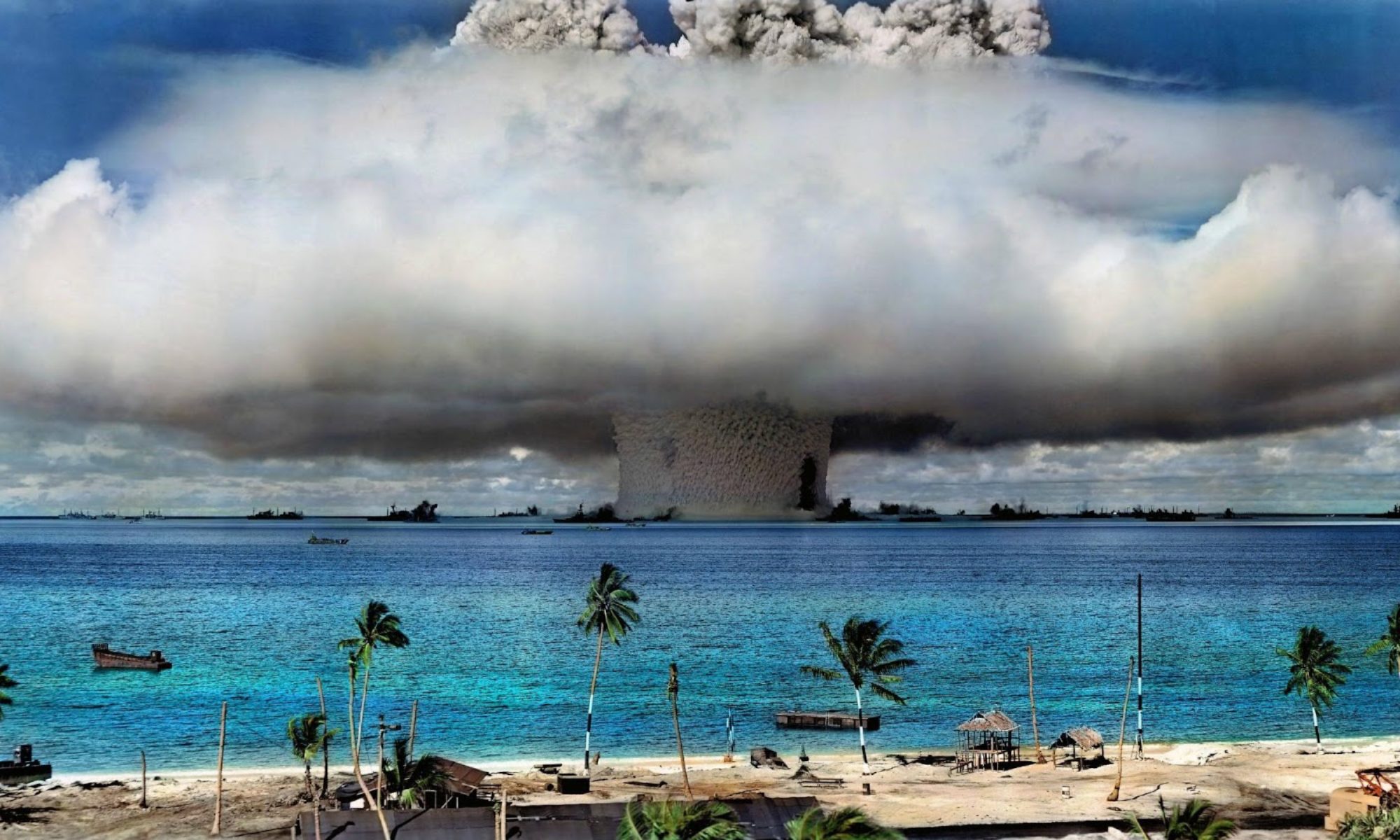


![The sabre [left] and the scimitar [right] were curved swords of a type as used by the Mongol military](https://i0.wp.com/members.ancient-origins.net/sites/default/files/sabre-and-the-scimitar.jpg?w=525&ssl=1)


![A ‘Mongolian Draw’ [left] versus a ‘Mediterranean Draw’ [right]](https://i0.wp.com/members.ancient-origins.net/sites/default/files/Mongolian-Draw.jpg?w=525&ssl=1)


