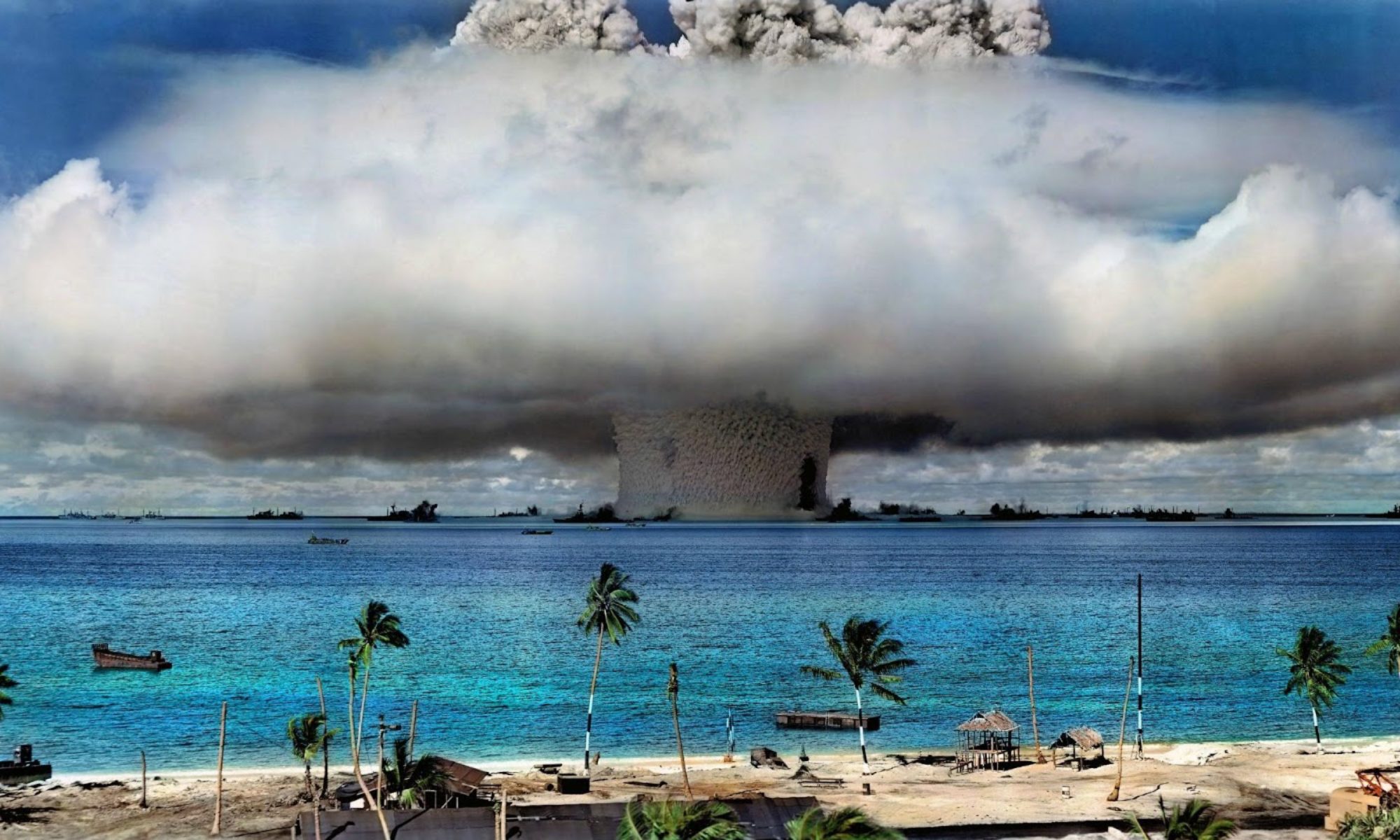
Russia’s War of a Thousand Cuts

Introduction

Recently, I watched an interview with military analyst Michael Kofman concerning Russia’s military evolution since 2022. The interview raised several interesting questions. These are my takes, not challenges to his assessment.

When observing Russian military operations in Ukraine, particularly through battlefield footage and maps such as DeepState, it is easy to conclude that Russia is suffering from resource constraints. Perhaps it is. But another possibility is worth considering. Russia may have considerably more resources than it is willing to commit, and what we are witnessing may not be a limitation in Russian military capability, but a deliberate economy-of-force approach.

There are several ways to examine this.

First, Russia may lack the resources to equip and sustain larger formations capable of fully conducting coordinated offensive maneuver. Second, Russia may possess those resources but lack the secure logistical system necessary to sustain such operations across the battlefield. Third, Russia may possess both capabilities but prefer to continue its present method of warfare because it serves a larger strategic purpose.

That purpose, I would suggest, is attrition, not merely military attrition, but political attrition as well.

What makes Russia’s present method of warfare interesting is the scale at which it conducts offensive operations. Rather than consistently employing battalion- or company-sized formations, Russian forces increasingly rely on small assault groups, sometimes consisting of only two or three soldiers.

At first glance, this may suggest an inability to concentrate forces. But does it?

When the economy of force is properly employed, it allows a commander to allocate the minimum necessary resources to secondary tasks while preserving greater combat power for the main effort. It works alongside the principle of mass, balancing risk, resources, and effectiveness across the battlefield.

If done without significantly compromising its own operations, it holds the cards in that respect. It can determine where to apply pressure, where to delay, where to deceive, and where to concentrate its supporting capabilities.

This is where operational fluidity becomes important.

Imagine multiple two-man assault teams operating across a broad front. Individually, they possess little combat power. Collectively, however, they may create numerous simultaneous problems for Ukrainian defenders.

Where are these teams operating? How far apart are they? What zones of responsibility are assigned to them? Are they independent infiltration teams, or are another ten or twenty teams following behind them?

A two-man team might seem insignificant until it becomes clear that reconnaissance drones, artillery, electronic warfare, and other strike capabilities support it.

The maneuver element may be small, but the supporting military apparatus is not.

In that sense, we could argue that Russia is dispersing its maneuver elements while concentrating its firepower and operational effects.

This creates something of a reciprocal relationship between economy of force and mass. Resources saved on secondary tasks can be concentrated elsewhere, while numerous localized actions may collectively produce operational effects far greater than their individual size suggests.

In other words, the micro becomes macro.

One often-overlooked factor is the length of training soldiers receive before entering combat, especially as both Russia and Ukraine struggle to replace experienced personnel.

Training periods are often too short, and the loss of experienced officers and NCOs creates another problem. Soldiers must learn on the fly, and on a battlefield like Ukraine, that can be deadly, assuming they survive long enough to learn anything.

Now consider a two-man assault team.

What happens when one man is killed?

The surviving soldier is now in charge. He must decide whether to advance, withdraw, hold his position, or wait for further instructions. He may have little training or experience, but the circumstances still demand a decision.

In that sense, battlefield initiative isn’t always developed through extensive training or a well-established command structure. Sometimes necessity imposes it.

This arrangement offers flexibility, but it comes at a cost. What one soldier sees as an opportunity, another might see as an unnecessary risk. Without experienced leadership, the outcome can depend heavily on an individual’s judgment.

This raises another interesting question about micromaneuvering. Are we witnessing a deliberate effort to decentralize tactical decision-making, or has the nature of small-unit warfare forced that responsibility onto soldiers who might otherwise never have been expected to exercise it?

Perhaps it is a little of both. There are no wrong orders.

The military may enter the war with a professional fighting force. But once the war ends, it’s left with volunteers and conscripts, who now become the new professional class. Period.

This brings me to what I consider the larger significance of micromaneuvering.

It reminds me of death by a thousand cuts.

If Russian forces can threaten multiple positions at once, Ukrainian commanders must decide which threats demand immediate attention and which they can contain.

This uncertainty shapes decisions.

Does a Ukrainian commander reinforce a threatened position? Does he commit reserves? Does he redirect artillery? Does he allocate additional drone operators to locate and destroy an infiltration team?

What happens if that infiltration team is only a diversion?

What happens if Ukrainian forces commit more resources than necessary and thereby weaken another sector?

Of course, Ukrainian commanders have considerable experience dealing with these small groups by now. They won’t necessarily overreact to every two-man team that appears.

But that is precisely where the larger supporting system matters.

A two-man team by itself may pose little danger. Twenty such teams, operating across several locations and supported by artillery, drones, and reconnaissance, present a different problem. Think of the game “Whac-A-Mole.”

The defender must continually assess what is happening, determine where the main effort exists, and respond accordingly.

This can strain command and control, logistics, reserves, and response times.

It also raises an important question about resource consumption. How much does Russia expend conducting these operations, and how much must Ukraine expend to counter them?

If Russia can consistently impose greater defensive costs than it incurs offensively, then its economy-of-force approach becomes especially significant.

The question is not simply how much territory Russia captures in a given day or week. It is what those operations are doing to Ukraine’s ability to sustain its defensive system over time.

This also brings us back to Russia’s industrial capacity.

When I previously argued that Russian industrial mobilization could prevent its army from being starved of munitions, I was considering the small scale of the assault formations being employed.

A two-man or four-man assault team does not have the same immediate logistical requirements as an entire mechanized battalion.

Granted, those teams may depend on considerable artillery and drone support, and those supporting systems consume resources of their own.

But the relationship between industrial production and the scale of force employment remains important.

Russia does not necessarily need to equip every formation for simultaneous large-scale offensive maneuver. It needs to sustain the formations actually conducting operations while maintaining the larger force supporting them.

This may help explain why Russia can continue applying pressure along an extensive front without committing its entire military establishment to large offensive operations.

However, this does not automatically mean Russia has unlimited resources or that every supporting formation is adequately supplied. Those are separate questions.

What interests me is whether Russia has deliberately organized its offensive operations around the resources it can sustain most effectively.

If so, does this arrangement also serve its larger political strategy?

Military attrition is only part of this argument.

The other part is political attrition.

Russia does not necessarily need to destroy the Ukrainian military outright if it can progressively exhaust the political and financial system sustaining Ukraine’s war effort.

This includes Ukraine, but also the European Union, NATO member states, and the United States.

Under this interpretation, the objective is to keep increasing the costs of continued resistance and external support.

Drain their coffers. Force governments to find additional funding. Create recurring financial obligations. Make supporting states repeatedly reconsider what they can provide, when they can provide it, and how long they can continue.

Europe has repeatedly shown it can finance Ukraine, whether through borrowing, budgetary mechanisms, or other arrangements. That demonstrates financial capacity and political commitment.

But neither guarantees assistance will arrive at the scale or pace needed to achieve Ukrainian military objectives.

Four variables matter most: speed, predictability, completeness, and political sustainability.

These are not merely financial considerations. They directly affect military planning.

A government might approve billions in assistance, but that does not necessarily mean Ukraine receives the equipment it needs when it needs it.

A promised weapon system does little good if it arrives after the operational circumstances that prompted the request have changed.

Likewise, uncertainty about future support complicates Ukraine’s ability to plan sustained military operations.

And behind all of this are the domestic political commitments of the supporting states.

Governments must balance foreign assistance against their own defense requirements, public services, economic problems, and the expectations of their populations.

The longer the conflict continues, the more often those competing priorities must be reconciled.

This is where financial strain can become political strain, and political strain can develop into internal political attrition.

Political attrition does not necessarily require elections or a change of government.

It can emerge through exhaustion.

A government may continue publicly supporting Ukraine while becoming increasingly reluctant to assume additional financial commitments or political risks.

Political leaders may begin questioning whether continued assistance can produce the desired outcome.

Institutions may remain intact while confidence in their decisions, commitments, and effectiveness gradually diminishes.

This is where the proverbial straw that breaks the camel’s back comes into play.

If enough political and financial strain accumulates, governments may become more willing to pursue a negotiated settlement simply because the costs of continuing the war have become increasingly difficult to sustain.

That does not guarantee a rapid peace. Political exhaustion may encourage negotiations without resolving the underlying disagreements between Russia and Ukraine.

Nevertheless, the strategic possibility remains.

Russia might seek to achieve through political attrition what it has been unable to achieve through decisive large-scale military maneuver.

And that brings us back to the battlefield.

If Russia’s objective is to exhaust Ukraine and its supporting states politically, then micromaneuvering may be more than an adaptation to battlefield conditions.

It may be an operational method suited to a strategy of prolonged attrition.

Small assault teams maintain pressure. Reconnaissance and firepower disrupt Ukrainian defenses. Localized advances force continued military responses. Ukraine expends personnel, equipment, and ammunition. Its external supporters must repeatedly provide additional assistance.

That process creates recurring military, economic, and political demands.

Whether Russia can sustain those demands more effectively than Ukraine and its supporters remains a separate question. Attrition cuts both ways, and Russia also pays a high price.

Nevertheless, the strategic logic is worth considering.

Perhaps Russia’s present method of warfare is not simply the consequence of an inability to conduct larger offensive operations. It may reflect a deliberate decision to preserve flexibility, avoid overcommitment, and maintain pressure until political circumstances become more favorable.

Or perhaps it reflects both military limitations and strategic preference.

That distinction matters because it changes how we interpret Russian operations.

The absence of large-scale maneuver does not necessarily mean the absence of operational purpose.

Nor does the slow accumulation of territorial gains necessarily mean those gains are the primary objective.

The ultimate objective may be to exhaust the political will and institutional capacity sustaining the enemy’s resistance.

And if that is the case, then micromaneuvering, economy of force, industrial production, and political attrition are not separate features of Russia’s war. Rather, they are interconnected, compartmentalized elements of a broader strategy designed to exhaust Ukraine militarily, economically, and politically, while simultaneously placing increasing financial and political pressure on the nations supporting it.

The Evolution of the Russian Military – Its Strengths and Shortfalls in 2026 (With Michael Kofman)

The Stalin-Putin Parallel: The War of Attrition as Strategy both Militarily and Politically

Find, Fix, and Maneuver

DRG

Military Failure, the Need for Innovation, and the Day After

Neo-Deep Battle Fires: How Artillery and Drones Are Rewriting Depth Warfare

The Day After: The Peace No One Is Prepared For

The Mongols: Armed to the Teeth with Weapons and Poison—Part II

Much is known about the ancient Mongol military and their incredible victories on the battlefield, but little is ever discussed about their arms, armor, horses, and logistics. What gear did they use? How did they deal with their wounded? How did they partner with horses to become masters of the steppe?

The Mongolian soldier’s bows and arrows are perhaps their best-known weapons – their famous riding and archery skills were a sight to behold, as long as they weren’t targeted at you.

A Deadly Rain of Arrows, Piercing and Slicing

Enemies of the Mongolian armies feared a deadly rain of arrows. (CC BY-SA 2.0)

The arrows the Mongolian military used varied in size, weight, and function. When it came to length, the arrows were roughly over two feet (0.6 meters) in length. The wood used to make the shafts was usually willow, birch, and juniper. The shaft of the arrow thinned out towards the notch of the tip. To make an arrow, the Mongol archer would take an iron tanged arrowhead and carefully hammer the point of the tang into the shaft without splitting it. If the top of the shaft split due to the tang, it would be bound with cord. To further strengthen a damaged shaft, the surface was layered with birch bark.

The Gear and Guts of the Mongol Military—Part I

When it came to feathering the arrow, the Mongols used a variety of bird feathers. Eagle feathers were the most commonly used but the Mongols also used the feathers of geese, kites, blackcocks and woodpeckers. On an interesting note, when using feathers, if a feather taken from the right wing was used, the arrow would spin to the right during flight, if taken from left wing, it would spin to the left.

Kazakh-Mongolian Hunter and his Eagle.

Kazakh-Mongolian Hunter and his Eagle. (CC BY-SA 3.0)

Traveler Marco Polo placed arrowheads in two classes: light ones with small sharp points for long-range shooting and pursuit, and heavy ones with large, broad heads used in close quarters. Carpini states that the arrowheads cut two ways, and were hardened by dipping them while red-hot into brine, after which they were so rigid they could pierce armor. A general by the name of Meng-Hung, who served the Sung Dynasty and who put up a strong resistance to the Mongols in the 1230s mentions three type of arrows: the sounding arrow, the camel-bone arrow, and the armor-piercing arrow.

The type of arrowheads used consisted of bone, steel, horn, and iron. Bone arrowheads could do next to nothing against armored opponents but still do considerable damage against other lightly or non-armored adversaries. Iron or steel arrowhead points were designed to punch through armor, such as the tapered, spiked arrowheads or those that were tempered and chiseled. Other arrowheads were broad and flat with a horizontal blade. Based upon its design, the Mongol cavalrymen would select this type of arrowhead to fire indirectly at the enemy troop intervals. This would inflict tremendous damage to both man and animal, as the arrowhead would slice its way through the ranks. In other words, “death by a thousand cuts” as the ancient Chinese phrase goes.

A modern Mongolian archer. “An absolute essential part of a Naadam (Festival) is archery. Mongolians use their thumb to draw the bow. Also, see how he controls his breathing at the last picture.”

A modern Mongolian archer. “An absolute essential part of a Naadam (Festival) is archery. Mongolians use their thumb to draw the bow. Also, see how he controls his breathing at the last picture.” (A. Omer Karamollaoglu/CC BY 2.0)

Flying Poison and Death on the Wind

Besides arrows designed to slice flesh and punch through armor came those that whistled and delivered poison. Many Mongol arrows had a hollow bone container. The container was placed beneath the arrowhead, had two oval-shaped holes, and produced a whistle upon being fired. The size of the barrel or biconical container was between 2.8 and 7.5 cm (one inch to three inches). The length of the container was directly related to the size of the arrowhead. The function of this arrow is disputed. Some think it was to frighten or was just a luxury or novelty item among the Mongols. When looking at its function from a military viewpoint, it could be proposed that the whistling arrow had a dual purpose: one, to have a psychological impact upon the enemy army and for scaring their horses, and two, for signaling nearby Mongol units to maneuver and attack.

Another projectile used by the Mongols was the poison arrow. The poison used on the arrow was called khoron. One type of poison was plant-based. Mongols smeared their arrows with what may have been the aconite (Aconitum napellus, or monks-hood). Aconite is a toxic plant of “perennial herbs of the genus Aconitum, having tuberous roots, palmately lobed leaves, blue or white flowers with large hoodlike upper sepals, and an aggregate of follicles.” The Mongols may have used the Aconitum ferox found in Tibet or of a related species. To make a lethal dose, the Mongols would have used three to six grams of the dried Aconitum and mixed it with ganja.

This c. 1280 painting depicts an archer shooting a traditional Mongol bow from horseback [left]

This c. 1280 painting depicts an archer shooting a traditional Mongol bow from horseback [left] (Public Domain)

The other type of poison used was called mogain khoran, and was extracted from the steppe viper or adder. The Mongols, like their nomadic ancestors, inhabited a land that was home to a number of snakes from which they drew venom. Such snakes inhabiting the area included the steppe viper, Caucasus viper, European adder, and the long-nose/sand viper. The Mongols had a vast arsenal of snake venoms at their disposal. To get an idea how the Mongols went about producing this poison, one must look to the ancient Scythians and those who wrote about them.

Vipera ursinii, venomous viper and a very widespread species from France to China.

Vipera ursinii, venomous viper and a very widespread species from France to China.  (Public Domain)

According to the book titled, “On Marvelous Things Heard,” by Pseudo-Aristotle, which was a work written by his followers if not written in part by Aristotle himself, mentions the Scythian handling of snakes and how to extract their poison:

They say that the Scythian poison, in which that people dips its arrows, is procured from the viper. The Scythians, it would appear, watch those that are just bringing forth young, and take them, and allow them to putrefy for some days.

After several days passed, the Scythian shaman would then take the venom and mix it with other ingredients. One of these concoctions required human blood:

But when the whole mass appears to them to have become sufficiently rotten, they pour human blood into a little pot, and, after covering it with a lid, bury it in a dung-hill. And when this likewise has putrefied, they mix that which settles on the top, which is of a watery nature, with the corrupted blood of the viper, and thus make it a deadly poison.

The Roman author Aelian also mentions this process, saying, “The Scythians are even said to mix serum from the human body with the poison that they smear upon their arrows.” Both accounts show the Scythians were able to excite the blood in order to separate it from the yellow, watery plasma. Once the mixture of blood and dung had putrefied, the shaman would take the serum and excrement and mix it in with the next ingredient, venom, along with the decomposed viper. Once the process was complete, the Scythians would place their arrowheads into this deadly mixture ready for use. The historian Strabo mentions a second use of this deadly poison:

The Soanes use poison of an extraordinary kind for the points of their weapons; even the odor of this poison is a cause of suffering to those who are wounded by arrows thus prepared.

Overall, it would not be farfetched to imagine the Mongols were going about the same procedures when it came to the manufacturing of poison using snake venom.

Quivers Full of Arrows, and Shields to Protect

Quivers housing the arrows were made of birch bark and leather, had an oval opening at the top and broadened from the top towards the base. Manufacturing the quiver required long strips of birch bark slightly overlapped. The material used to make the base is unknown but suspected to have been made of leather or felt. To keep the quiver together, he would stitch it with strong thread.

While archaeological excavations have turned up many quivers, unfortunately, none has survived and that is understandable given their makeup. On campaign, the Mongol warrior would take two three quivers, each consisting of between 30-60 arrows. When placed in the quivers, the arrowheads were placed downwards. The quiver was located to the left of the rider and was attached to his belt by iron hooks.

“Mongolian bows were as powerful as the English longbow, used at Crecy or Agincourt, and helped Genghis Khan build an empire from Beijing to Hungary and Austria.” Quiver, horn, and arrows. (Adam Singer/CC BY-ND 2.0)

The Mongol utilization of shields appears nearly absent in the sources. Carpini mentions that the shields “were of osiers or wicker but we do not believe they carry them except in camp while guarding the emperor or the princes and even then only at night.” Marco Polo says nothing about the type of shield but that they used them. However, Meng-Hung records the use of four types of shields consisting of a “large skin or willow-wood shields—probably for sentry duty only-smaller shields carried by front rank troops to ward off arrows when on foot, a visor worn over the face, and large tortoise shields for assaulting towns.”

Armed to the Teeth

Other weapons the Mongol used were the lasso, which was used to pull enemy horsemen out of their saddle, a dagger for close combat, a lance used to pierce through the enemy ranks during a fierce charge (but which also had a secondary purpose due to the hook below the head used to pull enemy riders from their saddles by catching the opponents clothes or equipment). This would have been especially easy against steppe riders who used shorter stirrups because they were less secure in the saddle. Mongols also used the mace, as it was a close combat weapon like the dagger. The mace was roughly 15 inches (40 cm) in length and weighed a little over 2 lb (1.17kg). Spears functioned much like the lance; they had a hook below the head, but were much shorter.

A model of a Mongolian mounted soldier, with bow, quiver of arrows and a shield. (CC BY-SA 2.0)

Logistics: An Army Marches on its Stomach

Logistics are crucial to any army on the move and the Mongols were no exception. Even though the Mongols acquired food through hunting or raiding and brought their herds and flocks with them, they still needed to secure their supply lines. While acquiring and protecting food was not an issue, other items of value such as military materials, like siege equipment, arms and armor, horses and other miscellaneous objects were more difficult to maintain.

Bactrian camels in Mongolia.

Bactrian camels in Mongolia. (CC BY-SA 3.0)

To move the massive amount of goods needed to supply the army, the Mongols relied on camels and, at times, on horses. The camel allowed the Mongols to move much more stuff. Take a Bactrian camel for instance; a Bactrian camel can carry 200-240 kg (440-530 lbs) and pull roughly 400-600 kg (881-1322 lbs) at a pace of 30 to 40 kilometers (or 18 to 24 miles) per day. Besides leading the horses to the pastures to graze, the Mongolians made sure that they had ample food readily available on hand. A Mongol tumen (10,000) troops, had roughly 50,000 horses on hand, would need 113.5 metric tonnes (250224.67 lbs) of hay and barley on hand. An army of six tumen 60,000 troops, traveled roughly with 300,000 horses and would require an astonishing 1,362 metric tonnes (3002696 lbs) of fodder each day. To move 1,362 metric tonnes of food each day would require 7,504 camels. Each camel would be required to carry 181.5 kg (400 lbs) of fodder each day to supply the horses! However, this does not account for the many more camels used to transport the other items as mentioned.

Besides the supplies to ensure the animals were well fed, the Mongols also brought additional food for the troops. The food, of course, was meat. The amounts are not mentioned, but when Genghis Khan invaded the Khwarazmian Empire (1219-22), each arban would take three-and-a-half dried sheep with them, along with a cauldron. While it is obvious that the amount of meat mentioned was already on hand as the Mongol horsemen were on the move, it also suggests that three-and-a-half dried sheep had already been prepared and distributed throughout each arban, and shows much more meat, along with potable drink, was slowly traversing in the rear.

Horses run through a winter storm in Mongolia (CC BY-SA 3.0)

Those assigned to overlook this task is unknown. It is obvious that the upper chain of command had oversight on the supplies, but whether specialized units were assigned to distribute the goods to the troops remains silent. Persian historian Ata-Malik Juvayni wrote a history on the Mongols titled Tarīkh-i Jahān-gushā, or History of the World Conqueror, and mentions that each unit was responsible for all the “various arms and implements down to banners, needles, ropes, mounts and pack animals such as donkey’s and camels; and every man must provide his share according to his ten or hundred.” If any item turned up missing, “those responsible are severely punished.”

Overall, the Mongols primarily depended on their herds and flocks that traveled in rear, as well as those assigned to overlook the traveling produce. While food supplies were crucial, the Mongols, besides hunting for food, could also stop off and resupply at a nearby village, town, or city using the fear of their approach or just plain pillaging it. Before proceeding, understand that the Mongol Empire stretched from the Pacific Ocean to Eastern Europe, and they could draw on much more than during the time of Genghis Khan.

When the Great Khan Mongke (1209-1259) gave his blessing to his brother Hulegu to conquer much of the Middle East starting in 1253, Hulegu pulled supplies and troops from all four directions starting in Karakorum until this lumbering Mongol army made its way through central Asia and swelled into an enormous force, before coming to rest at the outskirts of Samarkand. While at Samarkand, Hulegu continued to increase the size of his forces.

Audience with Möngke Khagan. (Great Khan Mongke)

Audience with Möngke Khagan. (Great Khan Mongke) (Public Domain)

When Eastern Christian communities received news of Hulegu’s planned campaign, the vassal Kingdoms of Georgia and Armenia provided troops and were enthusiastic in recovering former Christian lands in Mesopotamia.

Further to the north, Batu Khan, Mongol ruler and founder of the Golden Horde, a division of the Mongol Empire, provided newly conscripted tumens (an army unit of 10,000 soldiers) mostly Turks and Alans, led by Balaghai, Khuli, and Tutar, Batu’s nephews. One can only image the amount of supplies, resources, herds, and craftsmen that came with each army from nearly every direction!

However, supplying troops with food was one thing; weapons were a whole other matter.

Top Image: Exhibit featuring Mongolian arrows (CC BY-SA 2.0), and Mongolian soldier model (CC BY 2.0);Deriv.

By Cam Rea

References

Thomas J. Craughwell, The Rise and Fall of the Second Largest Empire in History: How Genghis Khan’s Mongols Almost Conquered the World (Beverly, Mass: Fair Winds Press, 2010).

Timothy May, The Mongol Conquests in World History (London: Reaktion Books, 2012).

Timothy May, The Mongol Art of War: Chinggis Khan and the Mongol Military System (Yardley, Penn: Westholme, 2007).

Richard D. McCreight, Mongol Warrior Epic: Masters of Thirteenth Century Maneuver Warfare (Fort Leavenworth, KS: US Army Command and General Staff College 1983).

Marco Polo, The Book of Ser Marco Polo, the Venetian: Concerning the Kingdoms and Marvels of the East. Volume 2 edited and translated by Henry Yule. 3rdedition (London: J. Murray, 1929).

Michael Prawdin, The Mongol Empire: Its Rise and Legacy (London: G. Allen and Unwin, 1961).

George Vernadsky, A History of Russia, Vol 3 (New Haven and London: Yale University press, 1953).

Tracy, Larissa. Wounds and Wound Repair in Medieval Culture. Leiden: Brill, 2015.