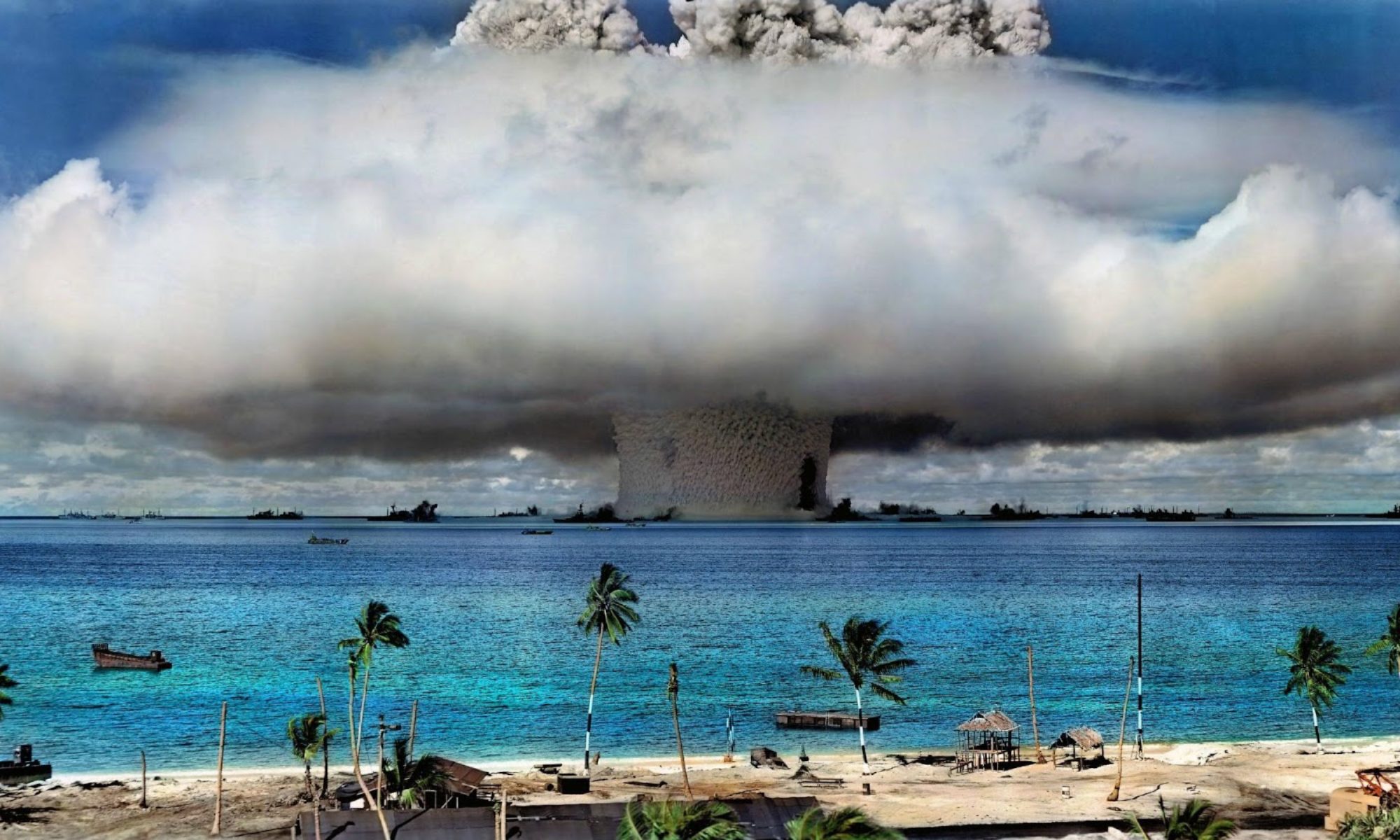
Interpositive Warfare

In war, an action can accomplish its immediate purpose while simultaneously altering the surrounding environment in ways that strengthen, weaken, reverse, or transform the original success.

Take counterinsurgency, or COIN, as an example. The United States employed COIN extensively in Iraq and Afghanistan. Its immediate purpose was often to secure territory and protect the population from insurgent activity. In the process, forces gathered intelligence, identified and removed insurgents, and attempted to build relationships with local communities. One operation could accomplish all of these objectives and therefore appear successful.

However, that same operation could also generate resentment, dependency, political distortion, and further resistance. Resentment could arise simply because foreign forces were present, regardless of whether they intended to protect the population. Local groups that allied with those forces could also become dependent on their protection, money, intelligence, or logistical support. Once that happened, they might struggle to operate or maintain their political position without outside assistance.

This dependency could then produce political distortion. Alliances were fragile. A tribe might cooperate with American forces against one enemy while remaining hostile toward another tribe that was also cooperating with them. A local ally could therefore become connected to a network of rivalries and obligations that extended well beyond the immediate operation. The question was no longer simply who supported the counterinsurgency effort, but why they supported it, whom they opposed, and what they expected to gain.

Over time, these relationships could generate further resistance. While American forces might not initially feel the brunt of that resistance, it could eventually turn against them. It might begin as an intertribal conflict, in which support for one group could indirectly alienate another, turning a local rivalry into resistance against the outside force itself. An operation might secure an area, remove insurgents, and protect part of the population while simultaneously remodeling the surrounding environment in ways that create new enemies, strengthen old rivalries, or transform the original success. Successful distortion is risky.

An interpositive is a positive image printed directly from the original camera negative. In simple terms, the original image is reproduced as a copy. That copy resembles the original, but it is no longer the original itself.

Defining Interpositive Warfare

Warfare comes from human decisions. Humans interpret, implement, manipulate, and respond to everything involved. Technology does not choose its objective; humans determine its purpose and how it will be used. Terrain does not formulate strategy, but it can redirect human action. Institutions are also made up of people making decisions, and those decisions shape what happens next.

Interpositive warfare shares a basic premise with praxeology: war begins with purposeful human action. The difference is that interpositive warfare is concerned not only with the intention behind an action, but with what happens after that action passes through human relationships, political institutions, and the wider environment of war. Along the way, the original intention is filtered and transformed.

Effects Are Recursive

A response not only changes the conditions under which the next action is planned and understood, but may also manipulate them. The process is not merely a linear exchange of action and reaction. Instead, it frequently returns to the past, reinterprets it through the present, and carries that altered understanding into the future.

In a linear model, action produces reaction, and the past provides a fixed baseline. In a recursive model, action and reaction form a continuing loop. The event remains fixed in the past, but its meaning changes as actors reinterpret it. Control therefore produces not only an intended result but also an emergent transformation that shapes what follows.

Success Can Produce Its Own Negation

An action may succeed according to its immediate measurement while producing consequences that weaken the larger objective. A tactical success can create operational difficulties. An operational success can produce strategic failure. Political success can also create future military liabilities.

Effects Can Be Delayed or Indirect

As for effects, they may return through memory, resentment, institutional behavior, doctrine, ideological change, economic dependency or lack thereof, and technological adaptation. While some of these may not appear in the current generation, they may appear in the next. In either case, the original action need not produce an immediate or direct response. It may simply nudge events in a particular direction, leaving later actors to carry the effect forward without recognizing where it began.

Actors Transform and Reposition Relationships

Whether it is soldiers, commanders, civilians, government workers, media organizations, allies, enemies, or institutions, they do not merely react; they interpret, transform, and retransmit effects. Think of it this way: improvise, adapt, and overcome.

Lastly, there are relationships. An action changes not only the actors involved but also the relationships among them. Once again, think of praxeology, the study of human action. Every interaction produces a response, which then produces another. The result is a chain reaction. Watch people moving through a crowded mall, constantly adjusting their paths to avoid colliding with one another. Each person’s movement causes others to reposition themselves.

Warfare operates in much the same manner. Allies may become less dependable. Populations may become hostile. Who needs conspiracies when you have bureaucracies growing defensive? Meanwhile, enemies may adapt in unexpected directions. Every action repositions the relationships surrounding it, changing how the actors respond to one another and what they may do next.

Multi-Domain and Systems Models

Land, maritime, air, space, cyberspace, physical, informational, and human categories remain useful for organization, planning, and analysis. The problem begins when these analytical categories are treated as independent parts of reality.

Multi-domain models generally show effects moving across or between domains. Interpositive warfare asks how those exchanges transform the actors, relationships, institutions, and boundaries through which later action must pass. The boxes do not merely exchange effects. The boxes themselves, and the people who operate through them, are altered by the exchange.

Think of the Columbian Exchange. It did not simply transfer people, goods, diseases, and ideas between otherwise unchanged worlds; it transformed the worlds involved.

Linear and Geometric Assumptions

A diagram captures the structure of a particular moment, but it cannot represent the transformation that follows. Interpositive warfare focuses on the organized chaos beyond the diagram: one action creates a vacancy, the opening passes through intermediaries, and the entire field rearranges itself—rather like a line of hermit crabs exchanging shells.

Distinctions from Existing Concepts

Interpositive warfare overlaps with many concepts, but it is not identical to any of them. Its purpose is not to replace established military theories, but to identify a particular feature of war. That feature is the study of human action and the institutions through which it operates, both on and off the battlefield.

Second- and Third-Order Effects

Second- and third-order effects describe consequences that extend beyond the immediate result of an action. A tactical decision may produce a cascade of operational, strategic, political, or social consequences that were neither intended nor immediately visible. In other words, blowback.

Interpositive warfare is built for these consequences but places greater emphasis on the process through which they emerge. The issue is not merely that one action causes another effect later. Instead, the action passes through intermediaries that interpret, redirect, delay, strengthen, weaken, or transform it, sometimes making it stronger while causing it to appear weaker. Intermediaries also change in the process. The result is not merely a chain of consequences, but a continuing alteration of the environment through which future history must pass.

Feedback, Complexity, and Friction

Feedback and complexity explain how actions produce responses that alter the conditions of later action. Clausewitzian friction explains how the human element disrupts intention.

Interpositive warfare shares these concerns but focuses on the reproduction of action in altered form. Friction may obstruct an action, and feedback may return information or consequences to the original actor. Interpositive warfare asks what the action becomes after it has passed through the wider field of war. In doing so, it may return in a misinterpreted form or even work against the purpose for which it was originally produced.

Praxeology

Praxeology begins with purposeful human action. Human beings choose objectives, employ means, and interpret circumstances, all in pursuit of a preferred outcome. Warfare likewise begins with human decisions, even when those decisions operate through various institutions.

Interpositive warfare begins with the same premise but extends the action beyond its original intent. Once purposeful action enters war, it passes through other human beings and the institutions they represent. Along the way, it is filtered, bottled, and transformed. Praxeology explains why the action begins; interpositive warfare examines what that action becomes after it enters a conflict, reshapes the surrounding conditions, and influences what happens next.

Counterinsurgency in Iraq and Afghanistan

Counterinsurgency in Iraq and Afghanistan offers a clear example of self-negating success. In theory, COIN seeks to protect the population, secure territory, and win the confidence of local communities rather than simply destroy the enemy. It also attempts to address the political, economic, and social grievances that sustain insurgent movements, including poverty, corruption, weak infrastructure, and the absence of legitimate government.

COIN also depends heavily on intelligence. The more trust military forces establish with the population, the more information they hope to gather. That information helps identify insurgents, map relationships, and build case-by-case dossiers on individuals and networks. In the long term, the goal is to leave behind a legitimate and self-sustaining host-nation government capable of maintaining security without foreign assistance.

On paper, these are obvious strengths. In practice, however, they also reveal the doctrine’s self-negating character. COIN is extremely resource-intensive. It requires large numbers of personnel, money, and time, as well as repeated deployments. The longer forces remain, the more vulnerable they become to ambushes, IEDs (improvised explosive devices), and other forms of asymmetric attack. What begins as counterinsurgency can gradually expand into nation-building, creating an open-ended mission funded by outside taxpayers and carried out in a political environment that may never have possessed a strong sense of national unity to begin with.

A prolonged focus on COIN can also erode conventional military readiness. A force that spends years preparing for patrols, population security, intelligence collection, and small-unit engagements may become highly experienced in one form of warfare while allowing other capabilities to weaken.

The greatest difficulty, however, lies in human loyalty. Loyalties shift. Local actors may cooperate because the money is right, because one rival poses a greater threat, or because foreign support temporarily strengthens their position. That relationship may change as soon as another tribe, militia, political faction, foreign government, or outside economic interest enters the picture. An ally in one situation may become an obstacle in another. Trust remains conditional, and intelligence gathered through those relationships may be incomplete, manipulated, or directed against local rivals.

Counterinsurgency could therefore succeed tactically while undermining itself strategically. American forces won engagement after engagement, secured territory, removed insurgents, and often built enough trust to gain intelligence and local cooperation. In that immediate sense, COIN worked.

The strategic problem was that the groups involved were not unified in any meaningful way. In many areas, the real political units were tribes, militias, religious factions, local power brokers, and patronage networks. American forces were trying to win their support, but these groups were also competing among themselves for money, influence, protection, and position. The United States became another actor within the same field of rivalries rather than a power standing above it.

Winning the hearts and minds of one tribe did not necessarily strengthen the larger political order. It could weaken another tribe, deepen an existing rivalry, or make one group dependent on American protection. There was no true unifying apparatus capable of turning these separate tactical relationships into a lasting national settlement. COIN could therefore create local success without producing strategic unity.

This leads to COIN’s central weakness: the absence of a clearly defined end state. What does victory look like? How much stability is enough? When does a host-nation government become self-sustaining? At what point does the foreign force leave without undoing the gains it helped create? Without clear answers, tactical and operational success can continue indefinitely while strategic success remains undefined and elusive.

COIN could therefore protect populations, remove insurgents, gather intelligence, and secure territory while simultaneously creating dependency, weakening conventional readiness, distorting local politics, and extending the mission without a measurable end. Its successes were real, but they often altered the environment in ways that made those successes difficult to preserve. In that sense, counterinsurgency became a self-negating success.

Inside the Box of Mirrors

A tactic is never static. It exists inside a box of mirrors, multiplied, distorted, and reinterpreted by every observer. The box represents the operational environment. Its six faces represent six primary sides that refract the tactic: enemy forces, allied partners, command structures, institutional logistics, populations within the domain, and the physical and cultural terrain itself. These six faces are illustrative rather than fixed. Depending on the conflict, there may be many more.

Each reflection differs because perspective warps it. A flanking maneuver may appear to the enemy as a vulnerability, to an ally as resolve, to commanders as data, and to populations as a narrative. When the tactic is executed, adapted, or redirected, every reflection changes with it. There is no isolated action.

The Negative–Interpositive Cycle

The photographic analogy of the negative and interpositive beautifully captures how one effect becomes the source of the next. The original negative is the intent: the plan as conceived. The interpositive is the first-order effect, or how reality develops the image through human action, interpretation, and Clausewitzian friction.

The interpositive then becomes the new negative. The altered reality—enemy adaptations, unintended consequences, alliances, and fractures—becomes the baseline for the next cycle. Each iteration inverts and evolves the tactic. What begins as deception may harden into a predictable pattern if it is not refreshed. What once looked like strength may reveal fragility under a different light.

This is why rigid doctrines fail and why truly effective operators treat every success as a potential trap. The environment has already begun adapting to yesterday’s move.

Adaptation, Deception, and Predictability

In warfare and beyond, this dynamic helps explain several enduring principles. Take the OODA loop developed by U.S. Air Force Colonel John Boyd (observe, orient, decide, act): observe the reflections, orient to their distortions, decide when and how to turn, act, and immediately begin the next loop before the enemy’s reflections stabilize.

Reflexive control deliberately shapes what the mirrors show the adversary so that the adversary’s reflected decisions serve one’s intent. Emergent strategy operates through a similar process. Real plans are not simply executed from the top down; they coevolve with the reflections that conflict produces.

The best commanders do not merely impose a plan. They design systems that learn from inside the box of mirrors faster than their opponents do. Entropy and surprise are useful only for a short time because repeated tactics lose their contrast. The box becomes familiar. New light, such as novelty, deception, and tempo, must be introduced before the reflections flatten into predictability.

Tactical Reproduction

At the tactical level, a single action—an ambush, feint, or drone strike—does not merely succeed or fail. It alters local conditions: enemy morale, alertness, ammunition stocks, small-unit trust, terrain usability, electromagnetic signatures, and civilian perceptions.

The result becomes a new negative. Tomorrow’s patrol operates in the world that today’s action helped create. Even inaction reproduces the same dynamic. Hesitation becomes data that the enemy develops into the next interpositive.

A battle does more than produce a result. It reproduces the actors who must fight the next battle. Enemy soldiers learn. Allied forces form new expectations. Commanders revise their judgments. Populations assign new meanings to what they have witnessed. The tactic survives not as an unchanged event, but as a series of altered interpretations carried forward by everyone involved.

Operational Reproduction

At the operational level, the mirrors multiply. An operation—a campaign phase, major offensive, or sustained air interdiction effort—reshapes force ratios, logistical nodes, command relationships, intelligence advantages, and political will. It changes what future operations can accomplish and what courses of action remain possible.

A successful breakthrough may advance too far without secure flanks, creating a vulnerable salient while also establishing a new base for further action. A deliberate withdrawal may cede ground but preserve forces, restore operational tempo, or strengthen political cohesion.

In either case, the altered battlefield, alliance dynamics, and resource picture become the fresh negative. Future operational art must develop from this plate rather than from the original plan. The operation that follows does not begin where the previous one began. It begins inside the environment that the previous operation helped manufacture.

Strategic Reproduction

Strategy is the highest-order darkroom. It does not merely win battles or campaigns; it redefines the war itself. Every strategic choice—forming alliances, imposing economic sanctions, conducting information campaigns, or changing war aims—reconfigures the enemy’s options, the home front’s endurance, third-party involvement, and even the conflict’s moral and legal framing.

The interpositive of one strategic decision becomes the negative for the next. Expanding war aims after early victories, for example, may make later restraint or de-escalation more difficult. A strategy of attrition, as seen in the Russo-Ukrainian war, may exhaust the enemy while also exhausting one’s own military and society, altering the political terrain upon which any negotiated settlement must eventually rest.

The introduction of new domains, including cyberspace and economic warfare, changes the purpose and character of the conflict. At this level, recursion can become self-referential. Strategy begins to reproduce the nature of the war, which in turn reshapes strategy. Wars begun for limited objectives may metastasize into existential struggles, or existential struggles may eventually contract into limited settlements. The means shape the ends, and the ends reshape the means.

The Recursive Loop

Tactics alter conditions and create the basis for new operations. Operations alter the conditions from which new strategies emerge. Strategies alter the conditions for a different war or for a different peace. Each level is both produced by and productive of the levels above and below it.

This is why linear planning eventually collapses. Effective practitioners treat every outcome as provisional source material rather than final validation and design for adaptability across tactical, operational, and strategic levels.

Victory belongs less to the side with the best initial negative than to the side that masters the repeated development process: the side that sees the reflections clearly, turns at the right moment, and develops cleaner, more useful interpositives faster than its opponent.

War is often planned and analyzed in terms of action and reaction. Objectives are identified, forces are assigned, and operations are conducted. As for success and failure, well, those are measured through the outcome. Yet war does not remain still, nor do its conditions remain stable long enough for this process to unfold exactly as intended. Every reaction changes the actors, their relationships, the institutions they represent, and the conditions through which later action must pass.

Interpositive warfare does not promise control over this process, nor does it offer a formula for predicting every consequence. Human action cannot be predicted with certainty. Its value lies in recognizing that action and environment cannot be separated; that is its strongest suit. The battlefield is not simply the place where war occurs. It is continually reproduced by the people acting within it.

Humans are interpositives: 360-degree transparent images of time and space, drawn inward toward a center that looks back from every direction. Conflict lives in a geometric box of mirrors that never sits still.

The Rise of the Arsacid Dynasty

Arsaces’ historic invasion of Parthia was a process.

Before Arsaces I, King and founder of the Arsacid dynasty, and his brother, Tiridates captured Parthia, they appeared to be residing in the province previous to the appointment of Andragoras as satrap, or governor. Andragoras gained this position due to Arsaces and Tiridates killing the last two previous satraps by the names of Pherekles and Agathokles.

Information concerning the death of Pherekles by Arsaces is scant. Greek historian Arrian of Nicomedia states it was “to avenge an insult offered to one of them.” This insult provoked a rebellion, which led to the death of the satrap. While nothing more is provided, this small amount of info says much.

Roman, Seleucid, and Parthian Empires in 200 BC.

Roman, Seleucid, and Parthian Empires in 200 BC. (CC BY-SA 3.0)

During this period, Arsaces probably controlled the Kopet Dagh mountain range running east-west across the northern edge of the Iranian plateau that bordered the Seleucid province of Parthia. Being in such close proximity, it would not be unreasonable to think that Arsaces’ sphere of influence extended somewhat into the province of Parthia. If so, Arsaces possibly held a considerable amount of influence among the locals, who may have provided him with tribute for his protection services.

Furthermore, in both attacks on the province of Parthia, it would not be unreasonable to assume that Arsaces confiscated some territory within the Parthian satrapy.

View on the Kopetdag mountains from the Ahal plain, Turkmenistan.

View on the Kopetdag mountains from the Ahal plain, Turkmenistan. (CC BY-SA 3.0)

As mentioned, an insult caused Arsaces to strike, but the type of insult is unknown, leaving one to speculate.

Afterwards, Arsaces and his military wing fled back to the Kopet Dagh mountain range. While Arsaces traversed his holdings, the Seleucid king, Antiochus II Theos, appointed a new satrap to the province by the name of Agathokles.

Seeing that the situation on the ground in Parthia was still unstable, Arsaces decided to invade again and violently remove the satrap from power. One could suggest that this attack on Parthia was nothing more than a raid. However, there is no mention of a raid. Instead, Arsaces went straight for the satrap.

With the sudden death of Agathokles, Antiochus II appointed a new satrap by the name of Andragoras.

Coin of Andragoras, a Seleucid satrap of Parthia and later independent ruler of the region. (Classical Numismatic Group, Inc.

Coin of Andragoras, a Seleucid satrap of Parthia and later independent ruler of the region. (Classical Numismatic Group, Inc. http://www.cngcoins.com /CC BY-SA 3.0)

Andragoras is said to possibly be Persian, his original old Persian name being Narisanka. Information regarding Andragoras before his arrival to govern Parthia is limited. What is possible and speculative is that he served as a functionary during the reign of Antiochus I. If so, he would have possibly continued in this role for a period under Antiochus II. Shortly after his appointment, Andragoras found himself defending his seat of power against the same unwanted guests.

WHO WAS ARSACES?

The origins of King Arsaces, the man who would give birth to the ancient Arsacid Dynasty, remain elusive. Information is scant. The oldest known source is Strabo. Strabo, a Greek historian, states, “that Arsaces derives his origin from the Scythians, whereas others say that he was a Bactrian.” Justin, a Latin historian, states that Arsaces was “a man of uncertain origin.” It is evident that Strabo and Justin are unsure of Arsaces origins. While Justin makes no mention of Arsaces ethnicity, Strabo does to a point. In order to uncover precisely who Arsaces was and his possible origins, one must first examine the name Arsaces and the tribe from which he came.

The name Arsaces may or may not have been his real name or, possibly, a throne name, taken by all the descendants who held the same status. Chronicler Syncellus, who relied on the fragments of historian Arrian’s Parthika, mentions that Arsaces was a descendent of the Persian king Artaxerxes II. Syncellus’ information concerning the relationship comes from the fifth century BCE Greek physician and historian Ctesias.

Ctesias was the physician of King Artaxerxes II of Persia, and he compiled a history of Assyria and Persia called Persica during his stay. Ctesias mentions that Artaxerxes’ name before his ascent to the throne was Arsaces, “the king’s son, who afterward changed his name to Artaxerxes.” Moreover, Artaxerxes’ grandfather was king Artaxerxes I, whose name was rendered as Arshak/Arsaces, Babylonian Arshu.

Gold coin with Artaxerxes II, Babylonia, ca. 330–300 BC; obverse: Persian king running holding a bow.

Gold coin with Artaxerxes II, Babylonia, ca. 330–300 BC; obverse: Persian king running holding a bow. (© Marie-Lan Nguyen / Wikimedia Commons / CC-BY 2.5)

MEDICAL MYSTERIES AND RIGHTFUL HEIRS

Besides Arrian’s claim that the Arsacids were descendants of the Achaemenid Dynasty, there is a possibility that the two dynasties were medically related due to the presence of a rare disease known as neurofibromatosis. This physical deformity might have been seen as a sign that they were part of a ‘chosen’ few.

The Greek historian Plutarch, speaks of a deformity that King Artaxerxes I “was surnamed Longimanus, because his right hand was longer than his left.” Artaxerxes suffered from a disease called unilateral upper limb gigantism, which is associated with, but not strictly to, neurofibromatosis. Neurofibromatosis is rare and, according to researcher Hutan Ashrafian, “causes include congenital diseases, such as Proteus syndrome, Klippel-Trenaunay-Weber syndrome, neurofibromatosis, and macrodystrophia lipomatosa. They can also be acquired in cancers and lymphoedema.” Ashrafian makes the case that Neurofibromatosis may have been the cause of Artaxerxes’ deformity.

When it comes to the Parthian kings, Don Todman notes, “The nodule is first seen in the coins of Mithridates II (123–88BC) beneath the left eye and in the image of Orodes II (57–38BC) and in succeeding kings, including Phraates IV (38–2BC), the son of Orodes II. They appear on the faces of many but not all of the subsequent kings up to Vologases I (51BC–AD78) and Vardases II (55–AD58).”

Todman rules out the many other possibilities and further adds, “Neurofibromatosis, however, has a high degree of penetrance and autosomal dominant inheritance.” Todman concludes, “The lesions in the Parthian Kings is speculative” and that the “appearance of the nodule is consistent with Neurofibromatosis and the occurrence over multiple generations also accords with this hypothesis.” Therefore, the Arsacid dynasty may have used their genetic defect to strengthen their claim as the rightful heirs of the Persian Empire.

The name Arsaces is a Greek rendering of his Old Persian name Arshak, also rendered as Arsak, Asaac, or Asaak.  The name Arsaces/Arshak suggests that he was of Saka/Scythian origin. This is due to the “Sac” or “Shak” found in his name. The Ar in Arshak quite possibly could mean Aryan in the Scythian language. In the Pahlavi dialect, the language of the Parthians, the word “Aryan” rendered as “Eran.” The “Er” in Pahlavi is said to mean “noble” or “warrior” and the suffix “an” attached to “Er” represents the relation. Thus, the name Eran can mean, “The noble race” or “the warrior race” along those lines.

MONEY TALKS

Another interesting aspect is one coin in particular that bears Arsaces’ image, but on the reverse of the coin, it has the Aramaic inscription of krny, translated as “Karen” or “Quren”. This is where the debate comes in. Either krny means “Commander-in-Chief,” or it is in reference to one of the powerful Parthian clans known as the House of Karen. The coin also bears his name ΑΡΣΑΚΟΥ, translating as “Arsaces”. It seems to be the only coin of his minted like this.

Coin of Arsaces I of Parthia. The reverse shows a seated archer carrying a bow. A Greek inscription on the right reads ΑΡΣΑΚ[ΟΥ] (from the outside). The inscription below the bow is in Aramaic.

Coin of Arsaces I of Parthia. The reverse shows a seated archer carrying a bow. A Greek inscription on the right reads ΑΡΣΑΚ[ΟΥ] (from the outside). The inscription below the bow is in Aramaic. (Public Domain)

One could read this coin to mean that Arsaces is from the House of Karen. However, other coins of Arsaces do not mention this but mention his name and title in Greek, not Aramaic.

The readings of these other coins say ΑΡΣΑΚΟΥ ΑΥΤΟΚΡΑΤΟΡΟΣ, translating as “Arsaces the Autocrat”. Both are plausible. If one considers Karen or Quren to mean “Commander-in-Chief,” it would be understandable for some coins bear the Greek inscription “Autocrat.” It would be true that an autocrat would be a commander-in-chief, for an autocrat is a ruler who holds unlimited power and is answerable to no other person, even though the possibility of the coin that says Karen and Arsaces may indicate a connection to the House of Karen.

Therefore, it seems plausible that ‘Karen’ found on the reverse of the coin is meant for the Aramaic speaking population at the time, in Parthia proper, indicating his authority rather than the house from which he came.

Other coins minted at the same time or later bear no Aramaic, but Greek instead. This is understandable, since Greek was the business and administrative language of the populace.

WHO WERE THE APARNI?

The name Aparni/Parni is Latin, while the Greeks referred to them as Aparnoi/Parnoi. However, there is a bit of dispute among historians over the names. Some historians believe the names are incorrect due to the Greek and Latin translations. The correct renderings could be Sparnoi, Apartanes, Eparns and Asparians. Since the names and translations are in dispute, we shall call them Aparni for now to avoid confusion.

The Aparni were a branch of the Dahae confederacy (central Asia, modern Turkmenistan), possibly a family clan of the tribe, and were said to have lived along the river Ochus, southeast of the Caspian Sea. What one can gather from the scant information provided is that the name Aparni may be incorrect, but the fact that they lived along the river Ochus and were a part of the Dahae confederacy remains undisputed.

Strabo is the only one who provides both tribe and ethnicity. Strabo states that Arsaces, “with some of the Däae (I mean the Aparnians, as they were called, nomads who lived along the Ochus), invaded Parthia and conquered it.” The Däae Strabo mentions are the Dahae. The first mention of the Dahae is found in Xerxes’ daiva inscription and they are described as a people he subdued during his reign. Nothing more follows. Herodotus was the next to mention the Dahae (Daans) and placed them among the tribes of the Persian nation:

“Now the Persian nation is made up of many tribes. Those which Cyrus assembled and persuaded to revolt from the Medes were the principal ones on which all the others are dependent. […]The rest of the Persian tribes are the following: the Panthialaeans, the Derusiaeans, the Germanians, who are engaged in husbandry; the Daans, the Mardians, the Dropicans, and the Sagartians, who are nomads.”

Relief of Cyrus II of Persia.

Relief of Cyrus II of Persia. (Siamax/CC BY-SA 3.0)

What else one can gather from this passage by Herodotus is that Cyrus was well aware of them before Xerxes. Herodotus account of the Dahae among the tribes of the Persian nation may have been “meant in a political, rather than an ethnic or linguistic sense, their Scythian identity poses no problem” as D. T. Potts mentions. While Herodotus provides little concerning their location, Strabo does.

Strabo provides three geographical accounts:

Those nomads (Dahae, however, who live along the coast on the left as one sails into the Caspian Sea are by the writers of today called Däae, I mean, those who are surnamed Aparni; then, in front of them, intervenes a desert country; and next comes Hyrcania, where the Caspian resembles an open sea to the point where it borders on the Median and Armenian mountains.

The Däae, some of them are called Aparni, some Xanthii, and some Pissuri. Now of these the Aparni are situated closest to Hyrcania and the part of the sea that borders on it, but the remainder extend even as far as the country that stretches parallel to Aria.

The Aparnian Däae were emigrants from the Däae above Lake Maeotis, who are called Xandii or Parii. But the view is not altogether accepted that the Däae are a part of the Scythians who live about Maeotis (Sea of Azov).

Western Asia c. 500–550 BCE; the Dahae lands are upper right.

Western Asia c. 500–550 BCE; the Dahae lands are upper right. (History of Persia at English Wikipedia /CC BY-SA 3.0)

Ptolemy places the Dahae between “the regions of Margiana adjoining the River Oxus.” What Strabo and Ptolemy are indicating is that the Dahae traverse a rather large region that expands from the Black Sea to the Aral Sea and from Central Asia to Northern Iran.

Therefore, from the sources examined, it seems evident, that Arsaces was indeed of Saka/Scythian origin and was associated with the Dahae tribe. Whether Arsaces was a decedent of the ancient kings of Persia seeking to reclaim and restore the once mighty Persian Empire will remain unknown. While the possibility is considerable, the connection remains uncertain.

ARSACES’ INVASION OF BACTRIA AND PARTHIA

It would be naive to suggest that the fundamental cause of the Aparni invasion is clouded in mystery, impossible to answer, or cannot be determined. As mentioned earlier, Arrian states the invasion was “to avenge an insult offered to one of them.” While Arrian is probably correct, Strabo may have the answer. Therefore, in order to understand why Arsaces raided and eventually conquered Parthia, we must first look to Bactria.

Historians tend to agree that the passages of Strabo indicate that the invasion of Parthia was due to Diodotus’ victory over Arsaces, which in turn, caused Arsaces to flee into neighboring Parthia. However, Strabo’s passage is rather silent concerning an actual battle that took place. Some look to Strabo as an indicator of this victory over Arsaces, in which Arsaces was “in flight from the enlarged power of Diodotus.” This passage also does not directly say that Diodotus defeated Arsaces, but it hints at the possibility that there was conflict. But what kind of conflict needs to be answered.

What seems overlooked is what Arsaces did best, raiding. The first clue comes from Justin. Justin speaks of Arsaces as being, “accustomed to live by plunder and depredations.” Strabo also mentions this and states:

“These people agreed to pay a tribute on condition of having permission to overrun the country at stated times, and to carry away the plunder. But when these incursions became more frequent than the agreement allowed, war ensued, afterwards peace was made, and then again war was renewed. Such is the kind of life which the other Nomads also lead, continually attacking their neighbors, and then making peace with them.”

It is no question that Arsaces made his living by pillaging. But, according to Strabo, the pillaging taking place was against those who did not pay tribute.

In order to understand why Arsaces I, King and founder of the Arsacid dynasty raided and eventually conquered Parthia, we must first look to Bactria.

It is no question that Arsaces made his living by pillaging. But, according to Strabo, the pillaging taking place was against those who did not pay tribute.

As mentioned, it seems evident that Arsaces’ “flight from the enlarged power of Diodotus” could indicate two possibilities.

The first proposal is that Arsaces continued pillaging Bactrian villages and caravans along the trade routes. Because of this, Diodotus, who held a considerable amount of power, confronted Arsaces and drove him out.

The second proposal could be that Diodotus either met Arsaces or sent an envoy to make a quasi-peace treaty to receive temporary peace by providing tribute. Remember, Strabo mentions, “Such is the kind of life which the other Nomads also lead, continually attacking their neighbors, and then making peace with them.”

Either Arsaces’ periodic raiding ended with force or tribute, or perhaps a combination of both. But given the passages of historians Strabo and Justin, it would seem that Arsaces was confronted, did not engage militarily, but realized that the military forces of Bactria were a far stronger. Arsaces turned his forces around and headed back into his lands. While at Kopet Dagh, Arsaces received news that Andragoras, satrap (governor) of Parthia, had broken away.

Leaving the Empire

It would be hard to believe that Andragoras was unaware of the vulnerability he placed himself in by separating from the empire. Andragoras declared independence after receiving news of the unexpected death of Antiochus II, Greek king of the Hellenistic Seleucid Empire, in Ephesus. The satrap knew that the death of his king would lead to succession uncertainty and a potential war for the throne. Therefore, Andragoras detached himself from the empire until he felt comfortable enough to rejoin the fold.

Coin of Andragoras, the last Seleucid satrap of Parthia. He proclaimed independence around 250 BC.

Coin of Andragoras, the last Seleucid satrap of Parthia. He proclaimed independence around 250 BC. (Classical Numismatic Group, Inc. http://www.cngcoins.com /CC BY-SA 3.0)

However, Andragoras may have felt secure enough to declare independence knowing that Diodotus had driven out the Aparni. While Andragoras was unaware of what was taking place north of Parthia, Arsaces was well aware after presumably gaining intelligence on the situation from his spies and possibly from merchants. The news Arsaces received was favorable; the military forces under the command of Andragoras was weak and the Seleucid Empire was busy fighting other rivals.

Arsaces mustered his forces and “invaded Parthia with a band of marauders, overthrew Andragoras, the governor, and, after putting him to death, took upon himself the government of the country. Not long after, too, he made himself master of Hyrcania, and thus, invested with authority over two nations.”

After establishing his capital at Nisa or Asaak, Arsaces was fully aware that if he wanted to hold his newly conquered, lucrative provinces, he must build up his military strength and so “raised a large army, through fear of Seleucus and Diodotus, king of the Bactrians.”

Diodotus I Soter, leader of the Bactrians.

Diodotus I Soter, leader of the Bactrians. (PHGCOM /CC BY-SA 3.0)

Arsaces knew that when the king of the Seleucids, Seleucus II, finished fighting in the west, he would make the trip east to recover former lands. Arsaces also feared his eastern neighbor Bactria, for even though Diodotus drove him from his territory, there was a chance Diodotus would invade.

Ancient site at Nisa, Turkmenistan.

Ancient site at Nisa, Turkmenistan. (Ljuba brank  /CC BY-SA 3.0)

Nisa, Turkmenistand

Nisa, Turkmenistand (CC BY-SA 4.0)

Unbeknownst to Arsaces was that Diodotus could do little outside his own satrapy. The reason for this was that if he were to enter the Parthian satrapy, he would be potentially incurring the suspicion of Seleucus II, which could lead to armed conflict. Because of this, Diodotus stayed put. Of course, this would imply that Diodotus was still loyal to the Seleucid crown. Perhaps he still was, at least to point. There is no doubt that Diodotus was slowly separating himself from the Seleucid fold during the reign of Antiochus II. But once Antiochus II died, Diodotus followed the lead of Andragoras of Parthia and declared independence shortly during the reign of Seleucus II.

SHIFTING POLITICS AND MILITARY MANEUVERS

It is possible that Diodotus not only bought off Arsaces, but also used him against Andragoras. However, this is unlikely. The probable reason as to why Diodotus did not left a finger was that not only did he fear the full force of the Seleucid Empire, but also he had not the military forces nor resources to invade, unhinge, confiscate, and hold onto Parthia and Hyrcania. However, one can also presume that Arsaces was just as ignorant of the military strength of Bactria, even after he increased his forces. But it was necessary for Arsaces to increase his military strength as he prepared for the possibility of a two-front war.

Therefore, Diodotus may have viewed Andragoras as a threat rather than an ally, because once Andragoras reunited with the Seleucid Empire, Diodotus feared that Seleucus II would mount a new campaign to recover the province of Bactria. One can assume that Diodotus welcomed the Aparni conquest of Parthia and Hyrcania. In this sense, Arsaces’ conquest of Parthia acted as a buffer between Bactria and the Seleucids, thus creating a potential ally for Diodotus since both kingdoms now had a common enemy.

A Parthian stucco relief of an infantryman, from the walls of Zahhak Castle, East Azarbaijan Province, Iran.

A Parthian stucco relief of an infantryman, from the walls of Zahhak Castle, East Azarbaijan Province, Iran. (CC BY-SA 2.5)

Even though not written, Diodotus may have wanted to establish a peace treaty with Arsaces. However, Diodotus died before the establishment of such a treaty in 238 BCE. With Diodotus dead, his son, Diodotus II, quickly accepted a peace treaty with Arsaces. Justin mentions this and states, “Soon after, relieved by the death of Diodotus, Arsaces made peace and concluded an alliance with his son, also by the name of Diodotus.”

Arsaces reaching out to Diodotus II to agree to a peace treaty was paramount in allowing Arsaces to concentrate the bulk of his military forces in preparation for the Seleucid invasion. Moreover, even though the agreement between the two was a peace treaty, one can presume that the treaty was also an alliance, which would be crucial in assisting in the defense of their territories from King Seleucus II, who would eventually be on his way.

SELEUCUS’ ATTEMPT TO RETAKE FORMER LANDS

Before Seleucus II set out to retake the provinces of Parthia-Hyrcania and Bactria, he had to deal with another situation at home, which involved his brother, Antiochus Hierax. Antiochus Hierax had rebelled against his brother Seleucus in Asia-minor. This war between the two lasted from 239-236 BCE. Hierax’s decisive victory over Seleucus at Ancyra (modern Ankara, Turkey) sometime between 240-237 BCE sealed the deal, but it would not be until 236 BCE when Seleucus surrendered all of Asia-minor north of the Taurus Mountains to Hierax.

Coin of Seleucus II. Reverse shows Apollo leaning on a tripod.

Coin of Seleucus II. Reverse shows Apollo leaning on a tripod. (Public Domain)

Seleucus’ loss of Asia-minor to his brother and the costly loss of territory to Ptolemy III during the Third Syrian War (246-241 BCE) undermined the unity of the empire. One can see why the eastern provinces broke away and declared independence. The continuous conflict, whether within the royal court or on the field of battle, kept the empire in constant uncertainty to the point that one either broke away and survived, or crashed and was left to an uncertain fate.

Seleucus knew that even though he might have been weak he could not afford more territorial losses. Further losses would destabilize the empire and encourage more breakaways, which in turn would entice his neighbors, like Ptolemaic Egypt, to gobble up more territory abundant with resources and the trade routes that passed through them.

With heavy losses in men, resources and territory, Seleucus took a gamble and decided to mobilize his forces for an eastern anabasis in hopes of retaking control of the crucial provinces of Parthia-Hyrcania.

Hyrcania and Parthia, and the section of the Royal Road noted by Herodotus.

Hyrcania and Parthia, and the section of the Royal Road noted by Herodotus. (CC BY-SA 2.5)

The reason for this is that when Arsaces conquered the provinces in question, he also captured the city of Hekatompylos, which lay astride the Royal Road linking Babylon and Seleucia on the Tigris to Bactria, and finally to India. Arsaces’ control over a portion of the Royal Road not only gave Arsaces control over the commercial traffic but also allowed the Parthians to intercept messages go to or coming from between the Seleucid and Bactrian kings.

Seleucus’ undertaking such an endeavor was both reckless and understandable. The reckless aspect of was that he quickly assembled his forces after suffering early defeats by Ptolemy III and Antiochus Hierax. Seleucus’ hasty military operation to recover former lands was a recipe for disaster. Either Seleucus was overconfident, desperate, or a combination of both.

The understandable aspect was his ambition to recover former lands, to exploit vital resources, and retake the trade routes that linked east with west back under the Seleucid umbrella, since most of the valuables enjoyed by the Greeks were coming through the eastern portions of the empire. If those provinces no longer belonged to the empire, the flow of wealth diminished.

The date of Seleucus’ anabasis is uncertain but possibly occurred between 236 and 229 BCE. But understand, there was not one invasion of Parthia but two.

WAR AND PEACE

Arsaces lay in his capital of Nisa, enjoying his newly conquered territory — but he was no fool. He understood that one day the Seleucid king would march east to recover former lands.

When word arrived that Seleucus was on his way, Arsaces quickly assembled his men and fled into the desert, taking up refuge with another nomadic tribe known as the Apasiacae, who were an offshoot of the Massagetae Scythians.

When Seleucus entered Parthia, he met with little resistance, one can presume, and reconquered his former provinces. As for how long he stayed in Parthia, this is unknown but it must not have been long, for shortly after entering Parthia, Seleucus was “recalled into Asia Minor by new disturbances.”

After some years had passed, Seleucus assembled another army and invaded Parthia a second time and was met with force. The outcome was an Arsacid victory. However, no detail of the battle exists. Moreover, it is possible that Diodotus II aided Arsaces in his victory over Seleucus. However, as mentioned already, details of the battle are silent, but there is an interesting passage written by Athenaeus in his Deipnosophists that speaks of Seleucus and “how he came against Media, and warred against Arsaces, and was taken prisoner by the barbarian, and how be remained a long time in captivity to Arsaces, being treated like a king.”

Frontispiece to the 1657 edition of the Deipnosophists, edited by Isaac Casaubon, in Greek and Latin.

Frontispiece to the 1657 edition of the Deipnosophists, edited by Isaac Casaubon, in Greek and Latin. (Public Domain)

Athenaeus’ reference came from Posidonius (135-51 BCE). A further backing of Seleucus’ imprisonment is due to coins. Earlier coins that portray Seleucus before the invasion of Parthia depict a clean-shaven and well-kept Seleucus, while the later coins depict him with a beard like that of the Parthians. According to Polybius, “Seleucus surnamed Callinicus (glorious victory) or Pogon (bearded).” The coins depicting Seleucus and Polybius passage inform that Seleucus adopted the two epithets before and after capture. How long Seleucus remained in Parthia is unknown, but it is evident that he was freed and died sometime around 226/5 BCE.

How long Seleucus II was imprisoned will continue to be disputed, but what is known is that the Parthians, possibly aided by the Bactrians under Diodotus II, defeated Seleucus. He had no other choice but to lick his wounds and sign a treaty that recognized the authority of Arsaces as the rightful ruler of an independent Parthia not subject to Seleucid rule. The historian Justin says, “The Parthians observe the day on which it was gained with great solemnity, as the date of the commencement of their liberty.” How the Parthians observed their independence day is unknown, as well are the remaining years of Arsaces’ reign.

LONG LOST BROTHER

There is one issue, not yet addressed: Arsaces’ brother, Tiridates. Photius and Syncellus provide the only two sources that mention Tiridates.

A depiction of what is believed to be Tiridates I

A depiction of what is believed to be Tiridates I (Public Domain)

However, their accounts of Arsaces and Tiridates are amalgamated with older stories. One being that of King Darius I of Persia, while the other is similar to the founding of Rome. Photius says, “These two brothers, with five accomplices, slew Pherecles.” Seven men partook in the assassination of Pherecles (Andragoras) when you include Arsaces and Tiridates involvement. This is similar to the account of Darius who seized the Persian throne with the help from six others when they slew the imposter named Gaumata.

Syncellus says, “After two years Arsaces was killed, and his brother Teridates succeeded him as king, for 37 years.” Syncellus’ account is similar to the story and Romulus’ murder of Remus. Moreover, even Justin mentions the memory of Romulus as in a memorable comparison to Arsaces’ foundation of the Arsacid Dynasty:

“Thus Arsaces, having at once acquired and established a kingdom, and having become no less memorable among the Parthians than Cyrus among the Persians, Alexander among the Macedonians, or Romulus among the Romans, died at a mature old age”

Unlike Syncellus, Justin is a much older source that does not mention Arsaces dying at an early age.  Moreover, Justin does not mention that Arsaces had a brother. What Justin does indicate is that Arsaces lived to be a ripe old age. If one were to take Syncellus’ account as true, what memory would the Parthian people have of a man who reigned for two years?

The sources that mention Tiridates are not in error, rather Syncellus is more likely in error suggesting that Arsaces reigned for two years and was murdered by his own brother. There is no doubt that Arsaces did have a brother by the name of Tiridates, but proof of that brother remind elusive until 1955, when an interesting Ostracon (pottery or stone piece with script), no. 2638 was found at the former Parthian capital of Nisa. However, the photos taken remained unknown to the world until 1986, when archaeologist S.D. Loginov (Institute of History, Turkmenistan Academy of Sciences) found them among the South-Turkmenistan archive.

Ostrakon of Cimon, an Athenian statesman, showing his name (as "Kimon [son] of Miltiades") Representational image only.

Ostrakon of Cimon, an Athenian statesman, showing his name (as “Kimon [son] of Miltiades”) Representational image only. (CC BY-SA 2.5)

Once the inscriptions were translated, they gave a completely different picture of the Arsacid genealogy: ‘rsk MLK’ BRY BR[Y ZY pryp]tk BRY ‘HY BR[Y ZY] ‘rsk. When translated into English it reads, “Year 157, Arsak king, grandson Friyapatak’a. son of the nephew of Arsak’a.” The year 157 does not mean 157 BCE; rather it means 157 of the Arsacid era, which would be our 91 BCE.

Notice that three names or three kings are mentioned; the first being Arsaces, the next being his son Arsaces II, and the third, Friyapatak’a, who renamed himself Arsaces III once he ascended the throne. Notice as well that there is no mentioning of a Tiridates. This does not mean that Tiridates never existed, but what it does indicate is that Tiridates was never a king. Moreover, Friyapatak’a may in fact be Tiridates’ grandson, which would make him the great-nephew of Arsaces I.

After the imprisonment and release of Seleucus II, Arsaces’ rule over Parthia remained peaceful up until his death in 211 BCE. Afterwards, his son Arsaces II inherited the throne and a new threat as well.

Seleucus II died before Arsaces. He is said to have fallen from his horse around 226/5 BCE. Seleucus III inherited his father’s throne, only to be murdered after a short reign of three years, in 223 BCE. The person next up for the job was Antiochus III, the younger brother of Seleucus III. The future was in his hands.

Coin of Seleucus III.

Coin of Seleucus III. (Public Domain)

Top Image: A rock-carved relief of Mithridates I of Parthia (r. c. 171–138 BC), seen riding on horseback. The Parthian rulers used the ancient Iranian art of Rock relief to mark the foundation of their new empire. (CC BY-SA 3.0)

Bottom Image: The silver drachma of Arsaces I of Parthia (r. c. 247–211 BC) (Classical Numismatic Group, Inc. http://www.cngcoins.com / CC BY-SA 3.0) and the Parthian fortress of Nisa (Flickr/CC BY-SA 2.0)

By Cam Rea

References

Arrian. Parthica, original Greek and English translation in F.A. Lepper, Trajan’s Parthian War. London: Oxford University Press, 1948.

Ashrafian, Hutan. “Limb gigantism, neurofibromatosis and royal heredity in the Ancient World 2500 years ago: Achaemenids and Parthians.” Journal of Plastic, Reconstructive & Aesthetic Surgery Volume 64, Issue 4 , 2011: 557.

Athenaeus of Naucratis, translated by Charles Duke Yonge. The Deipnosophists, or, Banquet of the learned of Athenaeus, Volume 1. Oxford: Henry G. Bohn, 1854.

Bivar, A. D. H. The Personalities of Mithra in Archaeology and Literature. New York: Bibliotheca Persica Press, 1998.

Charax, Isidore of. Parthian Stations.

Ctesias, and Jan P. Stronk. Ctesias’ Persian history. Düsseldorf: Wellem, 2010.

Curtis, Vesta Sarkhosh and Sarah Stewart. The Age of the Parthians The Idea of Iran Volume II. London: I.B.Tauris & Co Ltd, 2007.

Frye, Richard. The Heritage of Persia. New York: New York: New American Library; New English Library, 1966.

Gankovskiĭ, IUriĭ Vladimirovich. The Peoples of Pakistan: An Ethnic History. Lahore: People’s Pub. House, 1971.

Grainger, John D. The Rise of the Seleukid Empire (323-223 BC): Seleukos I to Seleukos III. Barnsley: Pen & Sword , 2014.

Green, Peter. Alexander to Actium: The Historical Evolution of the Hellenistic Age. University of California Press, 1993.

Herodotus. The Histories.

Holt, Frank Lee. Thundering Zeus: The Making of Hellenistic Bactria . Berkeley Calif: Univ. of California Press, 1999.

Justinus, Marcus Janianus. Epitome of the Philippic History of Pompeius Trogus, Trans. John Selby Watson. London: Henry G. Bohn, York Street, Convent Garden, 1853.

Lerner, Jeffery D. The Impact of Seleucid Decline on the Eastern Plateau. Stuttgart: Steiner , 1999.

Livshits, Vladimir A. “Three New Ostraca Documents from Old Nisa. (24 July 2004 “Transoxiana.www.transoxiana.org/Eran/Articles/livshits.html.

Metcalf, William E. The Oxford Handbook of Greek and Roman Coinage. Oxford: Oxford University Press, 2012.

P. Lecoq, P “Aparna”. http://www.iranicaonline.org/articles/aparna-c3k.

Plutarch. Lives, Volume XI.

Polybius. Evelyn S. Shuckburgh. translator. London, New York. Macmillan. 1889. Reprint Bloomington 1962. Histories. London, New York. : Macmillan. Reprint Bloomington, 1889. 1962.

Potts, D.T. Nomadism in Iran: From Antiquity to the Modern Era. Oxford: Oxford University Press, 2016.

Ptolemy. Geography.

Sachs, A. “Achaemenid Royal Names in Babylonian Astronomical Texts.” American Journal of Ancient History 4, 1979: 131.

Sidky, H. The Greek Kingdom of Bactria: From Alexander to Eucratides the Great. Lanham, Md: University Press of America, 2000.

Syncellus. In Roos, A. G. (ed.), Flavii Arriani quae exstant omnia. v.2. Scripta minora et fragmenta. Adiectae sunt tres tabulae geographicae et fragmentum Papyri 1284 Societatis Italianae. Leipzig: Teubner, 1967.

Todman, Don. “Warts and the Kings of Parthia: An Ancient Representation of Hereditary Neurofibromatosis Depicted in Coins.” Journal Of The History Of The Neurosciences 17, no. 2, April 2008: 141-146.

Wilson, N. G. Encyclopedia of Ancient Greece . New York: Routledge, 2006.